In the aftermath of October 7, Israel experienced the gravest security crisis in its history. Yet for many Israelis, what proved truly shocking was not only the Hamas attack itself, but also the international response that followed. From university campuses across Europe and North America to international organizations, a series of moral and political assumptions that had long been taken for granted suddenly began to unravel. China was by no means unique in this regard, but it offers a particularly revealing case.
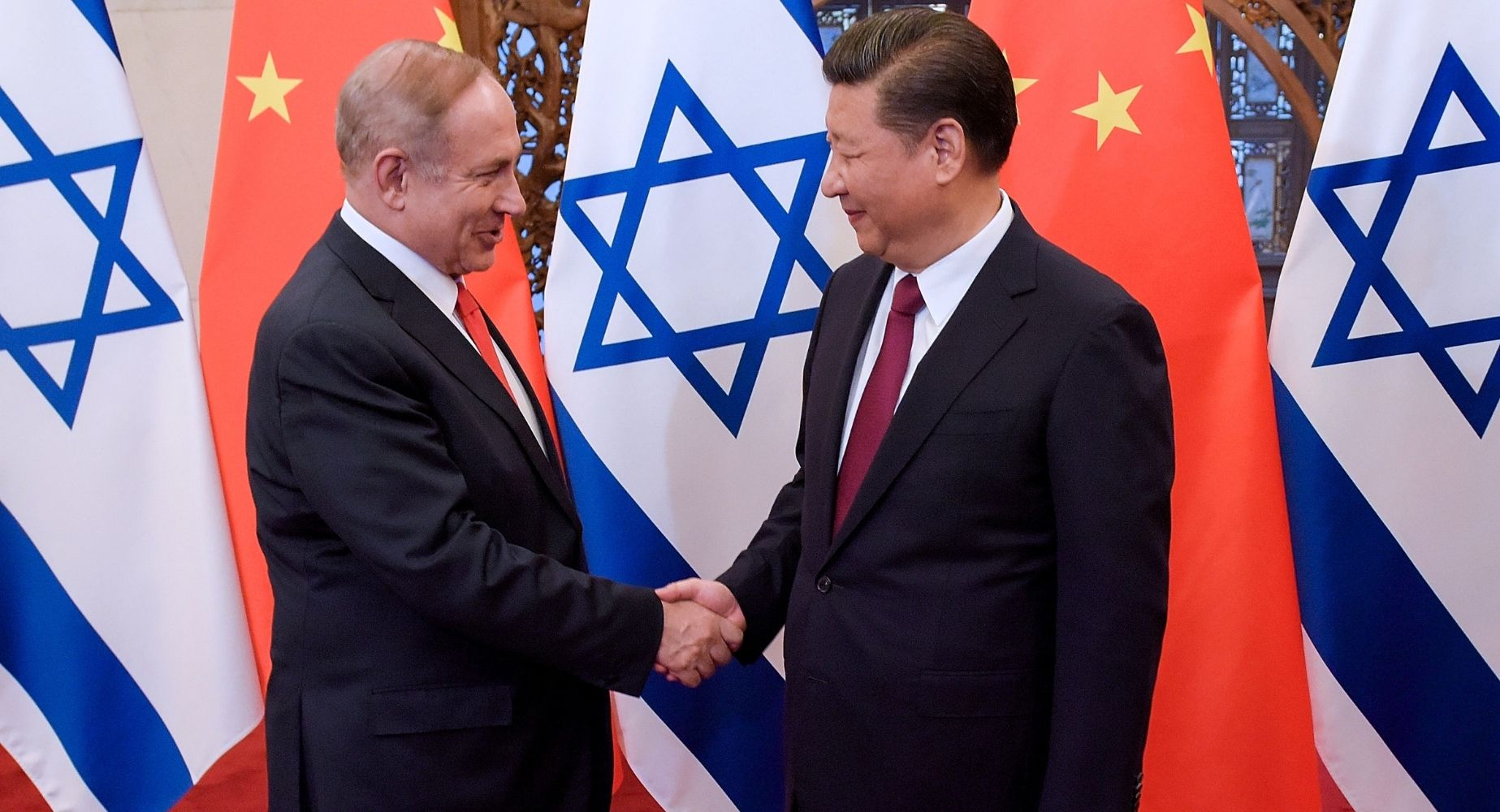
For much of the past two decades, Sino-Israeli relations were portrayed as something close to a natural partnership. China admired Israel’s innovative capacity, while Israeli companies, universities, and diplomatic institutions eagerly expanded into the Chinese market. Both sides believed that economic cooperation, technological exchange, and people-to-people ties could transcend political differences. October 7 exposed the extent to which this optimistic narrative rested on a series of profound mutual misjudgments.
China’s production of knowledge about the Middle East has long suffered from a structural imbalance. The major institutions, resources, and public discourses devoted to Middle Eastern studies have focused primarily on Arab countries, regional politics, international relations, and strategic affairs. The number of scholars specializing in contemporary Israeli society and modern Jewish experience has remained relatively limited. Meanwhile, much of Chinese Jewish studies has concentrated on the Bible, religion, history, literature, and the history of Jewish communities in China, without necessarily engaging with contemporary Israeli politics, society, or security.
This imbalance does not mean that Chinese academia lacks knowledge about Israel altogether. Rather, it means that knowledge about Israel has struggled to occupy an equal place within China’s broader understanding of the Middle East. When the Israeli-Palestinian conflict enters public debate, Chinese society tends to interpret it through familiar frameworks such as Arab nationalism, anti-colonialism, great-power competition, and the rhetoric of the “Global South,” rather than through the historical experiences, social structures, and security concerns that shape Israeli society itself. Within this framework, Israel is frequently reduced to an American proxy or strategic outpost in the Middle East, while its own historical memory and security anxieties are pushed into the background.
Equally important, unlike in Europe and North America, the overwhelming majority of Chinese citizens have little opportunity to encounter Jews in their daily lives. Their understanding of Jews is therefore shaped largely by books, films, classrooms, and social media. Intellectuals, journalists, and online opinion leaders consequently play a far more significant role in shaping public perceptions of Jews and Israel than they do in most Western societies.
Even within China’s relatively small community of Jewish and Israel studies scholars, there is no unified voice. In recent years, some academics working in the field have publicly praised Hamas leader Yahya Sinwar and even compared Hamas to Chinese resistance movements during the war against Japan.
The problem lies not merely in their political views. More troubling is the fact that these views come from individuals who are ostensibly responsible for helping Chinese society understand Jewish history and contemporary Israel. When anti-Israel and at antisemitic narratives acquire legitimacy through academic authority, it becomes increasingly difficult for the broader public to grasp Israeli society and security dilemmas.
The limitations of this intellectual landscape became even more apparent after October 7. Much of the commentary that followed quickly adopted the binary framework of “colonizer versus colonized” and “oppressor versus oppressed,” while paying comparatively little attention to Hamas’s mass murder, kidnappings, and sexual violence against civilians. In official Chinese discourse, Beijing has consistently avoided explicitly designating Hamas as a terrorist organization; many media outlets referred to hostages merely as “detained persons”; even Chinese laborers injured and killed in the attacks never became a topic in the country’s public debate.
China misread Israel and Israel misread China as well.
Over the past two decades, from agricultural cooperation and medical technology to venture capital and university exchanges, Israelis generally regarded China as a long-term, stable, and pragmatic partner. Many diplomats, entrepreneurs, and scholars assumed that economic interests would ultimately transcend ideology and that technological cooperation could provide a sufficiently solid foundation for bilateral relations.
Israel’s greatest miscalculation, however, lay not only in underestimating the ideological and strategic priorities of the Chinese state, but also in misunderstanding Chinese society itself.
For years, Israeli institutions operating in China interpreted Chinese fascination with “Jewish wisdom,” “Jewish education,” and “Jewish success” as evidence of a natural cultural affinity. Yet in a society that has long placed extraordinary value on education, wealth, social status, and tangible achievement, what many Chinese admire is often not the unique historical experience of the Jewish people, but success itself.
For many Chinese, interest in Jews does not stem primarily from an understanding of Jewish tradition, the Holocaust, or the history of antisemitism. Rather, Jews are often imagined as an exceptionally intelligent, wealthy, entrepreneurial people who place great emphasis on education. Any group perceived as similarly successful, prosperous, and education-oriented could easily attract similar admiration.
The problem is that this seemingly philosemitic attitude is not fundamentally distinct from antisemitism. Admiration for “Jewish intelligence” and “Jewish wealth” shares the same cognitive structure as beliefs about “Jewish capital,” “Jewish control of America,” or global Jewish financial conspiracies. In each case, Jews are imagined as a people possessing extraordinary wealth, power, and collective abilities. Admiration and hostility may simply represent two manifestations of the same stereotype under different political circumstances.
For too long, Israeli diplomacy failed to recognize this ambiguity. It mistook a utilitarian fascination with success and wealth for genuine identification with Jewish history and confused cultural curiosity and commercial interest with deeper historical understanding.
After October 7, Israeli analyses of anti-Israel and antisemitic sentiment in China have focused primarily on official media, censorship, and Beijing’s foreign policy. These factors undoubtedly matter. Yet such explanations also reveal a broader tendency: like many Western countries, Israel has long been more accustomed to understanding China through the lenses of state power, ideology, and censorship than through the complex realities of knowledge production, commercial incentives, and popular sentiment within Chinese society.
As anti-Israel and antisemitic narratives spread rapidly across China, many Israeli observers tended to attribute them entirely to government influence, while struggling to explain why such narratives resonated so widely. Official propaganda alone cannot fully account for this phenomenon. Stereotypes concerning Jewish wealth, financial power, American politics, and the international order had already become embedded in Chinese popular culture and public discourse long before the war. The conflict and official narratives merely provided them with new political direction and an unprecedented scale of dissemination.
This misunderstanding led Israel to overestimate the power of commerce, technological cooperation, and public diplomacy to shape Chinese perceptions. Many appeared to believe that as long as companies continued to invest, universities continued to cooperate, and delegations continued to travel, the fundamental nature of Sino-Israeli relations would remain unchanged.
Yet the structural foundations of this optimism have themselves begun to erode.
Two decades ago, Israel’s special status in China derived largely from its strengths in agricultural technology, water management, medical innovation, entrepreneurial culture, and scientific research. At the time, China was actively seeking external partners capable of accelerating its economic transformation, and Israel seemed uniquely positioned to provide valuable expertise and inspiration.
Today, however, the landscape has changed. As artificial intelligence, robotics, and new energy technologies become the core arenas of global technological competition, these fields are increasingly dominated by China and the United States. Israel retains formidable scientific capabilities, a vibrant entrepreneurial ecosystem, and important technological advantages, but for China it no longer occupies the indispensable role it once played.
The challenge facing Sino-Israeli relations, therefore, extends beyond declining political trust. It reflects a deeper structural transformation. In the past, Israel could assume that its technological superiority would guarantee sustained Chinese interest; today, the image of Israel as the “start-up nation” is no longer sufficient to address the realities of a changing balance of power.
At a deeper level, China and Israel shared a common illusion of the globalization era. China understood Israel primarily in terms of its technological and economic value, while Israel viewed China chiefly as a market and a commercial opportunity. Both sides focused first on what the other could offer, rather than on how the other understood history, identity, security, and world order.
For this reason, both came to believe that commerce could replace politics, technology could transcend history, and economic cooperation could indefinitely relegate ideological conflict, security concerns, and questions of identity to the background. As long as contracts continued to be signed, projects continued to operate, and exchanges continued to expand, the most fundamental disagreements could seemingly be postponed indefinitely.
October 7 demonstrated that this assumption was mistaken.
The real issue is not who betrayed whom, but that neither side ever truly understood the other. China’s community of Jewish and Israel studies scholars has devoted decades to studying Jews and Israel without ever fully explaining how Chinese society imagines Jews. Meanwhile, Israeli diplomacy mistook China’s utilitarian admiration for “Jewish success” for genuine cultural affinity and confused commercial ties with political trust.
Each side also reduced the other to a simplified image. Chinese public discourse frequently portrays Israel as little more than an American proxy in the Middle East, while Israel and many Western observers have tended to treat Chinese society as a direct extension of state power. The former erases Israel’s own historical experiences and security logic; the latter overlooks the ideas, interests, and emotions that genuinely exist within Chinese society.
October 7 marked the end not only of the illusion of a “natural partnership” between China and Israel. It also serves as a reminder that, in an increasingly ideological world, economic cooperation and technological prowess cannot automatically translate into political support.
For Israel, the central question is no longer simply how to expand trade with China. It is how to redefine its place in an international order increasingly shaped by great-power competition, identity politics, and competing global narratives.
