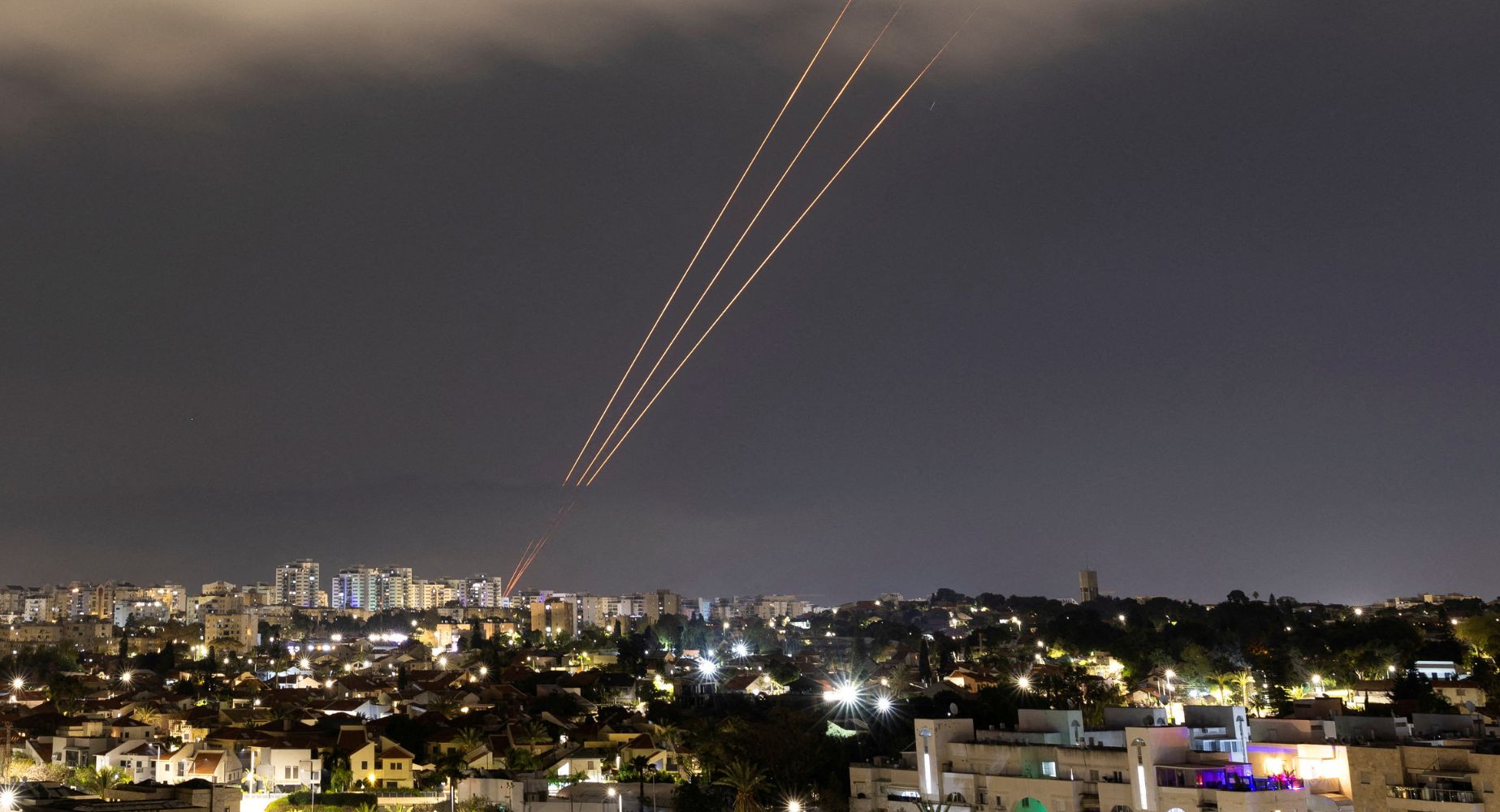
Israel, Iran, and the Future of Regional Order: As power shifts from territorial advantage to the control of interconnected technological systems, the Middle East is emerging as a critical laboratory where energy, compute, and strategic alignment may shape the architecture of the twenty-first century.
Ecosystem of Power: Israel, Iran, and the Evolution of Regional Order
Israel’s strategic history cannot be separated from the changing structure of Iran. In its early decades, Israel depended on Western protection while also benefiting from a quiet, unofficial relationship with pre-revolutionary Iran. This relationship was built on energy exchange, discreet coordination, and a shared perception of vulnerability within a hostile regional environment. While political constraints prevented formal alignment, the underlying logic was functional: Israel gained strategic depth, and Iran contributed to a broader regional equilibrium.
This historical period reveals a principle that extends beyond its immediate context. Israel is structurally stronger when it is not surrounded exclusively by adversarial systems. The relationship with Iran was not based on ideological affinity, but on functional convergence. Security, energy, and regional calculation formed part of a wider ecosystem that reduced strategic isolation. In this sense, Iran occupied an important place within Israel’s strategic horizon even in the absence of formal recognition.
The 1979 revolution fundamentally altered this configuration. Iran shifted from a peripheral stabilizer to a central organizer of regional opposition. This was not merely a change of government, but a transformation of regional logic. Ideology became institutionalized through proxy networks, asymmetric warfare, and long-term strategic pressure. Over time, this produced a distributed system of conflict stretching across multiple fronts rather than a series of isolated confrontations.
The significance of this transformation became increasingly visible over the following decades. Hezbollah, Hamas, and other aligned actors were not independent phenomena. They emerged as interconnected components within a larger strategic ecosystem. The challenge facing Israel gradually evolved from managing individual threats to confronting a system capable of reproducing instability across different theaters simultaneously.
From Territory to Compute:
While regional dynamics evolved, a deeper structural transformation emerged globally.
Power is increasingly organized around computational capacity. Military effectiveness, economic productivity, intelligence systems, and technological innovation now depend on the ability to generate, control, and scale compute. Competition over advanced semiconductors, export controls, artificial intelligence infrastructure, and data architectures reflects this shift. Power is no longer defined primarily by territory or industrial output, but by position within interconnected technological systems.
This does not render geography irrelevant. Rather, geography is being absorbed into a wider architecture in which energy systems, compute infrastructure, and human capital interact as integrated layers of power.
Israel’s traditional doctrine—based on deterrence, intelligence superiority, and rapid operational response—remains effective at managing immediate threats. However, it is less capable of shaping the structural conditions that generate those threats.
The events of 7 October 2023 exposed this limitation. Israel was not facing isolated actors, but a coordinated system capable of integrating ideology, operational planning, and technological adaptation across multiple fronts. Gaza functioned as one node within a wider regional structure involving Iran, Hezbollah, and aligned networks.
Security, therefore, can no longer be understood solely as threat response. It must be understood as system positioning.
Security as System Architecture:
The convergence of security systems and technological systems is increasingly eroding the distinction between geopolitical competition and infrastructure competition.
Regional orders were historically organized around geography, military balance, and resource access. These foundations remain relevant but are no longer sufficient.
Energy networks now sustain computational infrastructure. Technological systems shape military capability. Access to advanced knowledge systems determines long-term economic resilience. Security, development, and innovation are converging into a single structural domain.
Strategic advantage increasingly depends on position within the critical nodes through which energy, information, capital, and expertise circulate. Power is shifting from control of territory to control of system architecture.
Power as System Design:
In this environment, power is no longer defined solely by military or economic scale. It refers increasingly to the capacity to design systems and shape the conditions under which other actors operate.
Influence is exercised through standards, chokepoints, verification regimes, and access structures. These determine how technology flows, how capital is allocated, and how infrastructure is secured.
Artificial intelligence illustrates this transformation particularly well. Advanced AI systems depend on a complex layered ecosystem of semiconductor fabrication, design architecture, data infrastructure, cloud systems, energy inputs, and specialized human expertise. Strategic influence lies in coordinating these interdependencies rather than dominating any single layer.
The emerging global order reflects this logic. It is neither fully globalized nor fully fragmented, but increasingly stratified. Critical technological layers are concentrated within trusted networks, while other components remain widely distributed. This creates asymmetric interdependence, where influence derives from control of indispensable system positions rather than territorial dominance.
Iran as Structural Pivot:
Within this architecture, Iran occupies a pivotal position.
Its current configuration, within the post-1979 Iranian state system, allows it to project instability across multiple fronts through proxy forces, ideological mobilization, and asymmetric instruments of power. However, Iran’s deeper significance extends far beyond this operational configuration.
As a civilizational and geographic entity—what I have previously described in my “Onion State” analysis as a layered and resilient structure—Iran possesses characteristics that few regional actors can match: a large population, substantial energy resources, strategic depth, industrial potential, historical continuity, and deep structural resilience. These attributes give Iran an outsized capacity to influence the broader regional system independent of any specific political configuration.
Geography amplifies these advantages. Positioned between the Gulf, Central Asia, the Caucasus, and the broader Middle East, Iran occupies a strategic crossroads that magnifies the regional consequences of either instability or integration.
For this reason, Iran functions as a structural pivot rather than simply another regional actor.
A structurally reoriented Iran—a post-ideological strategic configuration grounded in state-centered governance, institutional continuity, and national interest rather than ideological projection—would fundamentally alter the regional equation. Such a transformation would not automatically produce alignment or convergence, but it would shift the underlying architecture that currently sustains persistent regional conflict.
The significance of such a shift lies not in ideological change but in system-level effects. A structurally reoriented Iran would move from exporting systemic instability under its current post-1979 configuration to participating in a more stable regional architecture. The result would be the opening of strategic space for long-term coordination across energy systems, technological infrastructure, trade networks, and security arrangements.
This does not imply inevitability. Several trajectories remain possible. The current post-1979 Iranian state configuration may persist. Internal fragmentation may intensify. Regional containment architectures may deepen. Alternative corridors—such as Israel–Gulf–India connectivity frameworks—may expand independently of Iran.
Each scenario carries distinct strategic consequences.
Yet among the plausible alternatives, a structurally reoriented Iran represents the highest-leverage pathway available, addressing the architecture of conflict rather than merely its operational expressions.
Pax Silica as Prototype:
The future regional order will not be defined solely by military balance or diplomatic alignment. It will be shaped by the integration of energy systems, computational infrastructure, technological ecosystems, supply chains, and human capital.
Pax Silica is an emerging infrastructural alignment in which energy, compute, and trusted technological systems are integrated into a layered architecture of managed interdependence, where strategic influence is determined by position within the computational stack rather than territorial control.
It represents neither a traditional alliance system nor a universal order, but a functional architecture built around trusted participation in critical technological networks.
This alignment is not a formal alliance or treaty structure, but a functional configuration linking large-scale energy producers, advanced technological nodes, and capital-rich investment systems into a coordinated infrastructure environment. Its logic is infrastructural rather than ideological.
The United States, Israel, and key Gulf actors increasingly form the foundational elements of this emerging prototype. Its purpose is not political unification, but the construction of trusted systems capable of supporting advanced computational and technological ecosystems under conditions of strategic competition.
Tri-Layer Architecture:
This system can be understood through three interconnected layers.
The first layer consists of energy and capital. Gulf states function as providers of computational mass, supplying the energy and investment required for large-scale AI systems, data centers, sovereign cloud infrastructure, and digital economies. Their role extends beyond resource ownership to infrastructure hosting, shaping where computational capacity is physically concentrated. Increasingly, they also exert demand-side influence, as sovereign investment programs and digital transformation strategies shape global infrastructure deployment.
The second layer consists of semiconductors, cybersecurity, and system integration. Within this layer, Israel functions as a Sovereign Tech Node. Its strategic role derives from its concentration of cybersecurity expertise, defense technologies, research institutions, and deep integration into Western innovation ecosystems. In an environment defined by trusted networks and export controls, its value lies in enabling secure system integration across regional and global architectures.
The third layer consists of human capital. This includes domestic talent, research institutions, entrepreneurial ecosystems, and globally distributed technical diasporas. These networks connect regional systems to global knowledge production, enabling continuous innovation and system adaptation. While mobile and decentralized, human capital remains essential to the design and governance of complex technological infrastructures.
Together, these three layers form a structure of asymmetric interdependence. Energy enables computation, computation depends on secure technological systems, and both depend on human expertise to function and evolve. Data and information flow across all three layers, connecting energy, computation, and human expertise into a single operational ecosystem.
Conditional Alignment:
The objective of this architecture is not political uniformity. The region remains defined by divergent interests, identities, and strategic priorities.
The challenge is therefore not convergence, but conditional alignment: the creation of interoperable systems that allow cooperation within defined domains without requiring broader political consensus. Participation depends not on political uniformity, but on adherence to shared technical and operational standards.
Shared technical standards, verified infrastructure boundaries, and secure governance protocols enable interaction within a structured environment. Stability emerges not from agreement, but from embedded participation in systems whose disruption carries mutual cost.
Within this framework, a structurally reoriented Iran would become a critical node of integration. Its energy base, human capital, and geographic position would allow it to participate directly in regional technological and economic systems, shifting competition into structured rather than purely confrontational forms.
The Middle East as Laboratory:
The significance of this transformation extends beyond the region.
For much of the modern era, Middle Eastern actors operated within architectures designed externally. The region is now becoming a laboratory for a different model of organization, in which energy, computation, technology, and human capital are integrated under conditions of sustained geopolitical competition.
Few regions concentrate these variables with equal intensity. Energy abundance, geopolitical competition, technological ambition, and strategic geography converge in the Middle East with a density that is difficult to replicate elsewhere. The outcome will therefore inform broader patterns of global system design in the decades ahead.
For Israel, this requires a strategic evolution. Military superiority, deterrence, and intelligence dominance remain necessary but are no longer sufficient. Security increasingly depends on the capacity to shape the architecture within which threats emerge and evolve.
Power is no longer defined solely by the ability to act within a system, but by the ability to design the system itself.
Israel, Iran, and the broader Middle East are not separate strategic problems, but interconnected variables within a single evolving architecture defined by energy, compute, technology, and human capital.
Historical precedent shows that alternative configurations are possible. Current conditions show the cost of their absence. The region’s future will be determined not only by the balance of power among states, but by the architecture of the systems that connect them.
The central question is no longer whether force will remain relevant—it will—but whether regional actors can construct a durable architecture capable of channeling force, competition, and technological transformation before competing systems define the region for them.
The transition has already begun. Its final structure remains open.
