Can Golf Diplomacy with Trump, Rubio, and Pahlavi Address the Republican Electoral Crisis and Resolve the Iran Conflict?
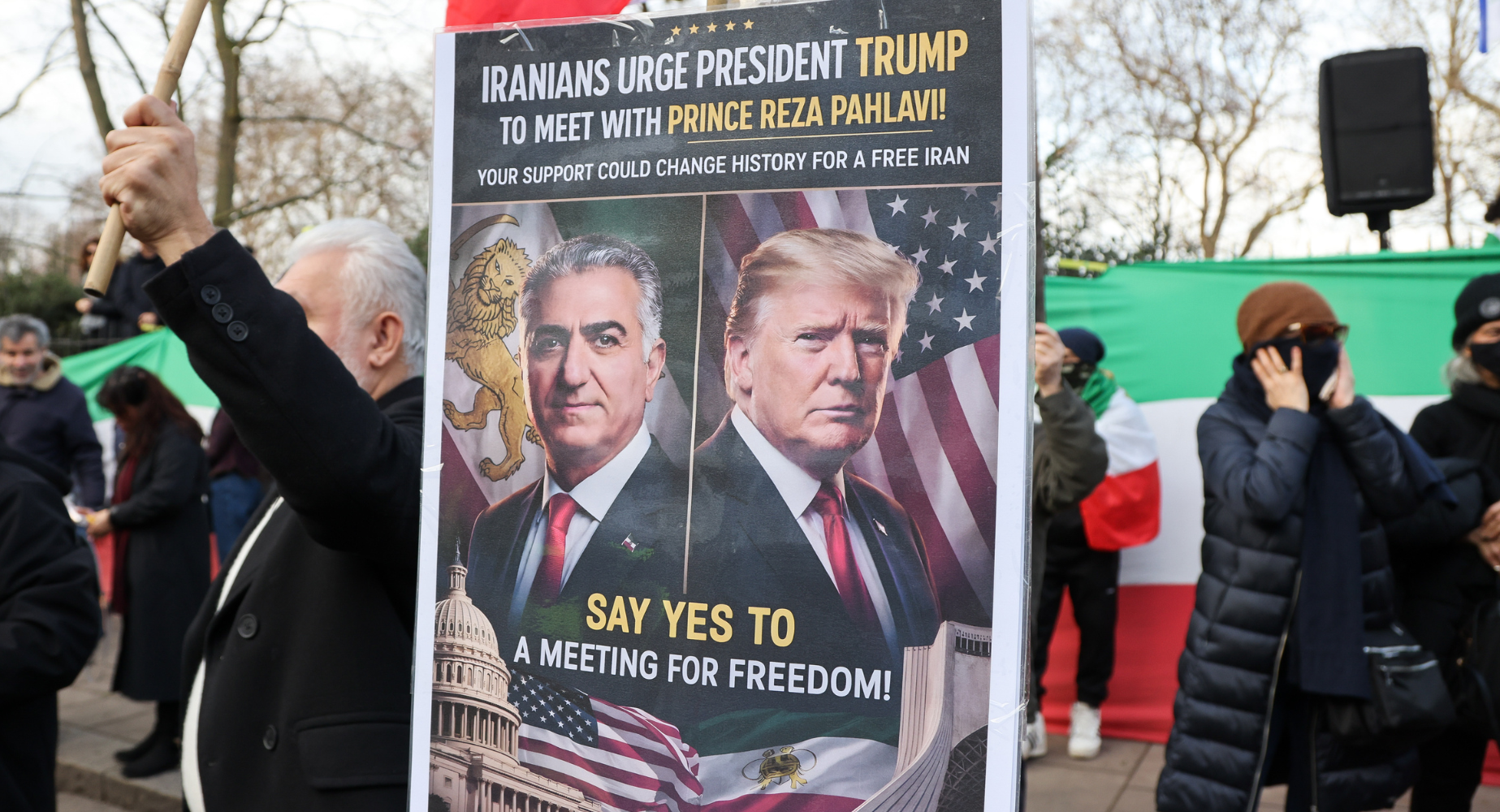
Donald Trump should invite Reza Pahlavi to meet with him and Secretary of State Marco Rubio. An informal encounter at Mar-a-Lago, perhaps over a round of golf, offers an opening to address two problems now converging on the White House. Republicans need political recovery after their midterm defeat. The United States and Israel need to finish a confrontation whose military achievements have yet to produce a durable political outcome.
These objectives are connected. The unresolved conflict imposes economic costs on Americans, strains political support for the alliance with Israel, and allows Tehran to turn survival into a strategic achievement. Ending that cycle requires an Iranian political alternative capable of assuming responsibility when external pressure creates an opening.
Trump brings presidential authority. Rubio connects that authority to diplomacy and allied coordination. Pahlavi brings Iranian transition leadership into the discussion. Israel’s security belongs at the center of the strategy because a settlement that leaves the regime able to rebuild its capabilities merely postpones the next confrontation.
The two birds are Republican political recovery and resolution of the Iran conflict. The single strategy connects American and Israeli pressure with an organized Iranian movement capable of giving that pressure a political destination.
The First Bird — Republican Political Recovery
The midterm defeat has intensified the struggle over Republican foreign policy. In his response to the electoral losses, Vice President JD Vance blamed the Iran war and distanced himself from Trump’s defense of it. The dispute now reaches directly into the contest over who defines the party’s direction before 2028.
Vance’s criticism also raises a question of accountability. As vice president and an advocate of a negotiated settlement, he helped shape the administration’s approach to Iran. He must answer for that approach as well as criticize its consequences. Americans have experienced the costs of the conflict while receiving uncertain explanations of what success means. Any competing strategy must explain how further pressure produces an outcome that justifies those costs.
But the electoral diagnosis leaves the strategic question unresolved. Ending American involvement through an agreement that preserves the regime’s capacity to resume confrontation risks exchanging an immediate political reprieve for another crisis. The administration needs an outcome that ends the recurring burden.
That is Trump’s opportunity. Direct engagement with Pahlavi would connect American pressure to preparations for a political transition inside Iran. It would give the president a destination to explain and a framework against which to judge his administration’s actions.
Rubio’s opportunity is equally clear. His contribution must be to organize the diplomatic conditions under which military gains become durable strategic results. Ahead of 2028, that offers a substantive test of leadership. Can he help reduce America’s regional burden while preserving its alliances and securing the gains already achieved?
The Republican case improves when the consequences reach American households. Safer shipping, fewer energy disruptions, and a declining need for repeated deployments give voters tangible reasons to reconsider the administration’s record. The administration’s domestic recovery depends on strategic achievement.
The Second Bird — Finishing the Job with Israel
Trump has already supplied the phrase that defines the unfinished task. In his October endorsement of Netanyahu, reported by Reuters, he urged Israelis to support him because “we have to finish the job that we started!” The same report described Netanyahu’s instruction to Israeli intelligence and the military to bring down the Iranian regime, which he presented as necessary to end the threat.
Netanyahu’s argument rests on the problem of regeneration. In his pre-election interview with The Jerusalem Post, he said, “As long as the Iranian regime is there, they’ll reconstitute themselves.” His position is that military damage leaves the underlying danger unresolved while the same leadership retains the intention to rebuild.
That is where Israel’s security argument and America’s electoral problem converge. Repeated bombardment without a political outcome produces the recurring commitment American voters resent. A temporary American exit that leaves Israel facing a recovering adversary keeps the next war in preparation.
Finishing the job therefore requires a political strategy capable of outlasting the military campaign. American and Israeli power can weaken the regime’s means of coercion. Iranian political organization must turn that opening into a challenge to its authority and prepare a successor able to govern.
The purpose of engaging Pahlavi is to connect those responsibilities. Washington and Jerusalem need to know what Iranian leadership can organize. Iranians need to know whether external pressure serves a defined political objective or another temporary bargain with their rulers.
Tehran benefits while those questions remain unanswered. Its leadership can wait for congressional resistance, electoral deadlines, and divisions among allies to narrow Washington’s choices. Its own citizens bear much of the cost of that endurance.
An organized political alternative changes the meaning of time. Each additional month must become an opportunity to strengthen Iranian coordination, prepare institutional continuity, and widen the regime’s internal uncertainty. Pressure acquires strategic value when something capable of replacing the ruling order grows alongside it.
One Strategy, Defined Responsibilities
The proposed meeting should establish the responsibilities of each participant and the terms of coordination with Israel.
Trump must define the American objective. Supporting an Iranian-led transition requires a clear commitment to Iran’s territorial integrity, functioning institutions, and the Iranian people’s authority over their permanent political system. Presidential recognition gives that objective visibility and places responsibility for its pursuit inside the administration.
Rubio must connect sustained pressure to diplomatic preparation. The reported division within Trump’s team places him among officials supporting continued economic pressure, while Vance and Steve Witkoff favor movement toward a deal. Rubio’s task is to explain what that pressure is intended to achieve and to organize the relationships needed to reach it.
That means coordination with Israel over the political destination and the protection of shared security interests. It also means consultation with regional governments, preparation for humanitarian needs, and sustained engagement with Iranian transition leadership. Allies require confidence that Washington’s objectives extend beyond the next pause in hostilities.
Pahlavi must demonstrate the organization behind his coordinating role. In his discussion of transition preparations with CNN, he emphasized defections, institutional continuity, and the dangers illustrated by Iraq. Those preparations belong at the center of direct engagement.
The discussion must establish how Iranian leadership maintains communication inside the country, coordinates political participation, and prepares to preserve public administration. International support becomes consequential when it strengthens capacities that Iranians can exercise themselves.
The transition also needs a clear distinction between continued public service and responsibility for repression. People uninvolved in crimes need credible protection and a place in national reconstruction. Those responsible for killings, torture, and other abuses must face individual accountability through a defined judicial process.
Pahlavi’s coordinating role carries an obligation to bring the country to a free constitutional choice. Iranians must decide between a republic and a parliamentary monarchy through a democratic process. External recognition supports the transition toward that decision.
From a Meeting to a Political Outcome
Golf diplomacy offers an informal setting for a consequential decision. The work begins when the participants agree on a political destination and accept responsibilities for reaching it.
Trump needs an achievement that answers the economic and political costs Americans have borne. Rubio needs to demonstrate that diplomacy can convert pressure into a more stable regional order. Israel needs confidence that the outcome addresses the regime’s capacity to regenerate its threats. Pahlavi needs international engagement that strengthens Iranian organization and preparation.
These interests converge around an Iranian-led transition that preserves the state while ending the revolutionary governing order. Success demands preparation before rupture, coordination among allies, and leadership capable of maintaining discipline during the transition.
Republican recovery requires progress that Americans experience as greater security and a reduced burden. Iranian political change requires an organized movement capable of assuming responsibility. Israeli security requires an outcome that reaches beyond the destruction of replaceable military assets.
The meeting at Mar-a-Lago is an opportunity to connect those requirements. Trump should extend the invitation, Rubio should organize the framework, and Pahlavi should bring the preparations that make Iranian agency operational. Finishing the job begins by agreeing on what completion means and who is responsible for delivering it.
