Matt Reisener, Senior National Security Advisor at the Center for Maritime Strategy and former Senior Program Manager for the Middle East and North Africa at the National Democratic Institute, offers a clear assessment in the Jerusalem Strategic Tribune of the possible consequences of the war with Iran.
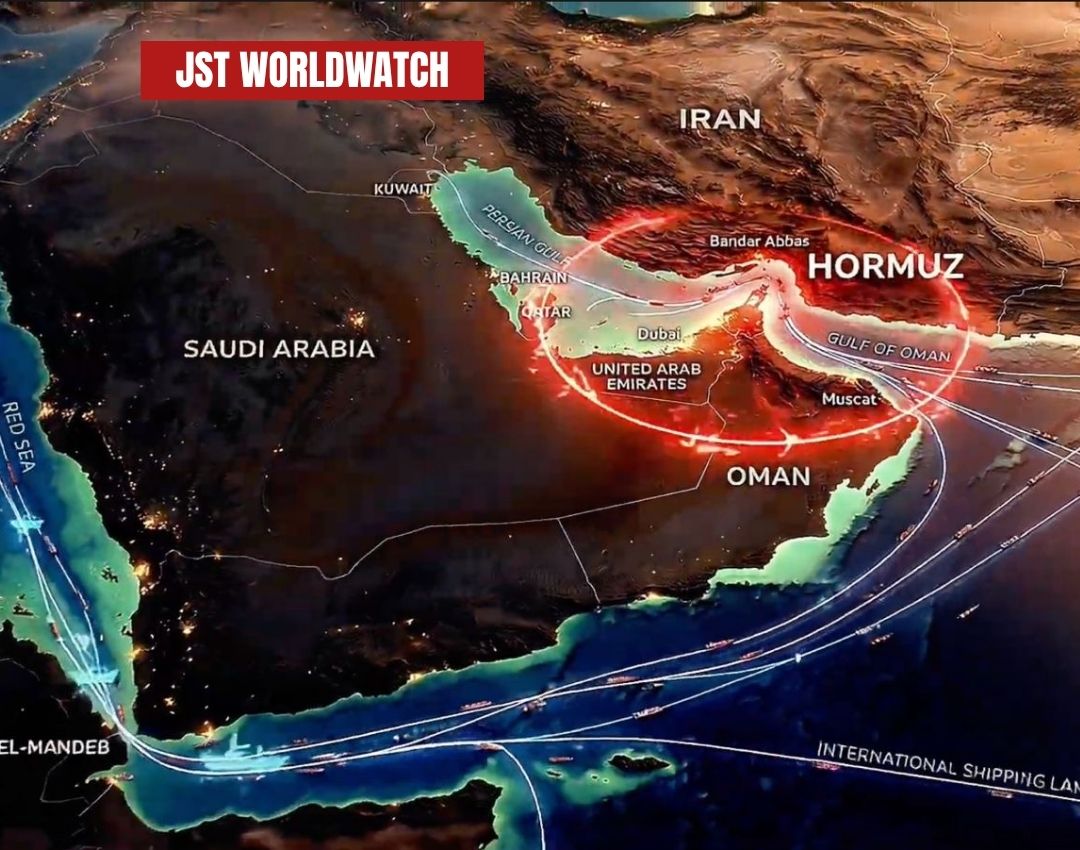
He argues that if this regime succeeds in its gamble over the Strait of Hormuz, the balance of power in the Gulf will change.
The reason is clear: the Strait of Hormuz is not only a passage. It is a bargaining chip, a legal test, and a geopolitical fault line.
Can Iran Really Control the Strait of Hormuz?
by
May 2026
Recent Articles
View from Israel: Q&A with Meir Ben Shabbat
The Jerusalem Strategic Tribune was pleased to speak about current events with Meir Ben Shabbat, head of the Misgav Institute for National Security & Zionist Strategy, in Jerusalem. He served as Israel’s national security advisor from 2017 to 2021. Our conversation is below. In what ways does President Trump’s decision to resume the war against […]
Rise of the New Spartas
A new dynamic has taken hold as Russia’s full-scale war of aggression in Ukraine grinds through its fifth year. Kyiv now strikes with regularity and precision deep in Moscow’s heartland, crippling energy infrastructure and supply lines. Advances are a thing of the past along a frozen front where drones impose a fearsome kill zone no […]
China Wants Peace in the Middle East-but Not the Burden of Enforcing It
China has become one of the Middle East’s largest economic stakeholders. However, when war threatens the region, Beijing still looks more like a diplomatic actor than a security provider. That paradox lies at the heart of China’s Middle East strategy. As its dependence on regional energy, trade, and infrastructure has expanded, so too has its […]
