The twentieth century was initially the worst of times and then the best of times for Europe. In that century’s first half, the continent experienced the two most deadly and destructive wars in all of history. During the first of them, communists seized control of the Russian empire and from there spread their rule westward in Europe as well as to Asia. In power, communism’s most notable achievement was mass murder, causing as many as 100 million deaths, many of them Europeans.
In the wake of the second great war, however, the western part of Europe enjoyed unprecedented peace and prosperity; and at the end of the twentieth century, the countries of Eastern Europe freed themselves from communist rule and embarked on the path that Western Europe had followed for four decades. As both a cause and effect of its good fortune, Western Europe, in the second half of the last century, launched a process of economic and political integration. It began with the creation of the European Coal and Steel Community in 1951, which pooled the national coal and steel industries of six countries, and was followed by the establishment of the European Economic Community in 1957, which steadily deepened its ties and expanded its membership thereafter. In recognition of these developments, in 1993 it changed its name to the European Union (EU). The turn of the twenty-first century has a good case for being the best time in all of history to be a European.
Moreover, in those halcyon days the European governments had an agenda for securing and even improving upon their benevolent status quo, an agenda that could be described as “more of the same.” Having achieved close integration in commerce with the Single European Act of 1986, and having embarked on monetary union with the advent of a common currency, the euro, in 1999, the EU could anticipate moving, at its own pace and in calm geopolitical circumstances. to a fiscal union and ultimately a political one, with Europe-wide institutions exercising more and more political power and national governments less and less.
The present century has not, however. worked out that way. Unanticipated adverse developments outside Europe have made further integration seem not simply desirable but positively urgent; but the course of events within the countries of the EU have made policies to achieve that goal difficult, perhaps even impossible, to enact.
The external shocks have come from three countries that have reverted to policies more common in the nineteenth century than in the second half of the twentieth. Entering the present century, Russia functioned as a reliable and low-cost supplier of energy to a Western Europe that is largely bereft of indigenous energy resources and whose industrial economies therefore badly needed Russian energy. While post-communist Russia discarded the ideology of Marxism-Leninism, its leader, Vladimir Putin, took up the nineteenth-century tsarist practice of territorial expansion, invading and attempting to subdue neighboring Ukraine in February 2022. This presented the countries of the EU with a double problem. First, if they continued to purchase Russian energy they would be supporting Putin’s campaign of conquest, which violated both their values and their interests; so they scrambled to find energy elsewhere. Second, if Putin succeeded in Ukraine, Russia would pose a serious threat to the security of the rest of Europe; so the EU, although without major military capabilities of its own, sought to bolster Ukraine’s defenses in whatever ways it could.
Meanwhile, China had come to contribute to European economic growth by providing a welcoming market for the continent’s exports, particularly capital goods from Germany and luxury products from France and Italy. In the twenty-first century, however, the Chinese government has increasingly adopted the kind of mercantilist economic policies – promoting its own exports and limiting imports to China – that were common in the nineteenth century and the centuries before that. As a result, Europe’s firms have lost market share in China while a tsunami of Chinese exports directed at Europe threatens to cripple the continent’s own industrial base.
In the past, their close ties with the United States would have afforded the countries of Europe protection from the threats that Russia and China now pose; but America has, unhelpfully, embarked on its own return to the nineteenth century. The current administration, reverting to the country’s pre-World War I determination to steer clear of the security affairs of the European continent, has cast doubt on its commitment to the North Atlantic Treaty Organization, on which Europeans have relied for their security since the 1940s; and the Trump administration has offered only lukewarm support, at best, to the Ukrainians in their struggle against Russiam imperial aggression. Similarly, where the United States once furnished a major market for European exports, Donald Trump has imposed the highest American tariffs since the nineteenth century, which punish European exporters (as well as American consumers.)
Given the challenges from without, the logical European response, which the continent’s political leaders generally prefer, is to accelerate the process of integration within the EU for the purpose of strengthening it economically, politically, and militarily. Yet such a course faces two kinds of obstacles. From the beginning, European countries have had mixed feelings about integration when it involved surrendering sovereignty to supranational authorities. Like states everywhere, those in Europe value their sovereign independence because they have different goals, interests, and preferences on a wide range of issues and hesitate to forfeit the capacity to pursue them independently, which integration generally requires them to do.
In the twenty-first century, another barrier to the process of integration has arisen: formidable opposition to it within the member countries from their publics and the populist political parties they increasingly support. Populist parties have gained ground in France and Germany and control the government of Italy. Populist sentiment lay behind the British decision to leave the EU entirely. Continental populism has as one of its defining features skepticism about, if not outright hostility to, the EU and the ongoing process of integration that it embodies.
Contemporary European populism has a basis in recent European history. It has arisen from three failures that populist parties and their adherents blame – not wholly unfairly – on the members of the continent’s political elite and that elite’s commitment to ever-deeper integration. The first of these failures was the malfunctioning of the common currency in the second decade of the twenty-first century. Before its launch, critics of the euro said that it would have difficulty operating smoothly in the absence of the kind of sovereign government that underpins all other currencies. The critics’ gloomy prophecy came to pass, and the economic turbulence that the euro’s difficulties caused brought with it economic pain, especially to southern Europe.
Because of the euro’s shortcomings, and for other reasons as well, economic growth in Europe slowed to a crawl for most of the twenty-first century. The project of integration had earned a measure of public popularity after 1950 because it accompanied, and was rightly associated with, remarkable prosperity. The waning of that prosperity has eroded support for the EU across the continent.
In addition, EU governments permitted immigration from outside Europe in numbers larger than the people they governed found acceptable. This issue, too, has divided political elites from other Europeans. The elites have regarded immigration as economically useful and the immigrants themselves, coming as most of them do from places that are war-torn or impoverished or both, as morally deserving. European leaders have also expressed confidence that the newcomers would embrace European values and adopt European patterns of conduct. It has been non-elite Europeans, however, who have had to pay the price – in increased crime, most notably – when immigrants have not embraced European cultural norms.
Thus, Europe finds itself, in 2026, in a bind. On the one hand, it needs, at least in the view of most of those charged with making public policy, to accelerate the ongoing process of integration in order to meet the challenges that the Russian, Chinese, and American departures from their late-twentieth-century policies have presented. Fiscal integration will fix some of the problems with the common currency and, in the best case, open new sources of economic growth on the continent. Political integration could form the basis for joint military projects that would enhance Europe’s capacity to defend itself. On the other hand, the economic damage the euro has caused, the slowdown in economic growth across the EU, and the populist backlash against mass immigration have combined to deprive the process of integration of the public support that, in democratically governed countries such as those of the EU, it requires in order to proceed.
Perhaps the future course of events will extricate Europe from its current predicament. In four years of war against Ukraine, Russia has demonstrated military prowess that falls considerably short of being overwhelming. China has economic difficulties that might lead to the modification of its aggressive mercantilism. Donald Trump will not be president of the United States forever, and his successors may well revert to foreign policies more familiar, and more congenial, to Europe. Domestically, European elites may manage to persuade their skeptical publics that accelerating the decades-long project of continental integration will solve rather than aggravate the continent’s present problems.
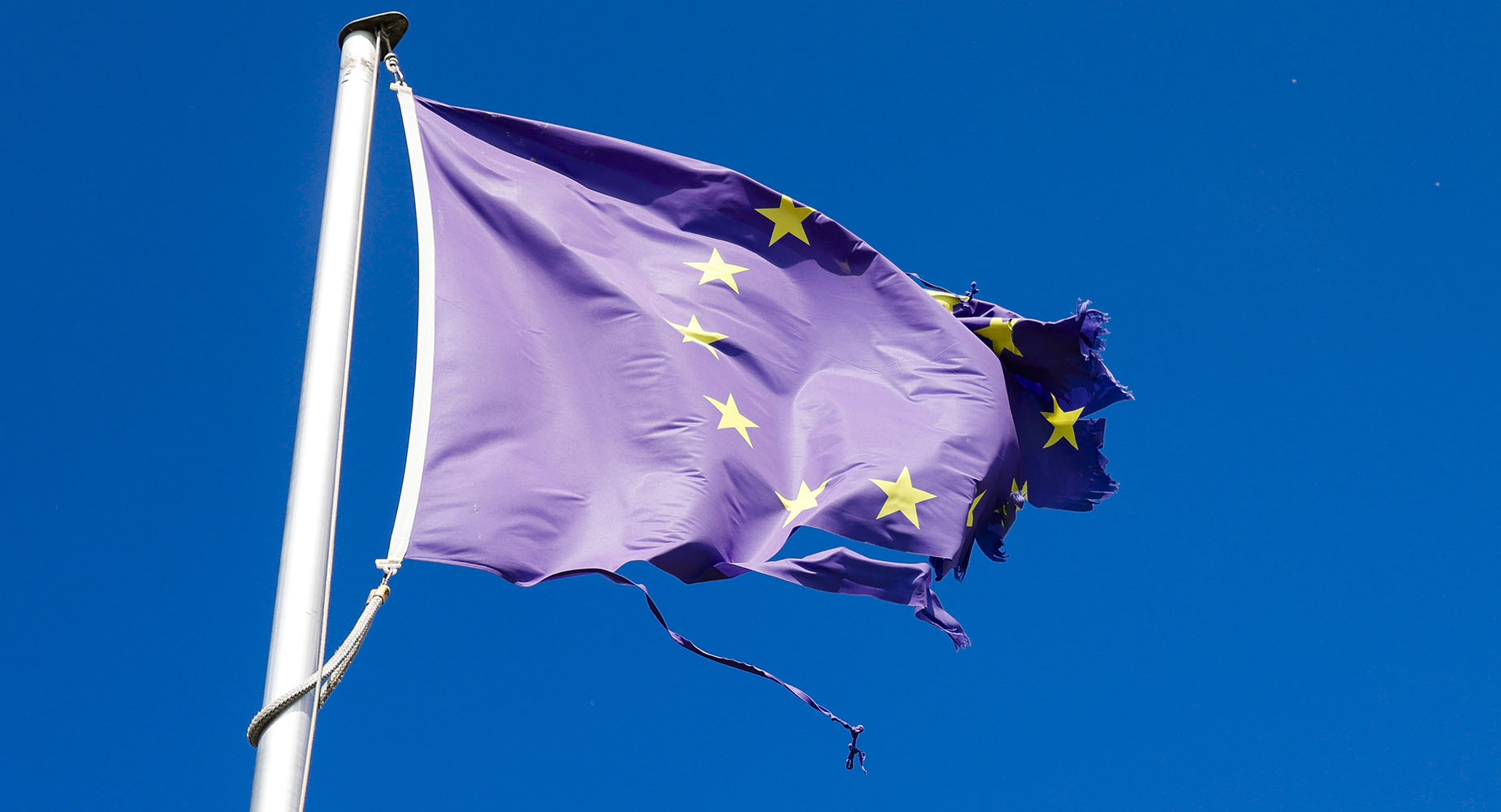
At the moment, however, Europe is stuck – between what seems the optimal response to unfavorable developments in the world beyond its borders and the grass-roots resistance at home to such a response. To be sure, these are not the worst of times for Europe: its present position is not remotely as perilous as were the circumstances of the first half of the last century. Neither, however, are these the best of times, the times that appeared to be imminent in the heady days at the turn of the twenty-first century, the times that now seem long ago and far away.
