The Middle East is no longer a peripheral conflict. It is an active battlespace in which U.S. naval power, global commerce, and allied security are being tested in real time.
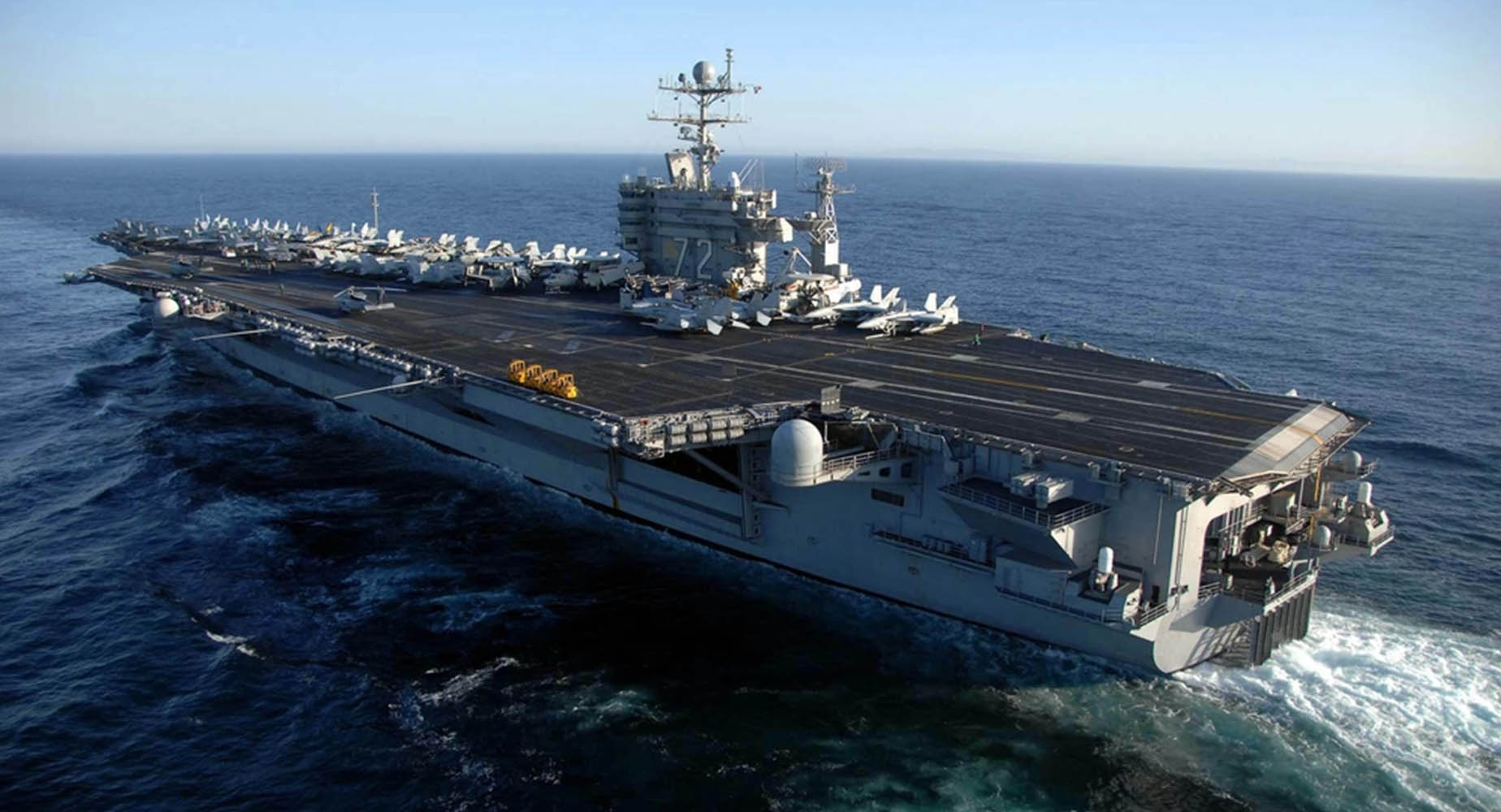
When a U.S. carrier strike group such as USS Abraham Lincoln operates in or near the Red Sea and Gulf of Aden, it does so as the centerpiece of American power projection. A Nimitz-class aircraft carrier, escorted by Aegis-equipped guided missile cruisers and destroyers, brings layered air and missile defense, strike aircraft, electronic warfare capabilities, and integrated command-and-control architecture into a contested maritime environment. This is not symbolic presence. It is forward deterrence.
But the threat environment along Yemen’s coastline has fundamentally changed.
The Bab el-Mandeb Strait is a strategic chokepoint linking the Red Sea to the Indian Ocean and the Suez Canal. From Yemen’s western shore, anti-ship cruise missiles, anti-ship ballistic missiles, one-way attack unmanned aerial systems, sea mines, and unmanned surface vessels can reach commercial shipping lanes and naval task groups operating in international waters. The Houthis have repeatedly demonstrated both intent and growing technical proficiency in employing these systems.
Their arsenal reflects sustained external support. Iranian-supplied components, training, targeting assistance, and weapons transfers have enabled increased range, improved guidance, and more complex attack profiles. The result is a layered coastal threat network capable of compressing warning timelines and complicating maritime defense.
An Aegis combat system can track hundreds of targets simultaneously. Standard Missile interceptors provide layered defense against aerial and ballistic threats. Carrier air wings extend strike range deep inland. Yet even the most advanced naval platforms operate within physics and geography. When mobile launchers disperse along hundreds of miles of coastline and unmanned systems fly low, slow, and irregular flight paths, the defensive burden multiplies.
This is modern hybrid warfare at sea.
The objective is not necessarily decisive victory. It is attrition, disruption, and normalization of instability. Each attempted strike forces interceptors to be expended. Each drone launch requires ISR assets to be re-tasked. Each maritime disruption raises insurance rates, diverts shipping routes, and signals vulnerability.
For a carrier strike group such as USS Abraham Lincoln, operating within missile and drone range of hostile coastal systems means persistent high-readiness posture. Airborne early warning aircraft must maintain expanded surveillance orbits. Destroyers must operate with heightened air defense alert status. Electronic warfare and cyber defense systems must remain active to counter targeting networks. The operational tempo increases. So does escalation risk.
Beyond the coastal missile threat lies a second layer of instability. Yemen’s fragmented security environment has historically provided space for transnational terrorist organizations, including al-Qaeda in the Arabian Peninsula. Even when degraded, such networks exploit vacuums to reconstitute logistics, recruitment, and operational planning capability. The presence of Iranian-backed militias along the coast and extremist networks inland creates a convergence zone of asymmetric threats within a compressed geographic area.
This convergence does not require ideological unity to be dangerous. It requires only simultaneous pressure.
The implications for U.S. forces and regional allies are concrete. American installations across the broader Middle East fall within expanding missile and drone strike radii. Allied bases face similar exposure. Commercial vessels transiting the Red Sea operate under persistent threat envelopes. ISR architecture must cover air, sea, and land simultaneously. Command-and-control nodes must integrate coalition partners in real time.
Freedom of navigation is not self-enforcing. It is upheld by credible force, persistent presence, and clear deterrent signaling.
The Red Sea has become a proving ground for whether low-cost, asymmetric systems can impose disproportionate strategic costs on advanced naval powers. If attacks on commercial shipping become normalized, the model will proliferate elsewhere. If missile and drone harassment against U.S. naval forces proceeds without consistent consequence, adversaries will adjust their calculus accordingly.
Deterrence requires clarity. It requires credible response options. And it requires sustained coalition interoperability.
Yemen’s geography makes it indispensable to global stability. Its coastline overlooks one of the world’s most vital maritime arteries. Its instability provides maneuver space for hybrid actors seeking leverage against the United States and its allies.
The mission is not political. It is operational.
Safeguarding the Bab el-Mandeb is about protecting international trade, defending forward-deployed forces, maintaining alliance credibility, and preventing hostile actors from rewriting the rules of maritime engagement through persistent asymmetric coercion.
USS Abraham Lincoln and the sailors who operate in those waters represent more than American presence. They represent the principle that international sea lanes cannot be held at risk by militias, proxies, or terrorist networks.
The Middle East is now a live-fire test of American maritime deterrence. How it is managed will shape the security architecture of the Red Sea — and potentially beyond — for years to come.
