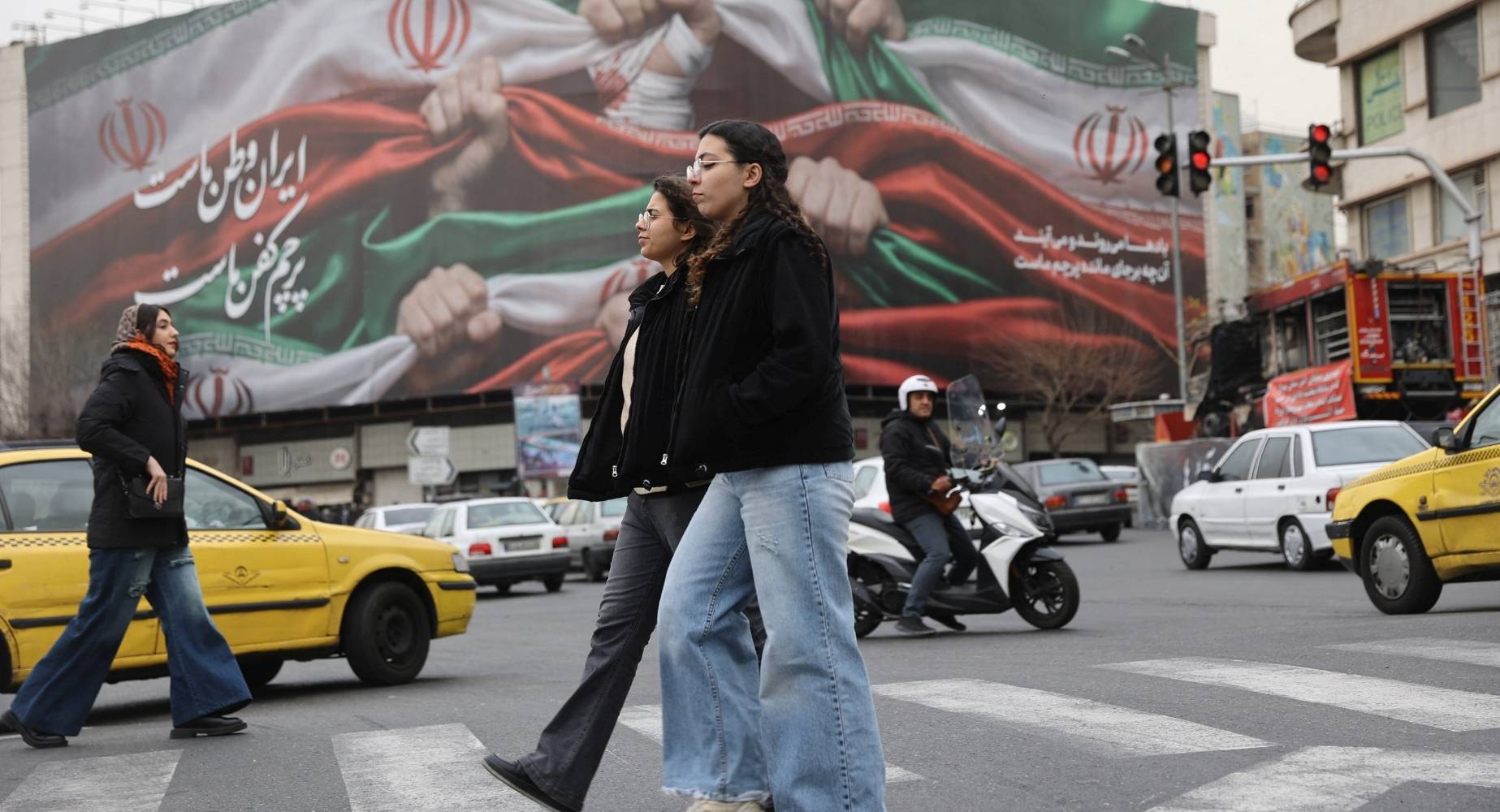
The collapse of a regime is mechanical; the birth of a nation is spiritual and intellectual.
The collapse of Iran’s Islamic Republic in early 2026 marks more than the fall of a regime. It represents the most consequential historical repudiation of political Islam as a governing system—and a strategic turning point for the Middle East. For forty-seven years, Iran stood as the most durable example of modern theocratic governance, combining clerical authority with bureaucratic continuity, coercive power, and regional reach. Its endurance sustained the argument that religious sovereignty could coexist with modern administration, economic management, and national development.
Unlike transient Islamist administrations or insurgent movements, Tehran demonstrated institutional longevity. This durability gave ideological oxygen to a wide spectrum of Islamist actors—from Shiite networks aligned with Tehran to Sunni movements that opposed Iran doctrinally yet benefited from its survival as evidence that religious governance could endure. When the population that lived longest under an Islamic state dismantles it through sustained civil resistance and political reorientation, the ideological consequences extend far beyond Iran itself.
Analysts at the Carnegie Middle East Center and the International Crisis Group have long observed that Iran’s existence reinforced the belief that secular governance in the Muslim world was neither necessary nor inevitable. When the society that lived under such a system for decades rejects it through experience rather than external pressure, that belief begins to collapse. Political Islam will not disappear overnight. Militant organizations will persist, particularly in fragile environments monitored by the United Nations Security Council and tracked by the Council on Foreign Relations Global Conflict Tracker.
But something essential has changed. The ideology has lost its most important demonstration that it could govern a modern state. Extremist movements may continue to mobilize grievances, yet increasingly they will function as protest forces rather than credible governing alternatives.
At the core of Iran’s theocratic failure lies political economy as much as theology. The Islamic Republic fused clerical authority with vast economic structures, embedding religious institutions within state monopolies while shielding them from transparency, competition, and taxation. Foundations and affiliated conglomerates controlled large sectors of the national economy while remaining largely unaccountable to public oversight.
This system created a parallel economic order. Religious authority became intertwined with concentrated capital, transforming the state into a hybrid structure in which ideology justified economic privilege. Over time the consequences became unavoidable. Economic stagnation, inequality, and systemic corruption undermined the regime’s moral claims. What had been presented as a system of religious justice increasingly appeared as a mechanism of monopolized wealth and institutional opacity. The Iranian experience demonstrates a broader structural truth: political Islam fails not only on human rights grounds but also on economic performance, institutional transparency, and distributive justice.
The most decisive rupture occurs in the legal domain. Political Islam relies on the fusion of religious doctrine with state authority, particularly in the private spheres of family law, inheritance, and moral conduct. Through these mechanisms ideology reproduces itself across generations. A secular transition dismantles this architecture. Civil law grounded in citizenship rather than creed establishes equal legal status regardless of religious belief. Equal rights for women, standardized inheritance rules, uniform age-of-consent laws, and judicial systems independent from clerical authority fundamentally transform the social contract.
Comparative legal studies referenced by the European Council on Foreign Relations indicate that ideological radicalization often survives not primarily through public rhetoric but through private legal structures governing daily life. When those structures are secularized, the transmission of ideological authority weakens over time. Legal reform therefore becomes more than administrative change. It alters the moral grammar of the state and cittizens replace believers as the basic unit of political legitimacy.
The collapse of a regime is mechanical; the birth of a nation is spiritual and intellectual. Political transitions alone cannot sustain a new order. Institutions require ethical foundations capable of generating legitimacy beyond coercion or ideology. For Iran, this foundation lies partly in its own civilizational heritage. The ancient Iranian ethical triad—Good Thoughts, Good Words, Good Deeds—offers a moral language that predates modern ideological divisions. Rather than framing the future as a struggle between religion and secularism, this principle emphasizes ethical conduct as the foundation of civic life.
The intellectual framework outlined in Iran’s Ethical Renaissance argues that the upheaval of 1979 represented not only a political rupture but also a moral displacement. A post-theocratic Iran must therefore recover ethical traditions rooted in its own history while adapting them to modern constitutional governance. Economic restructuring becomes part of this ethical project. Initiatives associated with opposition policy platforms such as the Iran Prosperity Project and reform proposals from the National Union for Democracy in Iran emphasize that dismantling monopolistic religious conglomerates is essential for restoring public trust.
Iran is not merely a nation-state; it is a civilizational society composed of diverse communities connected by a shared historical narrative. Persians, Azeris, Kurds, Baluchs, and other groups inhabit different cultural spaces yet participate in a common civilizational memory. Attempts to impose ideological uniformity have repeatedly destabilized this plural landscape. A sustainable political framework must therefore embrace diversity while preserving continuity.
In this context, a parliamentary monarchy offers one possible institutional anchor. Constitutional monarchies often provide symbolic continuity during periods of transformation while allowing democratic institutions to evolve gradually. Rather than concentrating authority, the monarchy functions as a stabilizing symbol above partisan conflict. Within this framework three symbolic pillars emerge: the Shah, representing historical continuity; the Homeland, embodying civilizational identity; and Freedom, anchoring the modern culture of human rights.
Such a structure connects past and future. Revolutions that attempt to erase history often descend into cycles of instability. Systems that integrate historical continuity with democratic evolution tend to achieve greater durability. Political transformation also requires practical institutional changes. One seemingly technical reform concerns the organization of time itself.
Under the Islamic Republic, Iran’s Friday-centered weekend aligned national economic rhythms primarily with religious observance rather than global markets. Comparative economic studies by the World Bank and financial synchronization analyses from the International Monetary Fund demonstrate that mismatched workweeks create measurable inefficiencies in trade, financial settlements, and cross-border investment. Transitioning to a Saturday–Sunday weekend would synchronize Iran’s economy with the global financial system. It would also symbolically decouple state administration from clerical ritual. Such reforms illustrate how secular governance gradually reshapes everyday structures of society—from legal systems and economic policy to the organization of time itself.
Iran’s transition therefore represents more than a domestic political shift. It marks the exhaustion of an ideological experiment that shaped the Middle East for nearly half a century. For decades, the Islamic Republic functioned as the central model demonstrating that political Islam could govern a modern state. Its collapse removes that example from the geopolitical landscape.
The implications extend far beyond Iran. Islamist movements may continue to exist, but their claim to provide a viable system of governance has been fundamentally weakened. The regional ideological balance begins to change. If Iran succeeds in building a secular political order rooted in ethical legitimacy rather than doctrinal authority, it will redefine the political horizon of the region. Political Islam would no longer stand as the dominant alternative to secular governance. In its place emerges something older—and perhaps more durable: a civilization rediscovering the ethical foundations of its own freedom.
