How the separation of religion and state could reshape citizenship, governance, and national life in a democratic Iran
For more than four decades, Iran has lived under a political system in which religion and state power have been deeply intertwined. The Islamic Republic did not merely draw inspiration from religion; it transformed religious authority into the primary source of political legitimacy, legislation, and governance. The result has been a system in which citizenship, law, personal freedoms, and even national identity have been filtered through an ideological and religious framework.
As discussions about Iran’s future continue to grow, one question repeatedly emerges: what would secularism actually look like in a democratic post-Islamic Iran?
For many Iranians, secularism does not mean hostility toward religion. Nor does it imply the removal of faith from society. Iran is home to a rich religious and cultural heritage that stretches across millennia. The purpose of secularism is not to weaken religion but to prevent the state from controlling religion and religion from controlling the state.
Contrary to what some assume, secularism is not entirely foreign to Iranian political thought. The roots of religious pluralism and political tolerance can be found deep within Iranian history. Long before secularism emerged as a modern constitutional doctrine, Cyrus the Great established a model of governance based on respect for diverse beliefs, cultures, and traditions. His legitimacy did not depend on imposing a single religious identity across his empire but on maintaining justice, stability, and coexistence among different peoples.
This does not mean that ancient Persia was secular in the modern sense. It was not. Yet the historical experience of the Achaemenid Empire demonstrates that Iranian statecraft possessed a tradition of governing diversity without religious coercion. In that sense, the principles of pluralism, tolerance, and coexistence have indigenous roots within Iranian civilization. A democratic secular Iran would therefore represent not a break with Iranian history but a return to one of its deepest political traditions.
The first and most fundamental principle of a secular democratic Iran would be the complete separation of religion from state institutions, politics, and law. Religious authorities would no longer possess constitutional privileges or political power. Legislation would be based on democratic procedures, constitutional principles, and equal civil rights rather than religious interpretation. Courts would apply the same laws to all citizens regardless of their faith or lack of faith.
At the same time, the state would withdraw from religious affairs. Governments should not appoint clerics, supervise religious doctrine, or determine theological legitimacy. Mosques, churches, synagogues, Zoroastrian temples, and other places of worship would operate independently within the framework of national law. Religious communities would enjoy freedom of organization and worship, while remaining separate from the machinery of government.
Freedom of belief would become a fundamental constitutional right. Every individual would be free to practice a religion, change religion, adopt no religion, or define their spiritual life according to personal conscience. No citizen should face legal discrimination, social penalties, or state persecution because of religious belief or non-belief. The right to believe and the right not to believe must enjoy equal protection.
Such a transformation would require a redefinition of citizenship itself. In a secular democratic Iran, citizenship would no longer be linked to religious identity. The state would recognize only citizens, not categories of citizens based on faith. Rights and responsibilities would derive from citizenship alone.
This principle would naturally extend to gender equality. Men and women would enjoy equal rights under the law in all areas of public and private life, including employment, inheritance, marriage, divorce, education, and political participation. Equality before the law would become an unconditional constitutional principle.
Marriage would also be redefined as a civil institution. Rather than being primarily a religious contract, marriage would be recognized as a social and legal agreement between consenting adults registered through municipal authorities. Citizens would remain entirely free to hold religious ceremonies according to their traditions and beliefs, but legal recognition would derive from civil registration rather than religious approval. This approach would guarantee equal treatment for all citizens regardless of faith.
Administrative reforms would further reinforce the principle of equal citizenship. Religion would no longer appear on national identification documents. A citizen’s relationship with faith is a private matter and should not be recorded by the state. Removing religious classifications from official documents would help eliminate institutional discrimination and strengthen civic equality.
Likewise, changing a personal name associated with a particular religious identity should become a simple administrative procedure. Citizens should be free to choose names that reflect their personal identity, family heritage, or cultural preferences without bureaucratic obstacles. The state should not function as the guardian of religious identity.
A secular republic or kingdom would also encourage a broader rebalancing of national identity. For decades, the official narrative of the Islamic Republic has largely defined Iranian identity through a religious lens. Yet Iran’s civilization extends far beyond any single religious period. Its history encompasses ancient Persia, the Islamic era, and the modern nation-state. A democratic Iran would recognize and celebrate this entire historical continuum.
One symbolic reform could be the restoration of the 2,500-year imperial calendar as the country’s official chronology. Supporters of this proposal argue that national chronology should reflect the continuity of Iranian civilization rather than derive exclusively from religious references. Such a reform would not erase religion from society; rather, it would reaffirm the broader historical identity of the nation.
The organization of the national workweek could also be reconsidered. Shifting the weekly holiday from Friday to Sunday would align Iran more closely with international economic systems and global markets. Friday would remain available for religious observance but would no longer function as the state’s official weekly holiday. Such a change would separate public administration from religious practice while strengthening economic integration with the wider world.
Public holidays would undergo similar reform. In a secular state, official holidays would primarily commemorate national history, culture, and civic identity rather than religious observances. Nowruz, Sizdah-bedar, and other historic Iranian festivals would remain central components of the national calendar. These celebrations belong to all Iranians regardless of religious affiliation and serve as powerful symbols of national continuity.
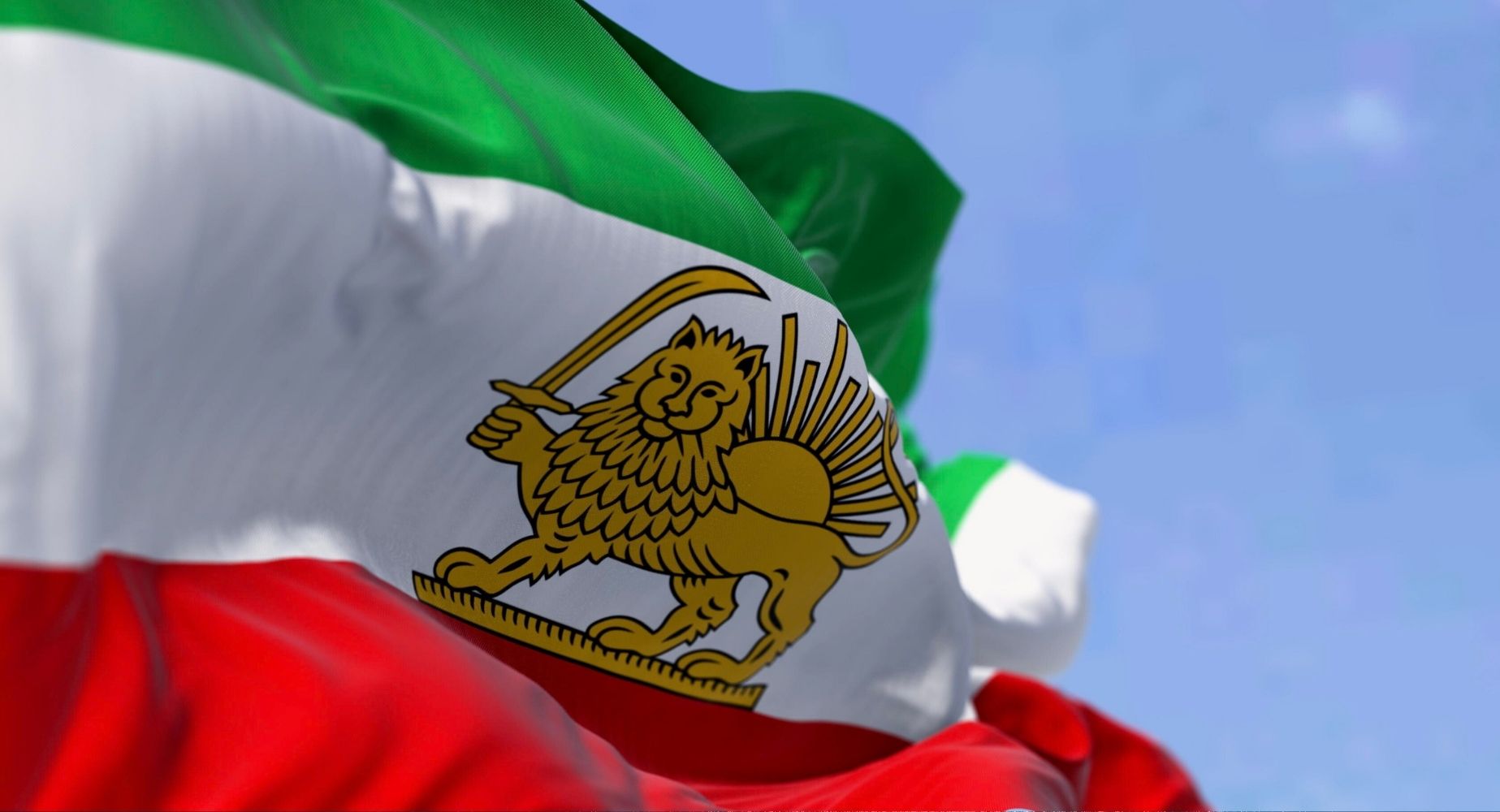
National symbols would also play an important role in rebuilding a shared civic identity. The Lion and Sun, one of Iran’s oldest historical emblems, could once again serve as a symbol of cultural continuity, historical memory, and national unity beyond ideological divisions. A national day dedicated to this symbol could celebrate the resilience and continuity of Iranian civilization.
Critics sometimes portray secularism as an effort to remove religion from public life. In reality, secularism seeks precisely the opposite of coercion. Under a secular system, the state loses the power to impose religion, while citizens gain the freedom to practice religion according to conscience. Faith becomes stronger when it is chosen freely rather than enforced politically.
The central question facing Iran is therefore not whether religion should continue to exist within society. Religion will remain an important part of the lives of millions of Iranians. The real question is whether political power should be tied to religious authority.
The experience of the past four decades suggests that the fusion of religion and state has damaged both governance and religion itself. It has weakened public trust, narrowed political participation, and transformed spiritual belief into an instrument of political control.
A democratic post-Islamic Iran would offer a different path: a state that belongs equally to believers and nonbelievers, to men and women, to every ethnic, linguistic, and religious community, and to every citizen regardless of personal conviction. Such a republic would not define itself through theology but through citizenship, constitutionalism, individual liberty, and equal rights.
In that sense, secularism is not merely a constitutional arrangement. It is the foundation of a modern civic nation in which government governs, religion inspires, and citizens remain free.
