2026 marks five years of Russian aggression against Ukraine, Ukrainian resistance, and conversations about recovery.
Much of the domestic and international focus on rebuilding Ukraine comes down to restoration and urban planning discussions: How many square meters of housing are needed? How many kilometers of roads? How can we return to what existed before the war? But by putting buildings at the center of the effort, we lose sight of the people who will breathe life into them.
For many Ukrainians, returning to a “before the war” state is simply out of reach. Some have lost their home and have to start their life from scratch, in a different place, in a different context. Some are waiting for a husband to come home from the front and have had to take over the family business. Another has lost their health defending the country.
These challenges demand a human-centered approach to rebuilding — not a return to before, but the creation of opportunities now.
The moment we put people at the center of the recovery process, we see more clearly the challenges Ukraine is grappling with today: security, instability, the breakdown of former social ties, and a shortage of workers. It immediately becomes clear that we need to think not only about infrastructure, but about how to build catalysts for local socioeconomic growth and cohesion in Ukrainian communities.
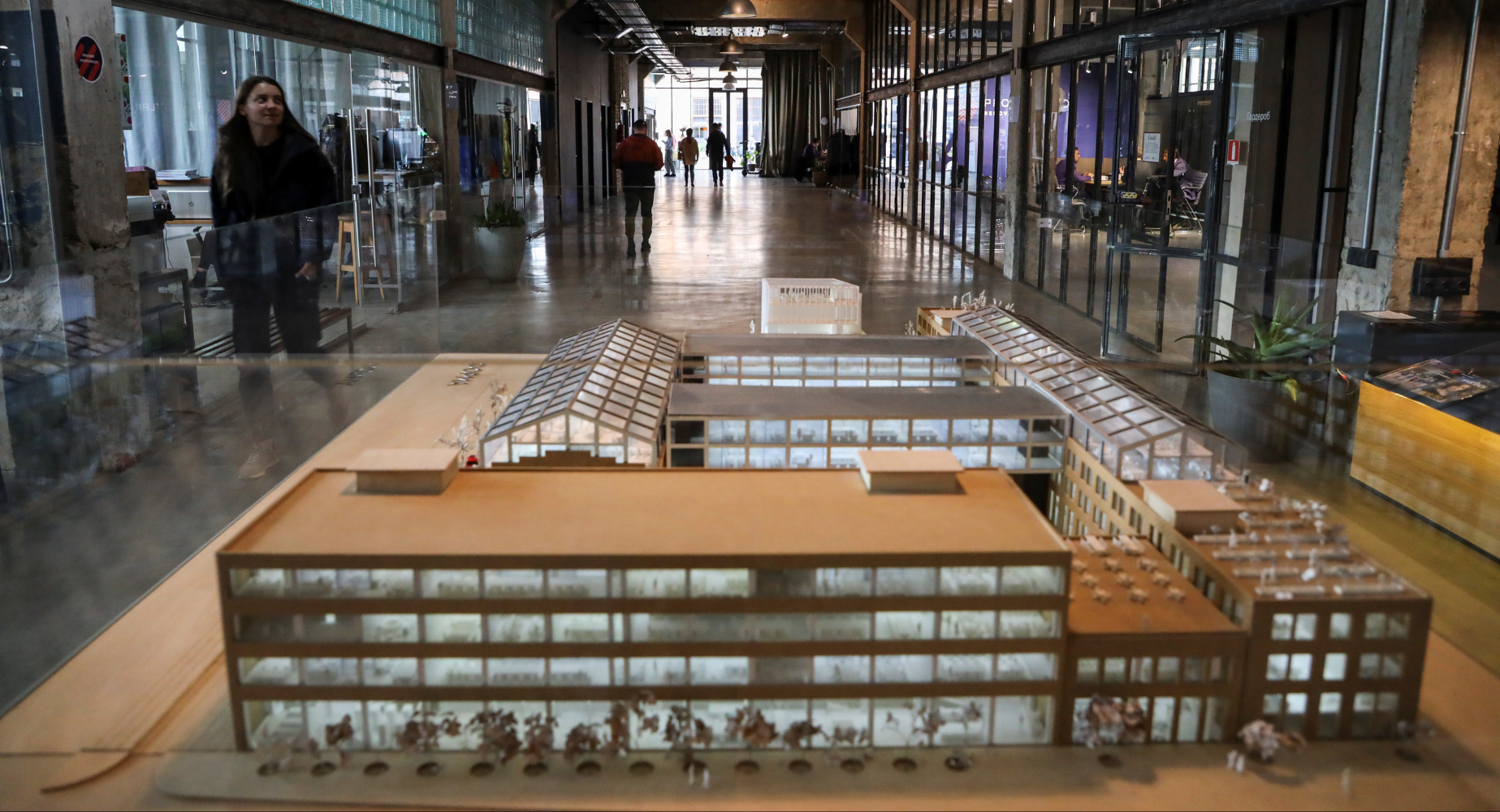
This isn’t a theoretical conversation. In Ivano-Frankivsk – a city of 220,000 in central Ukraine – we’ve been building a living model of recovery and innovation, integrated into the community and centered on people. The project began long before the full-scale invasion, as the renovation of a former Soviet-era factory into a living ecosystem of entrepreneurship, education, and manufacturing. The war has adjusted its focus to meeting real-time needs.
Disruptions to daily life from the full-scale war are only some of the internal problems that confront Ukraine. Massive labor shortages, thousands of Ukrainian veterans who have lost limbs and require prosthetics and reskilling, and access to capital and job training are all high priorities that need to be addressed.
Promprylad Renovation enables Ukrainians to stay in Ukraine by retraining veterans, supporting women entrepreneurs, and giving hope to thousands of people. Spanning two city blocks, the old Soviet gas factory houses municipal offices, the public broadcaster, coworking spaces, nonprofits, artisan workshops, educational organizations, art studios and galleries, event spaces, a dance studio, and retail venues, including a food court with an R&D kitchen developing new Ukrainian, Middle Eastern, and French dishes.
We are building an ecosystem centered on people and giving them back the ability to realize their potential in their own country. Nothing could be more exciting – or important.
Alla, who completed a retraining program at Promprylad, now works at a manufacturing company in western Ukraine. Her home in Berdiansk was destroyed, her city is occupied, so she can’t go back but she wants to stay in Ukraine and keep making a difference. Alla can’t get her old life back, but she can reinvent it somewhere new. It’s our job to help her do that.
Artem lost both legs defending his hometown. What followed was a long rehabilitation, attempts at prosthetics, a complete transformation of his family relationships, and the struggle to accept a new version of himself, with new limitations.
Finally, after months in the hospital, Artem came back to life: he took up adaptive sports, brought home medals from competitions at Marine Corps Base Camp Pendleton, and is now learning to run his own business. Artem is brewing the best coffee in town, which is no easy feat in a city full of ambitious baristas.
Maria is raising two daughters on her own while her husband defends the country. After the full-scale invasion began, she was forced to run the family business by herself.Just when she wanted to give up and everything felt like it was falling apart, she enrolled in Promprylad’s mentorship program. Maria’s mentor, a Ukrainian entrepreneur, helped her believe in herself again, and became her anchor on the path to bringing her business to new cities across Ukraine.
Every year, Promprylad supports tens of thousands of Ukrainians who choose to stay and build — and defend — their country. And of course, restoring buildings and infrastructure matters. But it only means something as a backdrop — so that Alla, Artem, and Maria, and millions like them, can rebuild not just a roof over their heads, but themselves, and eventually their country.
