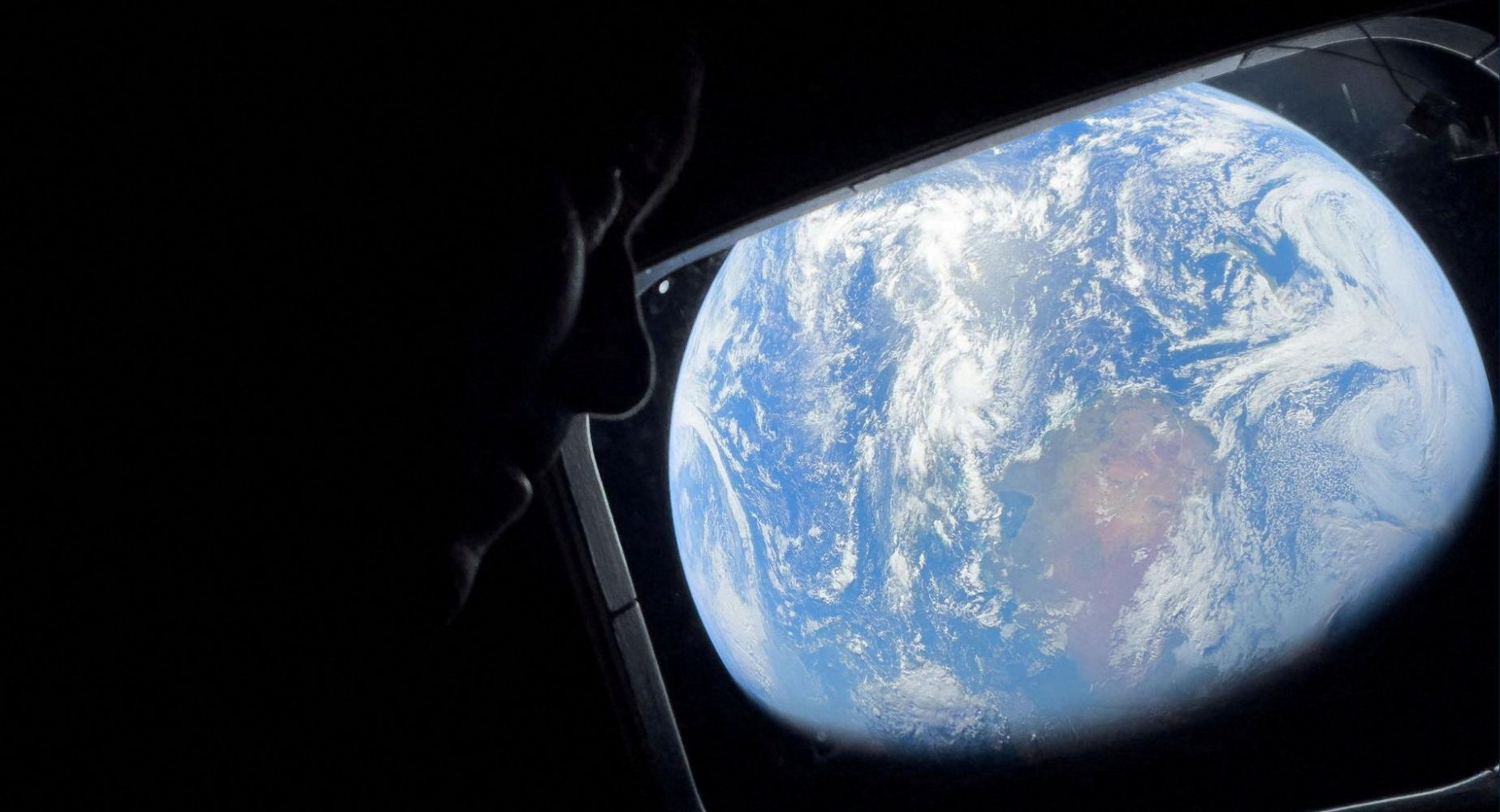
“We have discovered that there is a Whole, of which we are the elements. We have found the world in our own souls.”
Pierre Teilhard de Chardin, The Future of Man (1959)
Though unscientific, French philosopher Teilhard’s reference to “souls” is the logical starting point for human survival. To clarify, only a planetary civilization could rescue our imperiled species from expanding chaos and catastrophic war. And only a creative vision of planetary “wholeness” (macrocosm) could meaningfully reflect “the world in our souls” (microcosm).
The reasoning is straightforward. Before we could suitably transform critical global institutions, humanity will need to be transformed “inwardly.” As a clarifying point, Sigmund Freud would have identified this primary transformation as a “spontaneous sympathy of souls.” While this requirement hardly seems realistic, it is more realistic than staying with a time-dishonored system of belligerent nationalism.
There are supportive arguments. In matters that concern “being human,” we are all basically the same. Moreover, this “sameness” is not narrowly or exclusively biological. Rather, it carries over to humankind’s multiple and intersecting needs as community, nation and planet.
Where do we stand today on issues of organic planetary “wholeness” and related global transformations? Merely identifying this stance should not be an intellectual challenge. Virtually all nation-states, including major world powers, remain oriented toward the diametric opposite of planet-wide solidarity. To wit, the daily news is not never about civilization and survival, but about delusional “victory” in a world of interminable conflict. Significantly, this inherently ill-fated orientation has no discoverable basis in codified or customary international law.
These are not just issues of “common sense.” In The Law of Nations (1758), Swiss philosopher and legal scholar Emmerich de Vattel affirms the timeless primacy of human community and interdependence: “Nations,” reminds Vattel, “are bound mutually to advance human society…The first general law …is that each nation should contribute as far as it can to the happiness and advancement of other Nations.”
There is more. Vattel’s visionary ideals have never held any tangible sway in global politics. Unsurprisingly, these ideals have always been regarded as fanciful or utopian. Today, tangled in the falsely-constructed ethos of “America First,” these ideals have been pushed aside altogether.
Humankind is in the midst of a self-defiling civilizational moment. Still, utterly core questions are not even asked. The most worrisome effect of this ironic indifference will be steadily-accelerating global tribalism.
To the extent that the effects of such indifference could ignite a nuclear conflict, they could propel our imperiled planet toward sudden or rapid disintegration. Prima facie, the plausible risks of AI-assisted hacks and autonomous superintelligence will heighten already-growing risks of nuclear terrorism and nuclear war.
Ultimately, if humankind is going to survive as a planetary “whole,” science-based truth will need to prevail over politics-based wizardry. Going forward, any reasonable assurances of national security will need to be linked with struggles against fragmentation. Cumulatively, it is foolish to suppose that any nation could acquire net benefits on account of reciprocal costs to other nations.
The “bottom line” of global civilization is clear. We (individuals and nations) are “all in the soup together.” The Covid pandemic was universal. So too are still-rampant pathologies in the world body politic. The basic idea underlying human “wholeness” is discoverable in the words of Pierre Teilhard De Chardin: “The egocentric ideal of a future reserved for those who have managed to attain egoistically the extremity of everyone for himself,” summarizes the French Jesuit scientist and philosopher, “is false and against nature. No element can move and grow except with and by all the others with itself.”
For our dissembling world, chaos and anarchy are not the true “disease.” That more determinative pathology remains rooted in certain “great and powerful” states that continuously fail to acknowledge human interrelatedness. By now, this incapacity to acknowledge species “wholeness” has become a genuinely existential problem.
What should we expect concerning cooperative world community and planetary civilization? Left fractured and unimproved, world politics will only encourage a consistently lethal human deficit. This murderous deficit is the incapacity of individual citizens and their respective states to discover the world “in our own souls.”
Philosophy can have historical resonance, even in the “pragmatic” United States. The current problem was foreseen in the eighteenth century by America’s then-leading person of letters, Ralph Waldo Emerson. Today, however, almost no one reads serious books of science, literature or philosophy.
To explain further, history deserves some evident pride of place. From the 1648 Peace of Westphalia, a treaty which ended the last of the religious wars sparked by the Reformation, international relations and international law have been shaped by an ever-changing but perpetually unstable “balance of power.” Hope still exists, of course, but today it must sing softly, in an embarrassed undertone, furtively, sotto voce. Though counter-intuitive, the time to end visceral celebrations of militant nationalism is long overdue.
Macrocosm follows microcosm. In order to survive on a disordered planet, all of us, together, must seek to rediscover a consciously individual life, one that is wittingly detached from pre-patterned templates of nationalistic conformance. Inter alia, there should be no further tolerance of some foolishly imagined tribal happiness.
The most suffocating insecurities of life on earth can never be undone by militarizing global economics, building larger missiles or standing stubbornly for “realistic” definitions of national security. At the same time, the blatant perils of “Westphalian” international relations need not necessarily call for world government.
In the end, whatever happens in our crumbling world order, truth will remain exculpatory. “Civilization,” offers Lewis Mumford in the Name of Sanity (1954), “is the never-ending process of creating one world and one humanity.” Visionary prophets of world integration and human “wholeness” ought no longer be dismissed out of hand as “utopian.” Now, more than ever, these original thinkers define invariant wellsprings of human survival.
There is more. What must ultimately be accomplished is not “only” the survival of Homo sapiens as a species, but also the growth of humanitas, each person’s dignity as an individual. Reciprocally, the current world system’s continuing reliance on belligerent nationalism strongly suggests the prospect of coinciding and force-multiplying extinctions.
Macrocosm follows microcosm. Recalling philosophers Teilhard de Chardin and Mumford (above), all things human should be seen as totality. Until today, that opportunity was overlooked and ignored. In the end,” Goethe reminds us, “we are creatures of our own making.” Every national society, including especially the misdirected United States, will need to embrace leaders who can understand steeply complex meanings of human “wholeness.”
The prescribed task is daunting, many-sided and bewildering; still, there are no sane and defensible excuses for task-avoidance. Whatever policy particulars might ultimately be adopted by the United States, America’s focus should remain steadfast on considerations of interrelatedness and “mind.” Unambiguously, the seat-of-the-pants Trump paradigm of bitter rancor and endless conflict has driven us ever further from national survival, species survival and law-based human obligation.
In the best of all possible worlds, thoughtful acknowledgments of “wholeness” would be followed by correlative legal and structural transformations. For the moment, however, efforts at “planetization” will need to be limited to informed transformations of human consciousness. Though such transformations might first seem of little or no practical benefit, they could eventually become the starting point for melding science and soul.
