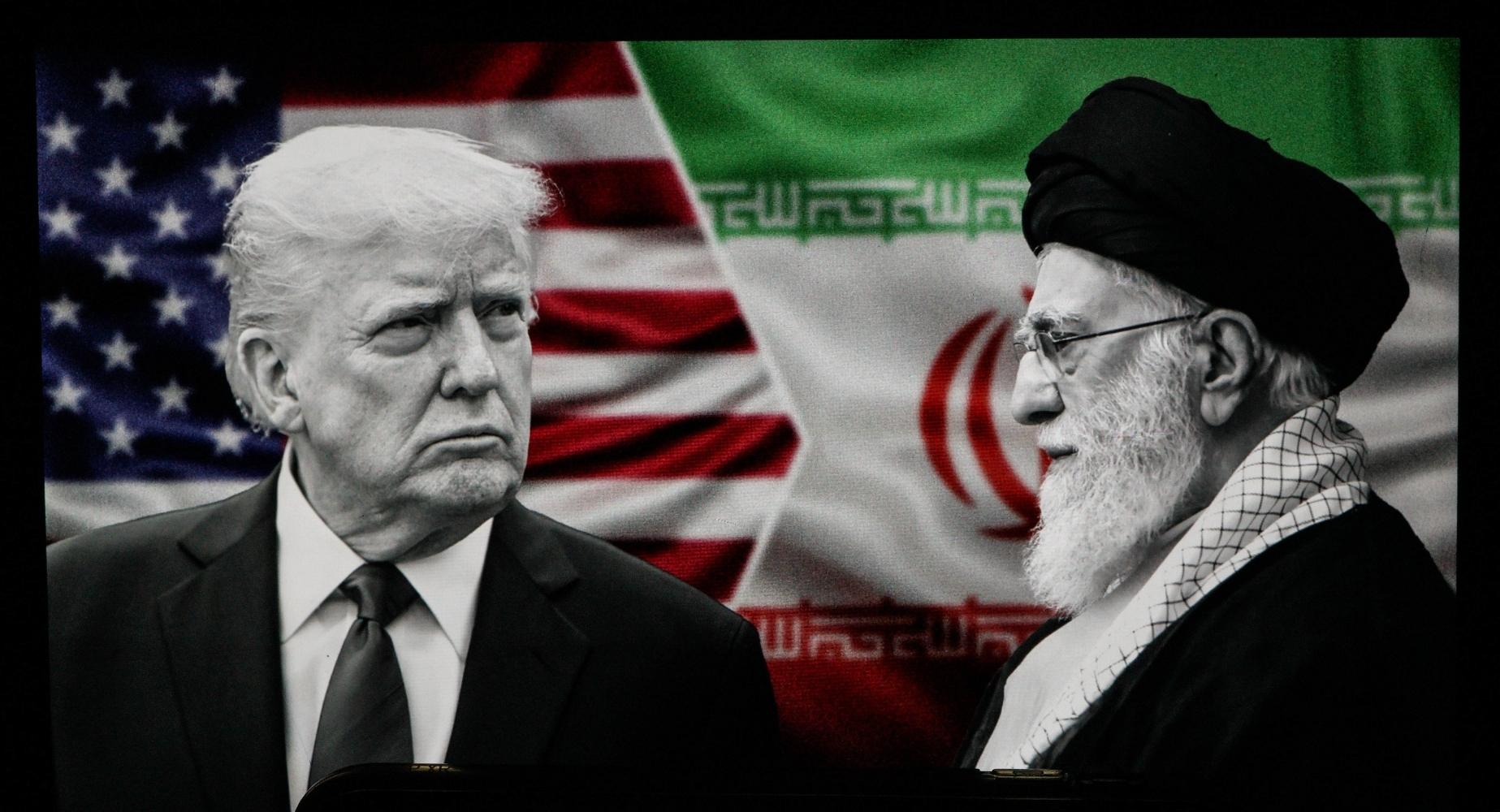
The greatest danger of the emerging deal is that it may throw the regime a political and economic lifeline at the very moment when it is most vulnerable
The justification for the 40-days of war with Iran, in a large part, turns on the question of whether or not it will achieve a better result than the 2015 Iran deal, known as the JCPOA. If it does, Trump will have vindicated his decade-long position that he could make a better deal. If it doesn’t, he will have proven that Obama’s cautious and accommodating diplomacy was ultimately wiser and more realistic.
Many of the key details remain unclear but the answer to this question can be assessed by comparing the two situations as they currently stand.
The first critical question is what will become of Iran’s enriched uranium. The JCPOA saw Iran relinquish almost its entire stockpile of enriched uranium, essentially resetting the clock. This was the primary achievement of the 2015 deal. In the current deal, Trump is still insisting that Iran relinquish its entire stockpile of what is assessed to be the 440 kg of 60% enriched material. But what of the other 9 tons of 20% and 5% enriched uranium? This remains unclear.
One of the major flaws of the JCPOA was that it allowed Iran’s hitherto illicit industrial scale enrichment infrastructure to remain largely intact, while the limitations placed on its use were to expire within a decade, opening the way for Iran to return to its pursuit of a bomb. Today, this infrastructure has been rendered unusable by Israel and America’s strikes. To make a deal better than the JCPOA, Trump would have to include a mechanism to prevent Iran from rebuilding these capabilities. It would have to include not only an Iranian commitment but also an enforcement mechanism to ensure “zero enrichment” indefinitely.
Then there are the issues that the JCPOA largely ignored altogether: missiles, drones, and regional aggression through proxies. So far, there are no indications that missile and drone limitations are central to the current discussions. Nor is there clarity regarding Hezbollah or Iran’s wider proxy network. To the contrary, there is talk of linking a deal to a ceasefire in Lebanon which would constrain Israel’s freedom of action against Hezbollah. These questions are not peripheral. For Israel and increasingly for the Gulf states, they are no less central than the nuclear issue.
The sanctions issue may prove even more consequential. One of the defining failures of the JCPOA was that sanctions relief provided Tehran with enormous financial breathing room that ultimately helped fund its regional proxies and military expansion. The same danger exists today. Everything depends on the scope and timing of sanctions relief. Does Washington release frozen Iranian funds? Does it ease oil sanctions? Does Tehran regain access to international financial systems while offering only promises of future compliance?
And here lies the biggest difference between now and 2015. Back then, the Iranian regime entered negotiations from a position of relative strength and regional expansion. Today it faces profound internal weakness. A majority of the population no longer supports the regime and it is under unprecedented economic pressure. The greatest danger of the emerging deal is therefore not merely that it fails to permanently dismantle Iran’s nuclear ambitions, or even that it grants it a free hand in its non-nuclear threats, but that it throws the regime a political and economic life jacket at the very moment when it is most vulnerable. And as long as the regime survives in its current form, the fundamental threat to Israel and the Gulf remains intact.
The emerging memorandum reportedly focuses first on reopening the strait and only afterward on broader negotiations over the nuclear issue. This sequencing is understandable given the disruption to global energy markets. But the question remains whether such a deal is even capable of restoring shipping to what it was in February 2026. It is highly unlikely that Iran will actually agree to restore genuine freedom of navigation. Rather it will likely assert that it maintains the authority to regulate or periodically disrupt one of the world’s most vital waterways. Gulf states and global shipping markets are unlikely to fully trust any arrangement that leaves Tehran with the demonstrated ability to close the strait at will.
We are approaching the critical decision and two scenarios emerge. In the first, a memorandum is signed that partially reopens the strait, Washington enters prolonged nuclear talks, and Iran remains fundamentally intransigent on the nuclear issue while benefiting from renewed exports and some sanctions relief. Tehran retains its ability to threaten Gulf shipping, Gulf Arab states drift toward accommodation with Iran out of economic necessity, and Israel finds itself constrained to an unsatisfactory status quo in Lebanon while Hezbollah recovers. Negotiations drag on through repeated extensions without resolution, as the cost of returning to military pressure steadily rises. The regime re consolidates control domestically, rebuilds missile production, and the perception of American weakness radiates outward — not only across the Middle East, but into East Asia as well.
The alternative is that the United States maintains or even intensifies pressure on the regime, concludes that durable freedom of navigation in Hormuz cannot coexist with Tehran’s current capabilities, and ultimately determines that force is the least bad option available. Such a strategy would not merely reopen the strait; it could fundamentally alter the balance of power in the Middle East by accelerating the collapse or transformation of the Iranian regime itself.
Under such conditions, Israel could resume decisive operations against Hezbollah, potentially reshaping the strategic reality in Lebanon as well. More broadly, a successful dismantling of the Iranian threat would dramatically strengthen American deterrence globally and cement Donald Trump’s legacy as the president who ended the Islamic Republic’s decades-long campaign of regional destabilization.
The coming weeks may determine whether the current crisis becomes the beginning of a genuine strategic transformation — or merely another pause that allows Iran to survive, recover, and threaten the region once again.
