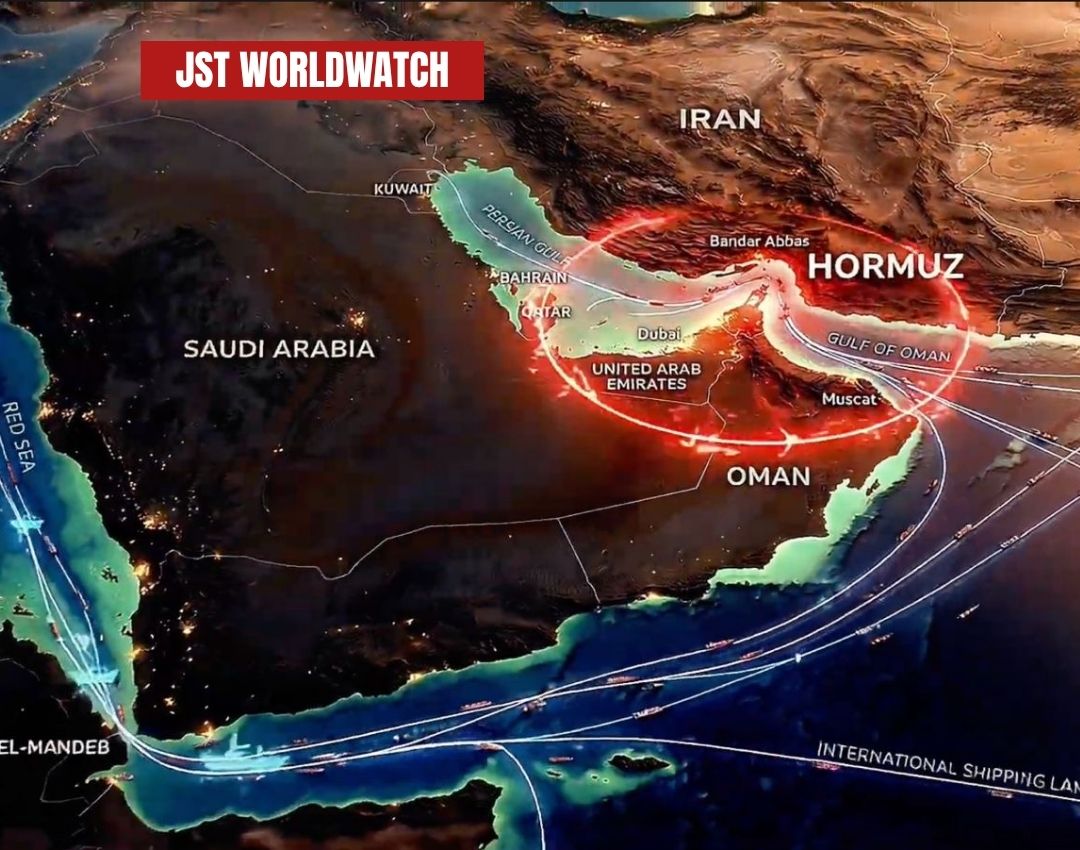
Matt Reisener, Senior National Security Advisor at the Center for Maritime Strategy and former Senior Program Manager for the Middle East and North Africa at the National Democratic Institute, offers a clear assessment in the Jerusalem Strategic Tribune of the possible consequences of the war with Iran.
He argues that if this regime succeeds in its gamble over the Strait of Hormuz, the balance of power in the Gulf will change.
The reason is clear: the Strait of Hormuz is not only a passage. It is a bargaining chip, a legal test, and a geopolitical fault line.
Can Iran Really Control the Strait of Hormuz?
by
May 2026
Recent Articles
Xi Returns to Cairo: Why Israel Should Pay Attention
A decade after his previous visit to Egypt, Chinese President Xi Jinping has returned to Cairo at a markedly different moment in both Egyptian-Chinese relations and Middle Eastern geopolitics. His visit, following the Shanghai Cooperation Organization summit in Bishkek and coinciding with the 70th anniversary of diplomatic relations between China and Egypt, is more than […]
Iraq After the Fall of Iran
The post-2003 order in Iraq has rested on a fragile and unstable balance of power. The political dominance of Shi’ite political parties and their militias has been underwritten by powerful Iranian support and influence, a semi-autonomous Kurdish north, and residual U.S. ties that coexisted uneasily with Tehran’s outsize role. The eventual collapse of the Islamic […]
Legitimacy Is a Front in the War – But the Present Israeli Government Effectively Abandoned It.
Upon the third anniversary of the Hamas attack, practically every Israeli thought back to October 7th and the days that followed. Our memories. How it felt. How that day found each of us and how it changed our lives forever. What fewer of us remembered – at this point in time – is how our […]
