Response to U.S. Central Command’s Request for Ideas on Punishing Iran
The unusual request by U.S. Central Command (CENTCOM) for new ideas on action against Iran offers a rare glimpse into the dead end into which the American campaign has drifted.
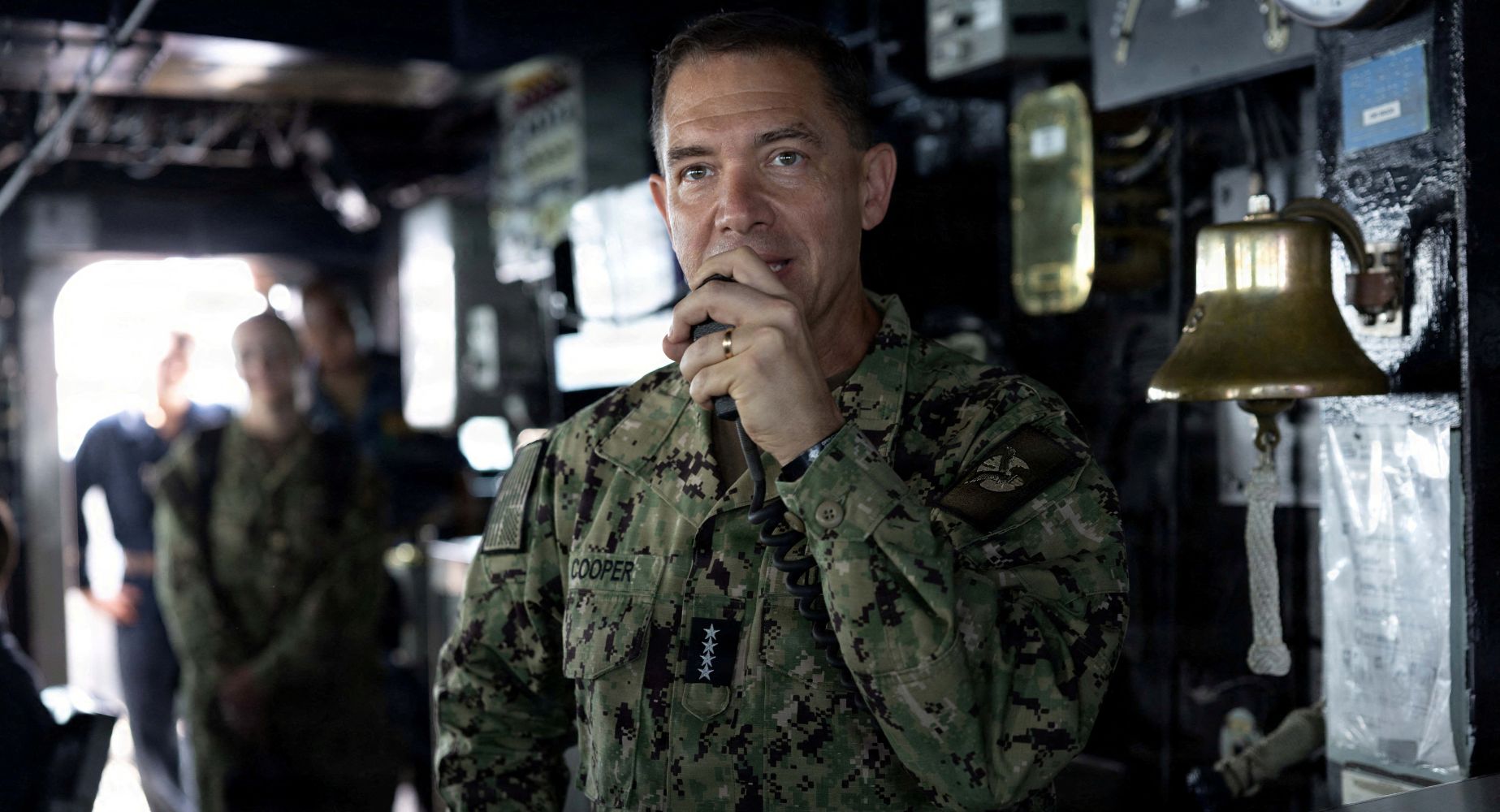
According to a CNN report, an officer in CENTCOM’s intelligence branch circulated a request to a wide group of military analysts asking for “creative and unconventional” ways to pressure and punish Iran. Military sources described the solicitation—akin to a form of professional crowdsourcing—as an unusual step. In its response, CENTCOM did not deny the report; instead, it explained that its commander, Admiral Brad Cooper, routinely turns to members of his staff regardless of rank in order to improve operational performance.
Broad consultation is, of course, a worthy practice. Yet it is difficult to ignore the timing and the wording of the request. The appeal was sent after weeks of strikes that failed to alter Iran’s negotiating position, and at a moment when the U.S. administration is weighing how to continue the war. At the same time, the Chairman of the Joint Chiefs of Staff, General Dan Caine, acknowledged that “air power has its limits.”
The request supplies four important pieces of evidence about the war the United States is waging against Iran.
First Evidence: This Is a War of Attrition
The use of the words “pressure” and “punishment” is not accidental. It reveals the American concept of the war: to inflict on Iran a sequence of heavy blows, gradually erode its capabilities, and persuade its leadership that the price has become too high to continue bearing. At that point Iran is expected to relent, come to the negotiating table, and accept terms it has so far rejected.
This is the practical definition of a war of attrition. The United States is not denying Iran the ability to continue fighting; it is trying gradually to influence Iran’s will to do so. It is not defeating the enemy in order to impose its own terms of surrender; it is punishing the enemy in the hope that it will agree to negotiate the terms of an ending.
Attrition is not necessarily a failure. It can serve as a temporary, deliberate phase within a broader decisive concept: controlled waiting until capabilities and political conditions ripen for a move that removes the threat. The failure lies not in the use of attrition itself, but in the absence of a plan for transitioning from it to decision.
In the war the United States is currently conducting against Iran, there is no sign of such a plan. Attrition is not a bridge to a decisive phase—it is the strategy. That is the difference between attrition as a means and attrition as a substitute for decision.
Second Evidence: The Punishment Is Not Achieving Its Purpose
Had the sequence of blows brought Iran to the negotiating table on American terms, CENTCOM would not have needed an extraordinary call for additional ideas on how to punish it.
This does not mean Iran is not being hurt. It is absorbing heavy damage. But inflicting pain on the enemy is not the same as achieving the war’s objective. If the blows do not change the adversary’s decisions, adding more targets and punishments may simply enlarge the stockpile of damage without bringing the war any closer to an end.
The United States can determine the intensity of every blow it delivers against Iran. It cannot determine how many blows will be required before the Iranian leadership decides to relent.
This is Iran’s great advantage in a war of attrition: the United States controls the intensity of the blows, but Iran controls the number of blows it is prepared to absorb—and thereby the duration of the war, the timing of its end, and indirectly the size of the U.S. military’s munitions inventory. If Washington’s patience runs out before Tehran’s capacity for endurance is broken, Iran can achieve its aim simply by surviving until the adversary tires.
The pressures exerted by regional states on Washington to avoid escalation reinforce this advantage. The longer the war continues, the more opportunities arise for political, coalition, and economic considerations to halt the next strike before its purpose has been achieved.
Third Evidence: The Denial Doctrine Is Being Tested
Conducting the war as an accumulation of erosions, blows, and punishments is consistent with the denial concept associated with Elbridge Colby and influential in U.S. defense policy: the application of limited, graduated force to deny the adversary gains, alter its calculations, and bring it to negotiation without being drawn into a war of decision.
Yet when gradual erosion becomes a substitute for decision, the war becomes uncontrollable. A great power retains control over the intensity of each action, but not over the number of actions that will be required until the enemy changes its will. Choosing a path supposedly designed to reduce risks transfers control of the war’s clock to the enemy.
CENTCOM’s request suggests that the United States is losing patience before Iran loses the will to continue. If that is the case, it constitutes an important Iranian achievement.
The alternative is not stronger punishment, but a different logic of war. A war of decision does not try to persuade the enemy to yield through the accumulation of pain; it denies the enemy the ability to continue fighting effectively, whatever its will may be.
It requires identifying the centers of gravity of the adversary’s war system, the assets essential to its functioning, and the vulnerabilities in their defense; concentrating effort against them; and neutralizing them in a way that triggers a cascade and dismantles the system. Once the enemy has been decided, one can dictate the terms for ending the war. There is no longer any need to wait until it agrees to come to the negotiating table.
Fourth Evidence: The Commander Has Disappeared from the War
The fact that the request originated in the intelligence branch and was directed at military analysts reveals a deeper failure.
Intelligence is essential for knowing the enemy, exposing its capabilities, identifying vulnerabilities, and locating targets. Fire-support elements are essential for destroying them. But they are not a substitute for generalship, whose role is to conceive the operational idea that will decide the enemy and, in its light, to extract the full potential of the army’s resources—even when most of them are standoff fires—so as to produce that decision.
The problem is not that CENTCOM is consulting. Every professional staff must gather information, examine alternatives, and conduct war games. The problem is the blurring of the boundary between the collection of raw material and the synthesizing work of generalship.
A systemic operational idea is not a pile of suggestions, nor a list of targets that can be crowdsourced. It is an intellectual creation of a commander, born of the linkage between the political purpose, an understanding of the enemy system, the principles of war and their reflection in historical precedents, available capabilities, and changing reality.
The precise war of attrition, managed as the destruction of targets by standoff fires, has created a tight, direct link between intelligence (which collects the targets) and the fire elements (which destroy them). The faster and more efficient this cycle becomes, the more the commander is pushed out of his unique role: to identify, in light of the war’s purpose, the system that must be collapsed and dismantled, to select the asset critical to its continued functioning, and to conceive a stratagem that will bring about its collapse.
Thus a self-reinforcing cycle is created. The attrition doctrine seemingly reduces the need for operational-command thinking; as that thinking diminishes it atrophies, and the military becomes still more dependent on erosion, punishment, and target destruction. Intelligence offers still more targets, fires destroy them—and the war continues.
This is not only an American problem. In the IDF as well, the tight link between intelligence and fires has pushed the commander aside and replaced systemic stratagem with target-production metrics. The technical success of the strike chain has obscured the fact that destroying many targets does not necessarily dismantle the enemy’s war system so as to decide and subdue it quickly on our terms.
The question CENTCOM should be asking is not “What else can we hit?” but “What holds the Iranian war system together as a system, and how can it be dismantled?”
Intelligence looks for targets. Generalship looks for systems and the most effective way to decide them.
A Possible Response to CENTCOM’s Request
It is neither wise nor responsible to offer CENTCOM additional targets for intensifying the punishment of Iran. It is far better to use the invitation to propose an American-Israeli commanders’ seminar to examine the principal reason the war is dragging on: the choice to wage it according to the attrition doctrine, without a plan for transitioning to decision.
Both armies have a distinguished history of successful wars of decision, and both share a need to strengthen once again the generalship that the attrition doctrine has atrophied.
In such a seminar one could briefly refresh the principles of a war of decision and analyze systems that were decided by brilliant operational stratagems: Washington’s stratagem at Trenton, Winfield Scott’s campaign that captured Mexico City, Patton’s rapid turnaround in the Battle of the Bulge, MacArthur’s landing at Inchon, and Schwarzkopf’s stratagem in the first Gulf War. The campaigns the IDF conducted in the previous century are likewise a rich source of stratagems and decisions, some of them brilliant.
Thereafter, if the Americans agree, commanders from both countries could jointly examine, on the basis of current intelligence, an operational idea for the rapid decision of the Iranian war system—using the means available to the United States and Israel, primarily standoff fires, and without departing from the war aims that have been set.
An emergency seminar held in the midst of a war cannot last more than a few hours. It may jump-start decisive thinking and produce a systemic idea, but it cannot close the gaps in knowledge and skill that have accumulated over more than two decades in which both armies drifted away from the doctrine of decision.
Such a seminar can therefore serve only as an immediate response, not as a fundamental remedy. A follow-on article will present a broader proposal for rebuilding the generalship that the attrition doctrine has eroded, drawing on the historical experience of the American and Israeli armies in restoring the professional competence of their commanders.
There is no need for yet another list of targets for stronger punishment of Iran. What is needed is a redefinition of the problem and commanders who know how to solve it.
CENTCOM asked for ideas to expand and deepen the punishment of Iran. Israel can place at its disposal a different proposal: not more targets, but a key— the transition from deterrent punishment, erosion, and attrition to rapid decision
