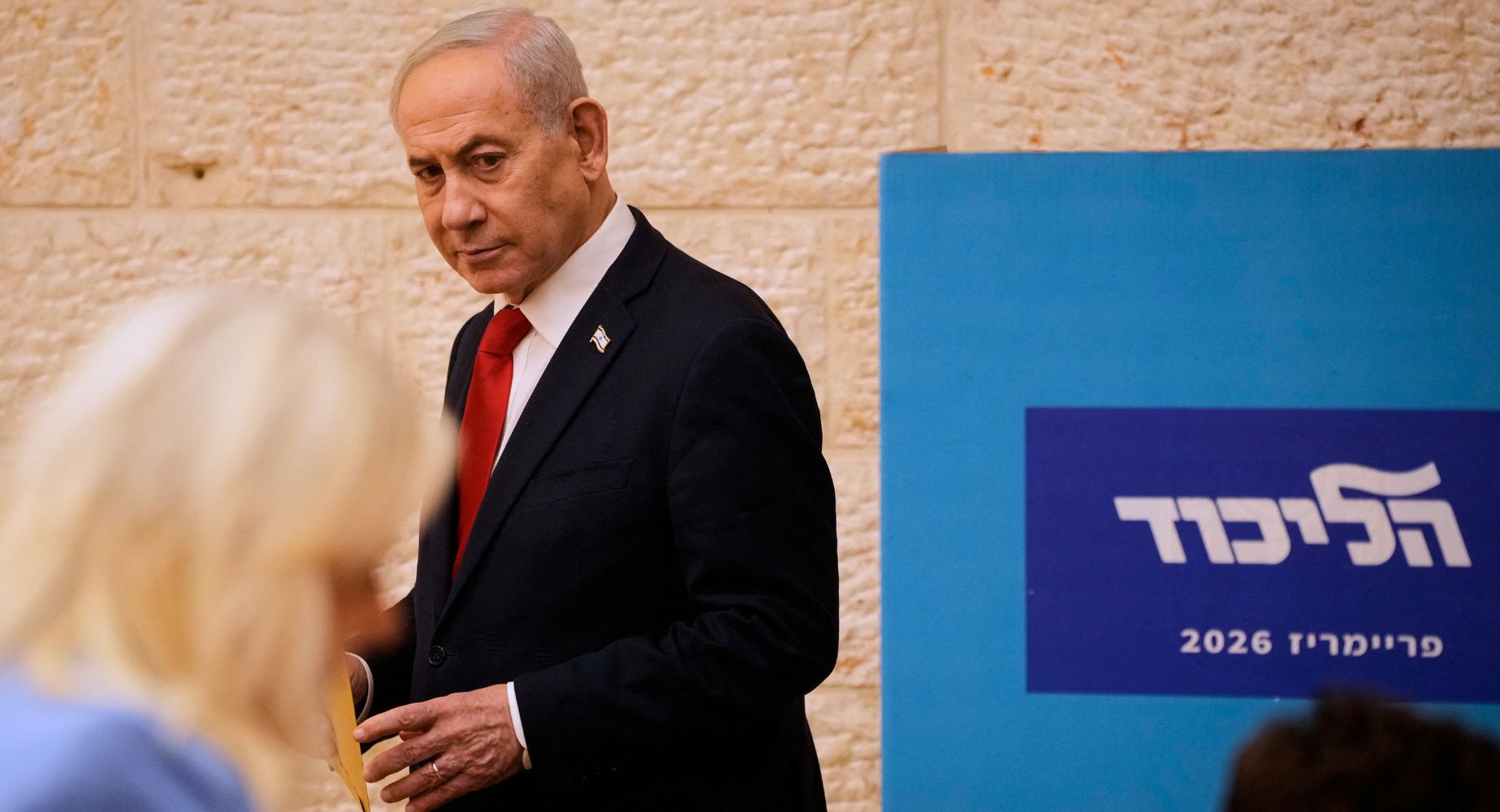
Israelis head to the polls next month for their first parliamentary election since 2022. Polling varies, but many conclude that Prime Minister Benjamin Netanyahu faces an uphill battle to stay in power.
Analysts doubt whether he can pull it off. “Their prime minister is in real political trouble,” writes Eurasia Group President Ian Bremmer of the Israelis. Haaretz, an Israeli paper that has long opposed the prime minister, claims that this may be “Netanyahu’s Last Stand.” The eagerness to pen his political obituary is apparent inside and outside the country.
Yet accounts such as these risk getting ahead of themselves. No one should write off Bibi. He’s been winning national elections for a long time and is the most dexterous politician in Israeli history. It’s too soon to trumpet this as his end.
Netanyahu has prevailed in trying political circumstances many times before. In 1996, a much-younger Bibi faced off against the Labor Party’s Shimon Peres on the prime ministerial ballot (the prime minister was then directly elected). A half-year prior, Prime Minister Yitzhak Rabin was assassinated by an extremist opposed to Oslo Accords. Israelis initially rallied around Peres, who succeeded the slain Rabin, and polls gave him a commanding lead over Netanyahu. It all came to naught. Netanyahu had much better political savvy than Peres, who was a fish out of water that election. Attacks on Peres’ alleged weakness on security connected with voters. Netanyahu won a narrow victory, but it was a victory nonetheless.
Kicked out of power three years later, Netanyahu returned from political purgatory and became prime minister once more in 2009. This time, he had to overcome the mathematics of coalition building. Tzipi Livni’s party, Kadima, one more Knesset seat (28) than Netanyahu’s Likud (27). Judged unlikely to be able to horse-trade effectively enough to form a government, Livni watched Netanyahu receive the mandate to do so. Forty-nine days after the election, the Netanyahu-led government was sworn in and boasted a healthy majority of Knesset members. This was a rude awakening for those who had previously written off Netanyahu.
He would need all the guile he showed in cobbling together the 2009 coalition over his next 12 years in power. Netanyahu silenced his critics in winning the elections in 2013 and 2015. The 2019 election looked to be a repeat, yet in-fighting on the Right derailed government formation, leading to a second election later that year. Another impasse ensued. A third election, this one in 2020, broke the stalemate. Netanyahu formed a unity government with Benny Gantz. Gantz, it must be said, was no match for Netanyahu in these machinations. The two concluded a deal whereby Netanyahu would first serve as prime minister for 18 months, after which time Gantz would take over. The result? Gantz never became prime minister because the unity government fell apart at the end of the year. This was an astonishing display of political prowess by Netanyahu. He stayed in the premiership for over a decade, consistently outfoxing those wishing to unseat him. Even his bitterest detractors had to credit him for such a feat.
Netanyahu was temporarily toppled in 2021, when rivals Naftali Bennett and Yair Lapid inked a rotation agreement of their one. Like Netanyahu and Gantz’s, theirs was short-lived and precipitated elections the following year. The movie followed a familiar script. Netanyahu cobbled together another coalition and returned to power, where he has been ever since.
Some will say that this year’s elections are different. They’ll cite the fall-out from the October 7 attacks, a veritable albatross for Netanyahu and his government. They’ll point to the ascendance of Gadi Eisenkot, who formerly served as IDF chief of staff and who lost a son during the war in Gaza, as Netanyahu’s main rival for the premiership. They’ll mention divisions between and within right-wing parties threatening to erode their number of seats in the Knesset. They’ll postulate that the Arab bloc may join a non-Netanyahu-led government to ensure that he’s booted from the premiership.
This could all be true. Netanyahu is dealing with significant headwinds this election. At 76, Netanyahu is no longer a young man and may have lost a step or two. His Machiavellian tactics may have alienated other politicians to the extent that they will no longer cut deals with him.
Even so, if there’s one rule of Israeli politics over the last 30 years, it’s that you don’t count Netanyahu out. He’s been in many jams and has wiggled his way out of each one. Those expecting him to do so again have history on their side.
