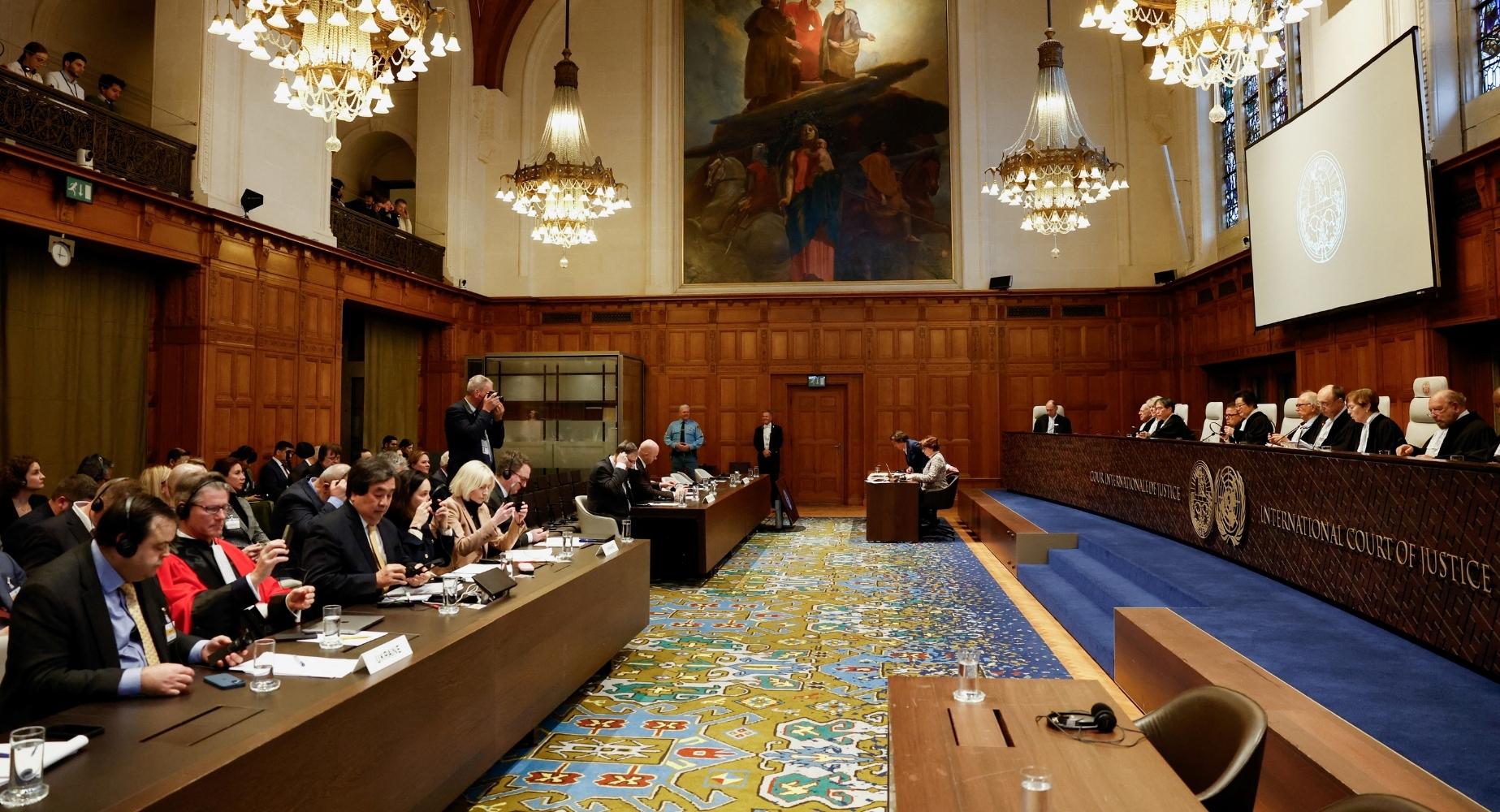
The international order established after World War II rests on a simple idea: states agree to live by a common set of rules. International law has served as the foundation for security, economic cooperation, and the relative predictability of international relations over the past several decades.
Today, however, that system is facing a profound crisis. The problem is not only that authoritarian regimes increasingly violate international law openly – disregarding the territorial integrity of other states, rejecting the principle of sovereignty, systematically violating human rights, and ignoring their international obligations. Equally dangerous is the fact that they have learned to benefit from a legal system they openly reject. Having eliminated free speech, judicial independence, and political competition at home, they use democratic freedoms, international agreements, and legal protections abroad to strengthen their own regimes and expand their influence.
This is one of the central weaknesses of today’s international order.
Every legal system – from ancient customary law to modern constitutional law – consists of two inseparable elements: rules and consequences for violating them. It is the combination of these two elements that makes law more than a declaration of good intentions and turns it into an effective mechanism for regulating human affairs. Because of its relative youth, international law has developed a sophisticated body of rules but has yet to establish the second essential component: an effective mechanism for swift and inevitable consequences for serious violations of those rules.This gap allows rogue states to enjoy the benefits of the international legal order while simultaneously undermining it.
Russia’s aggression against Ukraine has made this problem impossible to ignore. Since the beginning of the full-scale invasion, Western countries have debated whether to confiscate frozen Russian state assets to compensate Ukraine for the enormous damage caused by the war. The United States has already established a legal framework for doing so. Yet many European governments continue to resist similar measures, citing the need to uphold international law and the inviolability of property rights.
Such concerns would be entirely understandable if Russia itself recognized international law as binding. Instead, it was Russia that first rejected those rules through its unprovoked war of aggression, occupation of foreign territory, destruction and expropriation of Ukrainian public and private property, mass repression, deportation of civilians, and numerous other international crimes.
The same pattern can be seen in the information sphere. The Russian government has all but eliminated freedom of speech at home. Independent media outlets have been shut down or forced into exile. Journalists are persecuted, and even criticism of the authorities on social media lead to criminal prosecution. At the same time, the Kremlin’s information machine has for years exploited the openness of democratic societies to conduct large-scale influence and disinformation operations abroad. State-controlled media platforms, which in practice function as instruments of Russia’s security services, have operated in democratic countries while enjoying legal protections designed to safeguard independent journalism – not state propaganda or industrial-scale disinformation. In the United States, such activities long benefited from the protection of the First Amendment – one of the greatest achievements of American democracy. A constitutional guarantee intended to protect citizens from government interference was effectively used by a foreign authoritarian regime as a weapon in an information war against democracy itself.
Both examples point to the same systemic problem: democracies continue to treat regimes that flagrantly violate international law as though they remain good-faith participants in the international legal order. That is neither just nor consistent with the logic of law itself.
In every national legal system, an individual who commits a crime automatically loses certain rights and privileges. This does not undermine the rule of law. On the contrary, it is how the law protects itself.
The Anglo-American legal tradition has long recognized the doctrine of unclean hands: a party that has acted in bad faith cannot seek equitable relief while relying on principles of fairness. The same logic is reflected in Article 60 of the Vienna Convention on the Law of Treaties. A material breach of a treaty by one party entitles the other parties to suspend the performance of their obligations toward the violator in whole or in part. Equally fundamental is the principle of reciprocity, which underpins diplomatic, consular, commercial, and many other areas of international relations. No state is required to extend all the benefits of cooperation to a partner that refuses to abide by the same rules.
These principles are already deeply embedded in modern law. It is only logical to apply them to states that systematically violate international law. Such an approach would produce three important effects.
First, it would restore the natural link between violating international law and losing some of its legal protections – a link that exists in every effective legal system.
Second, it would deny authoritarian regimes the ability to exploit the openness of democratic societies as a weapon against those very societies.
Third, it would strengthen the authority of international law itself. Every legal system becomes stronger when it refuses to allow wrongdoers to profit from their own wrongdoing.
International law was created to preserve peace, not to provide comfortable legal protections for those who destroy it. Today it has reached a natural stage in its evolution: the generally accepted legal protections of the international system should apply only to those states that themselves respect its fundamental rules. A state that deliberately rejects those rules should not remain a full beneficiary of the very system it seeks to destroy. A legal order that allows lawbreakers to benefit from the law will ultimately lose both its authority and its ability to preserve peace.
