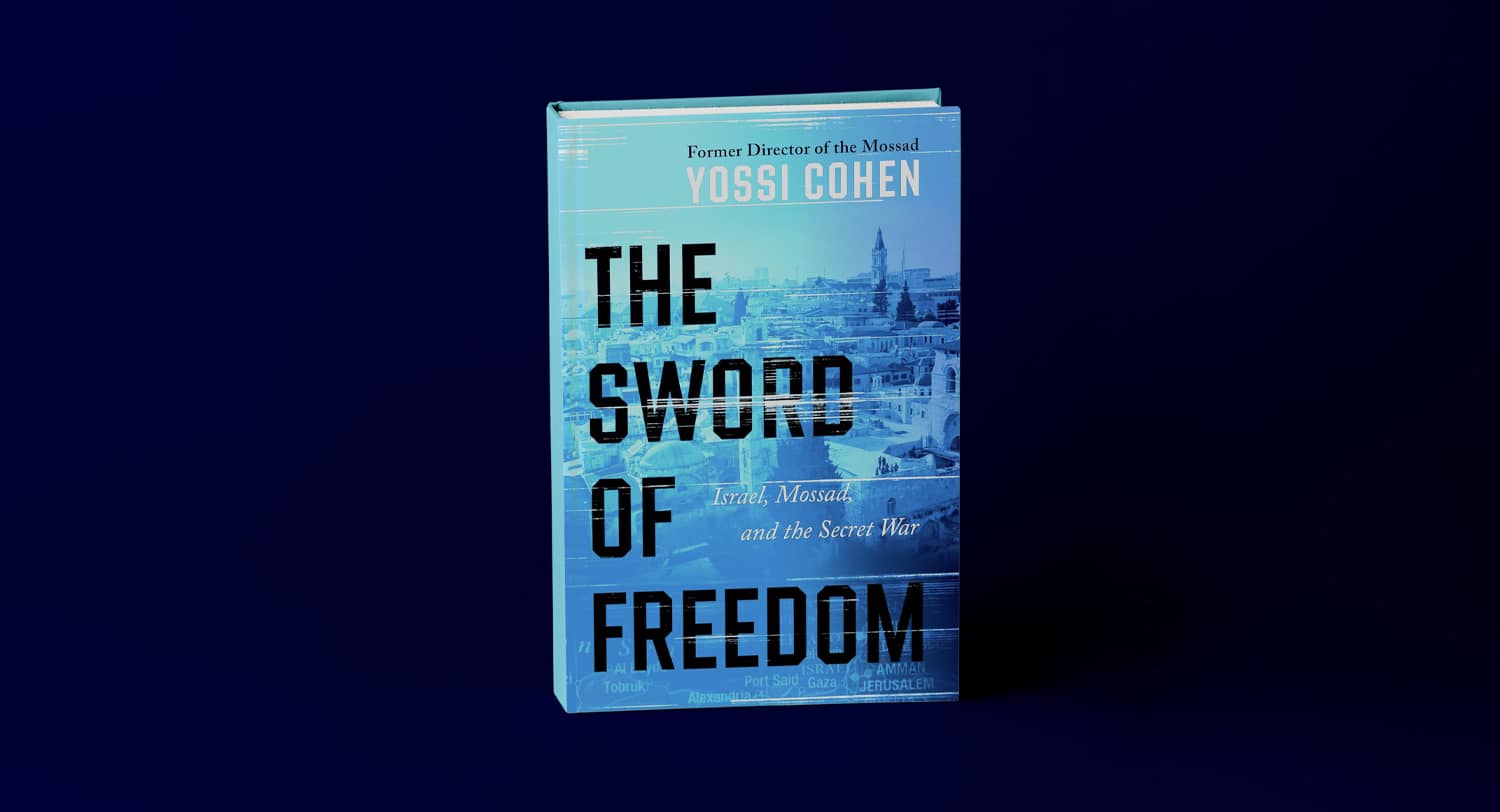
Yossi Cohen, The Sword of Freedom, Israel, Mossad and the Secret War,
Broadside Books, 2025
Israel is heading into an election year in 2026. And in recently published memoirs Yossi Cohen makes his case to be the next prime minister.
Director of Israel’s external intelligence service, the Mossad, from 2016 to 2021 and national security advisor from 2013 to 2016, Cohen writes of pondering his next move. “What type of PM would I be, if despite my current reticence, that is to be my fate?” Well, the reticence quickly vanishes. “I have one of the widest CVs in Israel,” he asserts, together with “strategic acumen and a proven ability to relate with leaders on the world stage” (in contrast with Prime Minister Netanyahu whom, he alleges, lacks this skill).
Self-promotion is common in political memoirs but Cohen’s version could have used a strong edit. “I’m a colorful guy” he admits, who “speaks four languages well” and, in explaining one of them, adds “Lebanese Arabic is a variety of Levantine Arabic indigenous to the country.”
Here is the opening line in a chapter describing one of the Mossad’s greatest achievements in recent years, stealing Iran’s nuclear archives: “It’s a dark and cold night in late January.” If only Charles Schultz were alive today to witness his literary influence.
All kidding aside, Israelis don’t need an introduction to Yossi Cohen. He has been squarely in the public limelight in Israel for more than 10 years, in contrast with the more shadowy presence of prior Mossad directors (though several others also wrote memoirs in retirement¹).
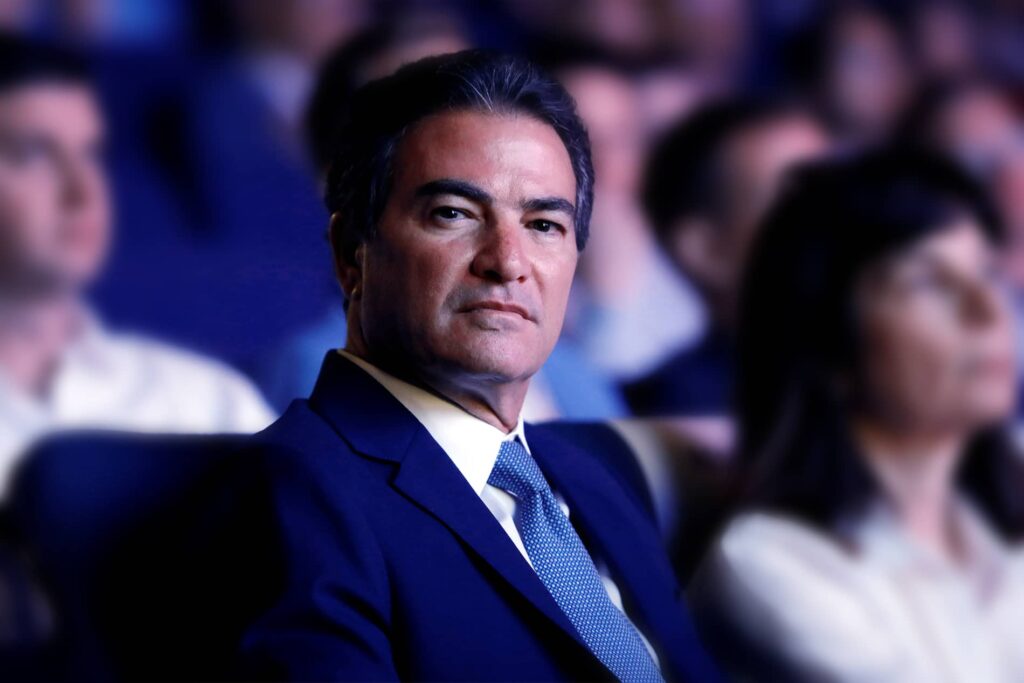
What Israelis need to hear from Cohen is his explanation for the security establishment’s disastrous groupthink about Hamas that emerged after the Israel-Hamas war of 2014 and prevailed for the next nine years, right up until the early morning hours of October 7, 2023 when thousands of Hamas terrorists crossed the border. This groupthink insisted Hamas was deterred from attacking Israel and could now be managed through economic incentives.
Cohen was not only a party to that groupthink. He was the key person implementing the policy of economic support for Hamas by arranging the delivery of suitcases of Qatari cash, estimated in the billions of dollars, to the Hamas government in Gaza. Cash was needed because Hamas is a worldwide designated terrorist organization and cut off from electronic payment systems, even the banking system of the Palestinian Authority.
Cohen’s memoirs go silent on this episode. Instead, he blames Mossad’s sister services – the Shabak (Internal Security Service) and military intelligence. He is right that they had direct responsibility for understanding what was happening inside Gaza. But his agency, Mossad, was responsible for Hamas’s critical external support and in fact he personally facilitated that support with trips to Doha.
To be fair, in the aftermath of the mini-war with Hamas in May 2021, right after his five-year term as Mossad chief ended, Cohen did admit to some misgivings. “We had hoped that Qatari involvement and Qatari money would lead us to a settlement with Hamas. But things got a little out of control.” Such candor is missing from his memoirs four years later. As he positions himself to run for prime minister, all blame is deflected onto the other services and onto Netanyahu.
Leaving aside his complicity in the intelligence failures that led to October 7, there is no doubt that Yossi Cohen served his country bravely and well for decades. The memoirs highlight key episodes. Among them is his counter-terrorism work with western European services that foiled ISIS attacks in Brussels and London: concrete evidence of the value of Israel’s intelligence sharing with these countries that they endanger through anti-Israel policies. He has an admirable personal side, particularly when talking about his son with multiple sclerosis. And Cohen also spices up the book with tales of the tactics of spying, in chapters like “The Art of Seduction.” His nickname in the Mossad was supposedly “the Model.”
Nevertheless, Cohen’s role in the soliciting and moving of Qatari cash to Hamas should weigh heavily on voters in 2026. It undercuts his claim to “strategic acumen.” And his attempt to shift all responsibility for intelligence failures onto others may help explain why Israel’s political party leaders are not rushing to recruit him.
The Israeli public’s demand for accountability for October 7 will likely overshadow Cohen’s art of deflection. The upcoming elections may well bring new figures, and some of the old ones, stepping forth from the dynamic Israeli population and giving voice to those who want a fresh, postwar start.
¹ These memoirs, in Hebrew, include Isser Harel’s Soviet Espionage and Communism in Israel (1987), Dani Yatom’s The Confidant (2009) about both his military and Mossad service, and Shabtai Shavit’s Head of the Mossad (2018). Ephraim Levy, born and raised in Britain, wrote in English, Man in the Shadows (2008).
