History is not gentle with Israelis and Palestinians. Every time diplomacy collapses, there is a round of violence. We saw this in the year 2000 after Camp David with the Second Intifada, again in 2008 after the Annapolis Summit with Israel-Hamas war, and most recently in 2023 after years of paralysis and political decay. Each time we failed to build a political horizon, and the ground beneath us exploded. This is not a coincidence. It is cause and effect.
My Story
I know this not as a distant observer, but as a Palestinian activist shaped by this conflict. When the First Intifada erupted in 1987, I was fourteen years old. Like many Palestinian teenagers, I was pulled into a conflict that felt personal and unavoidable — streets were filled with anger, television screens showed stone-throwing youth facing tanks. It felt simple, moral, and urgent. I wanted to belong to it. I threw stones. I was arrested. A military judge sentenced me to five years in prison.
That chapter did not end my political life. After my release, I rose through Fatah’s youth movement, eventually serving as international secretary and later heading the movement’s international and Israel file, deeply engaged in dialogue with Israelis that continues to this day. Over the years, my beliefs changed, not because the occupation disappeared, but because I learned, painfully and gradually, what violence does and what it never does.
Today, I call openly for Palestinian reform and democracy, and for Palestinian-Israeli coexistence and dialogue. After October 7, I visited the Israeli communities near the Gaza border and publicly condemned Hamas in front of cameras. I later visited the shiva [week-long mourning] of the Bibas family and asked Yarden Bibas for forgiveness, an act that was neither easy nor symbolic, but necessary. I continue to address Israelis in public and in their media.
I lived through the collapse of diplomacy as a child, a prisoner, a negotiator, and now a witness to catastrophe. And if history teaches us anything, it is that when politics fails, civilians pay the price.
Implementing the Trump Plan
Today, a unique moment has emerged. We have a US President who not only makes promises but appears determined to act. His 20-step plan is not perfect. No peace plan is. But it is concrete, detailed, implementable, backed by regional powers and the only plan currently on the table. For once, we have a framework rather than a slogan. If Israelis and Palestinians engage with it seriously rather than ideologically, it can mark the beginning of a new chapter and this window will not remain open forever.
Disarmament and demilitarization of Hamas is an essential condition for moving forward under the Trump plan. But so is replacing the Hamas government. Hamas is not just a militia. It is also a governing bureaucracy, a social network, an employer, a provider of basic services and a major component of the local economy
Approximately 60,000 civil and police employees worked under the Hamas government. One-third have been killed, leaving behind tens of thousands of widows, orphans, and dependents. Of the remaining employees, nearly half were not Hamas members; they were simply workers seeking income to feed their families. They currently receive around $300 per month from the remnants of Hamas’s structures, a social and economic lifeline that cannot simply be cut. Demilitarization that ignores these realities is impossible. Demilitarization that embraces them is achievable.
Therefore the new governing system in Gaza must integrate non-affiliated civil employees immediately, create retirement pathways for older or ideologically committed members, offer structured reintegration for those who renounce violence, build transparent social-security mechanisms for families of the dead, launch a massive vocational and administrative training program and replace Hamas’s payroll with a modernized civil service from day one. This is not appeasement. It is institution-building, the only path to ending armed factions.
Social Reforms
Few Israelis know the Gazan society which Hamas rules. Gaza is not just a political landscape but an ecosystem of powerful family clans, tribal networks with deep social authority, family-centered business conglomerates, civil society organizations, religious institutions, neighborhood leadership structures, women’s networks, student unions and professional unions and syndicates
These social forces often have far greater legitimacy than any political organizations. They have survived the collapse of the Palestinian Authority, the authoritarianism of Hamas, sixteen years of blockade, and years of repeated war. If Gaza’s reconstruction is to succeed, these forces must be the engine of transformation. They hold the social capital and legitimacy needed to weaken extremism and stabilize governance. What Gaza lacks is not only capacity, it also lacks opportunity.
Some in Israel speak of deradicalization as though it is a matter of rewriting textbooks. But indoctrination is not undone in a classroom alone. Palestinians have lived under conditions that generate radicalization for decades: hopelessness, displacement, unemployment, blockade, political stagnation, internal repression and external violence. Deradicalization requires: rebuilding an educational system based on critical thinking, science, foreign languages, and global engagement. It requires transforming the university sector through cooperation with top global institutions (including Israeli universities if possible), creating public dialogues and introducing media reforms that reward analytical journalism over populist rhetoric, and promoting cultural and historical literacy that acknowledges Jewish and Israeli narratives.
Political Reforms
Demilitarization and deradicalization will not succeed without the most difficult transformation of all: political reform. Gaza and the West Bank need a system that resembles a social-democratic framework: transparent, accountable, pluralistic, participatory, grounded in rule of law, and equipped with functioning institutions.
The Palestinian public is currently trapped between two disasters: Hamas’s violence and Mahmoud Abbas’s authoritarian stagnation, which has suffocated political life and prevented generational change. This dual crisis has devastated Palestinian society and destroyed public trust in political elites. But there is a more urgent political priority than simply electing new leadership (though that is necessary).
Palestinians must demonstrate they are capable of a functioning civilian service, transparent budgeting, independent courts, professional police, and a government that can compromise and negotiate, implement agreements, and deliver results. Without this, Israelis will not believe that peace is possible — and they will not say yes to any political horizon. International technical assistance to help Palestinians build governance institutions is urgent.
Economic Reforms
No political or social transformation will survive without economic revival. Gaza’s economy must be rebuilt around a reconstruction authority insulated from corruption, with major Arab and international financing, in partnerships with Israeli private-sector actors, in a long-term vision that integrates Gaza with the global economy, with energy, water, and transportation infrastructure, a modern port and logistics systems, industrial zones and vocational training for tens of thousands of young people. The old economic dependency breeder radicalism while the new economic dignity should breed self-confidence and stability.
For too long, Palestinians have spoken to Israelis in the language of political rights and international law. These concepts do not resonate in Israel’s current landscape. We need a new language that acknowledges Israeli trauma and concerns, recognizes Jewish history, and appeals to shared interests and shared futures. I know Israelis well. I spent years engaging with their civil society, journalists, intellectuals, commanders, and businesspeople. Beneath the politics, there is a reservoir of shared humanity waiting to be tapped.
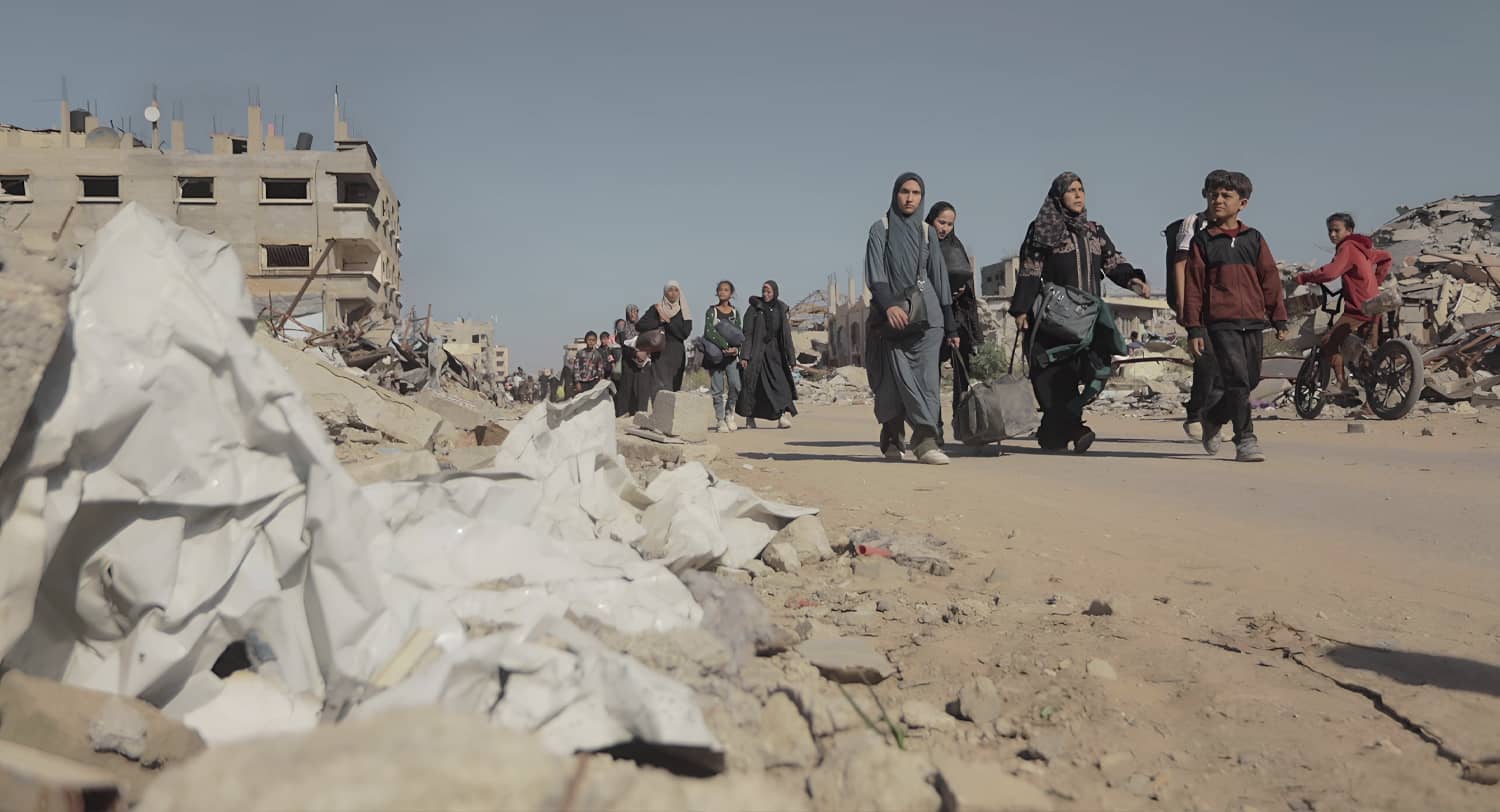
When one side changes deeply and sincerely, the other side eventually responds. And we Palestinians must take the first step for pragmatic reasons. In Gaza, nearly two million people live in plastic shelters. Israelis, despite fear and trauma, can survive another decade like this, but Palestinians cannot. This moment will not return soon, if we miss it, we will pay the price for another generation.
Gaza is a wounded society but one also full of talent, energy, resilience, family loyalty, and human dignity. It can become a model of reconstruction, a laboratory for new governance, a zone of stability, and bridge between Israelis and Palestinians if we choose to make it so.
