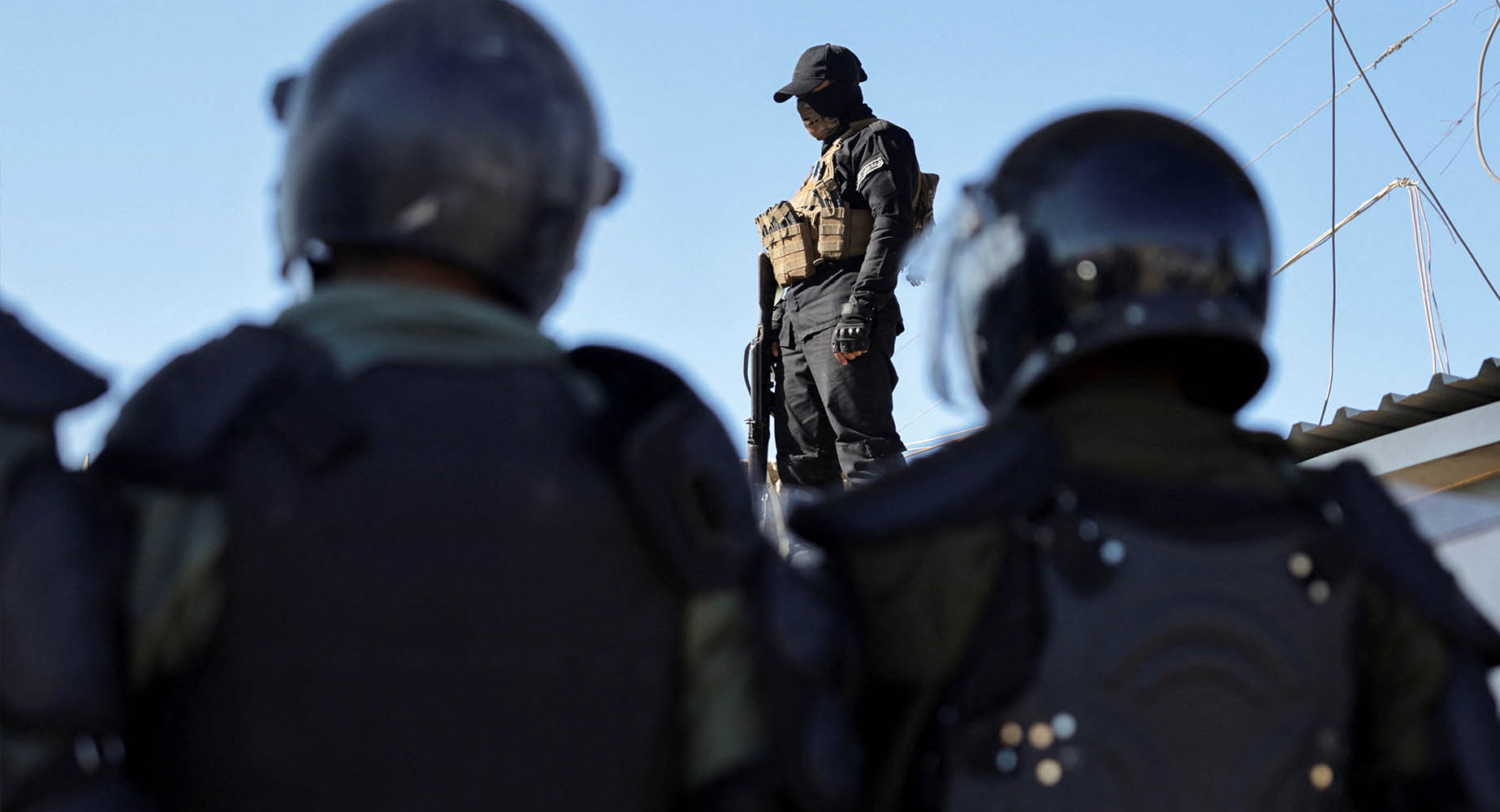
The unfolding events in northeast Syria represent a profound tragedy, not only for the Kurdish people in Syria but for the broader quest for stability in the Middle East. Syria’s transitional government under Ahmed al-Shara’a feels empowered by increasing regional and global recognition and has interpreted this as carte blanche for forcible consolidation. Its forces have launched attacks on the de facto autonomous region of northeast Syria, governed by Syrian Kurds.
The Syrian Kurds emerged as one of America’s most reliable partners in the fight against the Islamic State (ISIS). In 2014-2018, as ISIS rampaged across Iraq and Syria, establishing a self-proclaimed caliphate and exporting violence globally, the US-led coalition relied heavily on Kurdish ground forces. The Syrian Democratic Forces, a multi-ethnic alliance dominated by Kurdish fighters from the People’s Protection Units (YPG), provided the boots on the ground essential for reclaiming territory. They liberated Raqqa, ISIS’s de facto capital, in 2017, enduring heavy casualties while US air support and special forces offered critical backing. This partnership was instrumental in dismantling ISIS’s territorial control by 2019.
The Kurds have supervised detention facilities in northeast Syria holding thousands of captured ISIS fighters and their families, estimated at over 10,000 militants and 50,000 affiliates in camps like al-Hol. Mass escape or release from these prisons would reinvigorate ISIS. Such a scenario poses a grave threat to both US and Israeli interests, as ISIS has historically targeted both nations through lone-wolf attacks and coordinated plots. For Israel, an ISIS resurgence would also exacerbate instability along its borders and complicate already fraught regional dynamics. The Kurds’ stewardship of these facilities underscores their continued value as a stabilizing force in Syria.
Central to the current turmoil is the March 10 agreement, signed in 2025 between the Syrian Democratic Forces (SDF) and Syria’s transitional government. This US-backed deal outlined principles for re-integrating the autonomous region of northeast Syria into the Syrian state. It was a major diplomatic victory for the second Trump Administration. Key provisions included equal representation for minorities in political processes, the merger of SDF military and civilian structures into national institutions, and allowances for the SDF to maintain de facto control over border crossings and oil fields in Kurdish-majority areas. The agreement aimed to foster unity while preserving Kurdish autonomy in governance and security matters.Implementation of the March 10 agreement stalled amid mutual accusations of violations, leading to sporadic clashes and the erosion of trust. Despite these setbacks, the pact remains a foundational framework for peace building in Syria, emphasizing diplomacy over force.
With the SDF now under attack from Syrian government forces, the immediate imperative must be preserving Hasaka, a strategic province in northeast Syria that serves as a linchpin for the Kurdish administration.
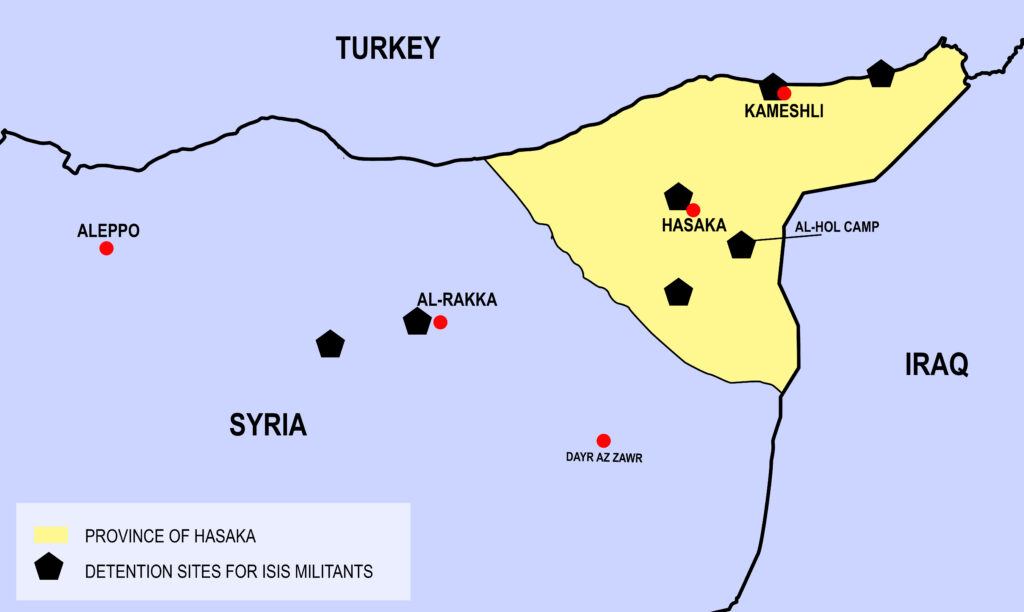
Hasaka’s descent into full-scale conflict would have uncontainable repercussions. Current skirmishes in Kurdish enclaves foreshadow a broader bloodbath, with civilian casualties inevitable in densely populated urban centers like Qamishli.
Most alarmingly, the current warfare has breached ISIS detention facilities, allowing fighters to escape and rejoin extremist networks. This could trigger a new exodus of refugees toward Iraq and the Kurdistan Region, overburdening fragile borders and communities. Such chaos would provide fertile ground for pro-Iranian militias to intensify their activity, using instability as an opportunity for expansion. What began as localized clashes could ignite regional fires, drawing in Turkey, the Gulf states, and other international actors further afield.
Only the United States possesses the leverage to halt this spiral. Washington maintains a troop presence on the ground, diplomatic channels to Damascus, and sway over Turkey and the Gulf nations supporting the transitional government. No other power can weave these elements into a cohesive de-escalation strategy. European allies lack a military presence, while Russia and Iran have their own problematic agendas. US mediation has historically bridged divides, as seen in the Trump Administration’s success in brokering the March 10 accord.
The context amplifies the dangers. With Syrian government forces on the attack, the SDF grapples with fractures, including tribal divisions that undermine unity and operational effectiveness. Most disturbingly, Syrian rhetoric has turned inflammatory: some official forces and religious bodies are labelling Kurdish fighters as “infidels,” invoking the language of Islamic conquest. Their use of “Anfal,” an Islamic term meaning “the spoils of jihad,” echoes Saddam Hussein’s bloody genocidal campaign against the Iraqi Kurds in the 1980s. Such dehumanizing narratives lower the barriers to violence and prepare the way for ethnic cleansing.
Such a catastrophe can still be avoided. Urgent measures are required, including an immediate ceasefire to stem the bloodshed, a firm halt to Syrian military incursions into Hasaka Province, ensuring that ISIS fighters remain in prison, and a reaffirmation of the March 10 agreement as the cornerstone for political resolution in Syria, with the US as guarantor.
These steps prioritize restraint, diplomacy, and dialogue over confrontation. Ceasefire enforcement will allow humanitarian aid to flow, protecting civilians from further harm. Preventing military incursions into Hasaka will preserve the Kurdish administration’s integrity, preventing chaos. Safeguarding prisons will avert a terrorist resurgence, aligning with global security interests. Reaffirming the March 10 agreement will rebuild trust, facilitating negotiations on integration that respect minority rights.
Preserving Hasaka transcends local Kurdish concerns and Syria itself. The crisis in northeast Syria is an opportunity to assert American leadership in the Middle East through forceful diplomacy, and so preserve the fruits of President Trump’s remarkable victory over ISIS during his first term.
