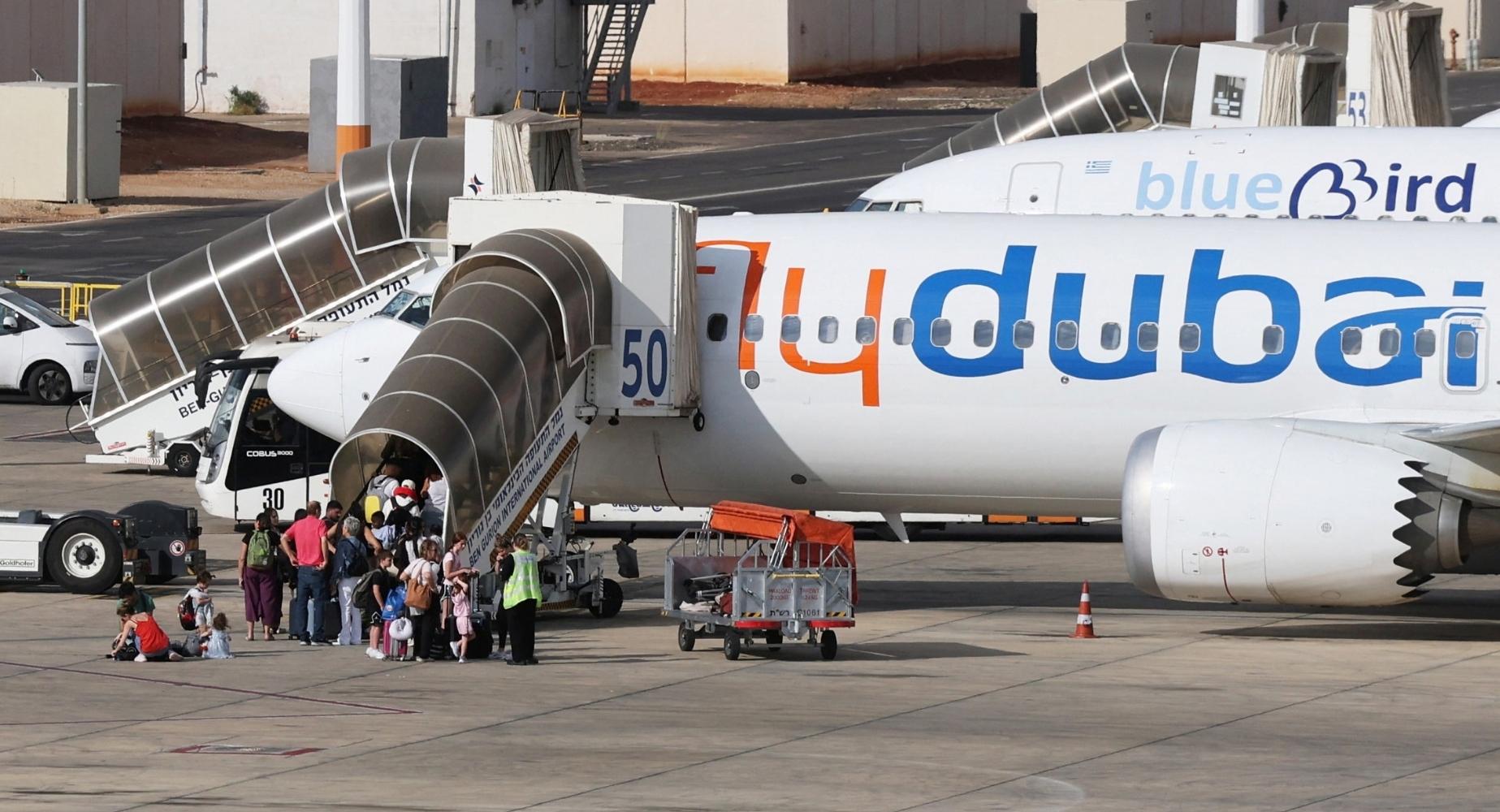
What happened aboard flydubai Flight FZ1073 should concern every government, intelligence service and airline in the world. The official investigation is continuing, and we should not prejudge its findings. UAE authorities are examining the circumstances and motives, including whether the incident involved terrorism, prior planning or direction. But one strategic conclusion does not require waiting for the investigation: what happened aboard that aircraft could have happened on another airline, under another flag, on another route. That should change the conversation.
For a quarter-century, counterterrorism has concentrated enormous resources on preventing attacks: airport screening, border controls, intelligence watchlists, terrorist-financing investigations, surveillance and military operations against terrorist organizations. Those capabilities remain indispensable and have saved lives. But the emerging challenge requires us to move further upstream. Modern societies function through systems of trust. Airlines trust employees, banks trust compliance mechanisms, charities trust intermediaries and governments trust licensed institutions. Terrorist and extremist networks understand these systems as well.
That is why two developments this week deserve to be considered together. On October 2, the U.S. Treasury announced action against what it described as a sophisticated, multi-year Hamas financing network that used purported humanitarian charities and cryptocurrency to transfer more than $2 million to Hamas. The significance extends beyond Hamas. It demonstrates how infrastructure supporting terrorism can operate across borders and inside structures that outwardly appear legitimate. The terrorist organization itself is therefore only one part of the security problem. Governments must understand the broader enabling ecosystem: financiers, facilitators, recruiters, institutional networks and ideological movements that can sustain, excuse or legitimize violent extremism.
This is where the Trump administration has made an important strategic advance. Its actions against specific Muslim Brotherhood branches, together with its campaign against Hamas financing networks, reflect a recognition that counterterrorism cannot begin only when an individual prepares an attack. Governments must examine the infrastructure that sustains violent organizations. I have previously argued that we must follow the money. We must now follow the networks—and understand the ideology that allows those networks to regenerate. When evidence demonstrates terrorist financing, material support, recruitment or incitement to violence, governments must act.
Washington cannot do this alone. The next phase of counterterrorism must be international. The United States, Europe and America’s Arab partners should build a permanent architecture integrating financial intelligence, law enforcement, aviation security, intelligence cooperation and prevention of radicalization to violence. That means following money across borders, including through charities, intermediaries and digital assets. It means following networks rather than merely organizational labels. And it means confronting the insider dimension of security—not by treating employees as suspects because of religion, nationality or political belief, but by ensuring that institutions can identify credible indicators of radicalization toward violence while respecting law, due process and individual rights.
Aviation demonstrates why this cannot remain a national question. An aircraft can be registered in one country, operated by a company in another, employ multiple nationalities, carry passengers from dozens of countries and cross several jurisdictions within hours. A vulnerability anywhere can become a vulnerability everywhere. Terrorist financing follows the same logic. Money can be raised in one country, move through another jurisdiction, pass through a charitable structure or digital asset and ultimately reach a terrorist organization thousands of miles away. The threat has globalized faster than our response. Our security architecture must catch up.
There is also a responsibility that belongs particularly to the Arab and Muslim world. I write this as an Arab and a Muslim. We cannot expect Washington, Paris or London to conduct the intellectual struggle within our societies for us. Arab governments, religious institutions, universities, intellectuals and civil society must confront ideologies that legitimize political violence, normalize hatred or transform religious identity into permanent confrontation. This is not a campaign against Islam; it is a defense of our societies against those who exploit Islam for political violence. Nor should governments confuse peaceful dissent with extremism. But tolerance cannot become indifference toward those who legitimize violence.
The Abraham Accords demonstrated that another regional model is possible: cooperation instead of permanent confrontation, economic integration instead of ideological mobilization, and coexistence instead of hatred. Protecting that model requires more than diplomacy. It requires confronting those who finance violence, those who facilitate it and the ideological environments that allow violent extremism to reproduce itself. The United States has begun moving upstream—from terrorists to the financial and institutional networks surrounding them. Arab governments should do the same. Europe should do the same. These efforts should become part of a common security architecture
FZ1073 should therefore not become simply another extraordinary aviation story. It should become a warning. We were fortunate that courage, professionalism and rapid intervention prevented a far worse outcome. But global security policy cannot depend on being fortunate the next time. After twenty-five years of counterterrorism, the next strategic principle should be clear:
Do not wait for extremism to become terrorism, and do not wait for terrorism to become catastrophe.
