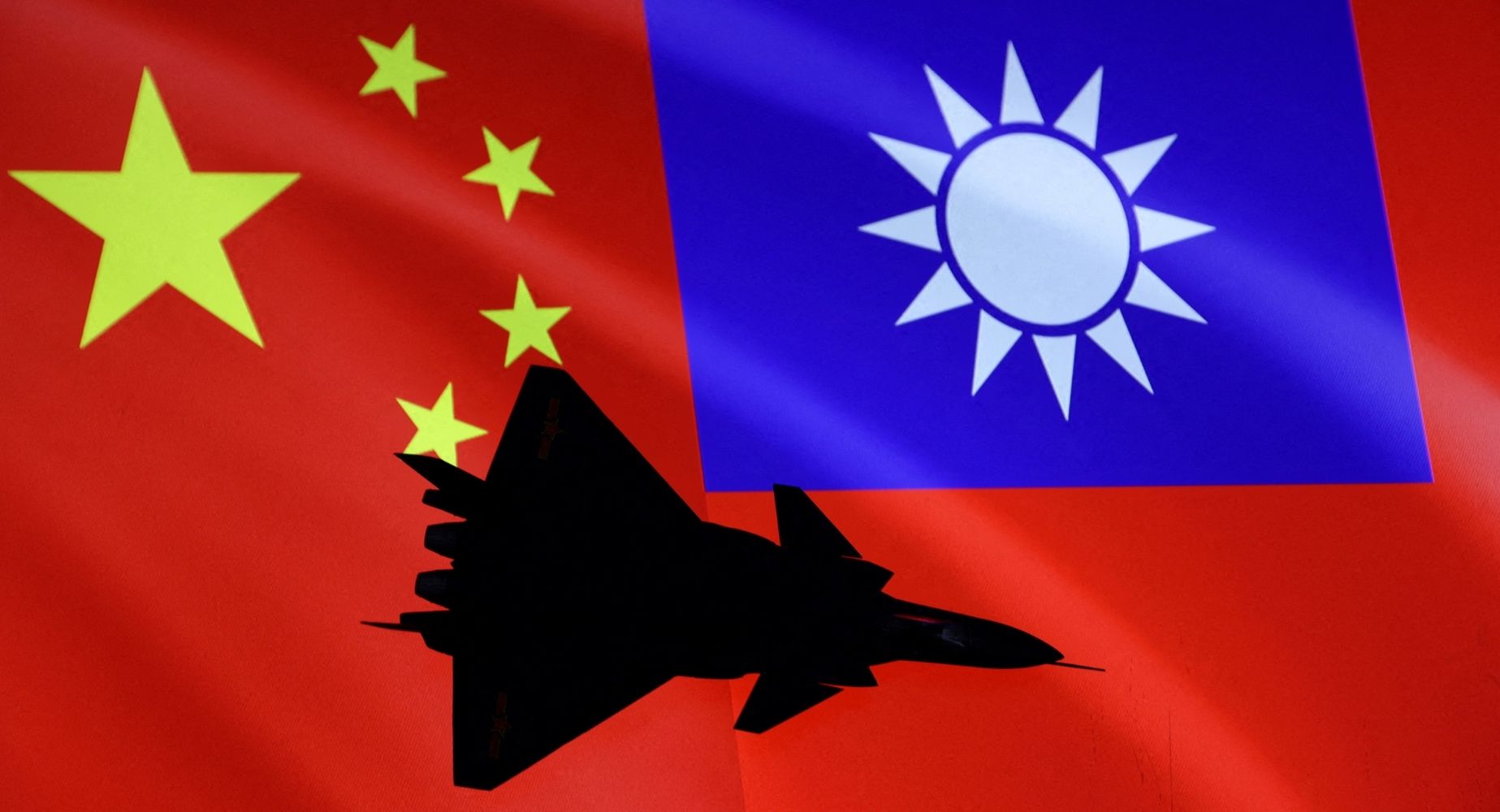
The strategic conditions of a conflict in the Taiwan Strait are expected to be different from those of the war in the Persian Gulf. However, Taiwan can still apply critical lessons from that theater to prepare for a potential escalation.
Despite the recent assessment released by the United States Office of Director of National Intelligence, which does not expect China to invade Taiwan by 2027, Taiwan still needs to execute acute reforms in its national security policy. While the primary concern for Indo-Pacific nations will be addressing the destabilization of energy, food, equipment, and technology supplies, Taiwan must focus on preparing to curb an offensive on the operational and the strategic side.
The joint American-Israeli campaign is focused primarily on decapitating Iran’s political leadership, setting back its nuclear program, and degrading its military assets. China is a global nuclear, military, and technological power, whereas Iran is not. However, Taiwan can still apply certain lessons from the war, even though its main effort will be to defend its territory and critical assets – which is also a vital component of the current campaign in the Gulf.
Air Defense and Technological Parity
Taiwan’s primary concern is how to defend its territory from China’s fighter jets, unmanned aircraft, and missiles. According to reports, Taiwan seeks to develop modern, indigenous air-defense systems (“T-Dome”) and interceptors, modeled after Israel’s Iron Dome. Israel’s sophisticated air defense system proved itself during the current war, and there is already quiet cooperation between the two states on this matter. Israel partially relies on U.S. air defense systems, but Taiwan’s case will be different; U.S. forces may arrive only after an escalation begins, and only if Taiwan demonstrates the resolve and ability to resist China’s initial assault.
A second effort should focus on developing mass-produced, affordable, autonomous tools. These have proven crucial – for example, in hunting Iranian ballistic missile launchers and other regime targets – specifically when the Israeli Air Force strikes targets 2,000 kilometers from Israel’s borders. Such drones, some navigated by artificial intelligence, can improve real-time intelligence collection and precision targeting while relying on satellites. Whereas China is expected to enjoy aerial dominance over Taiwan in the initial moments of an invasion, these tools, along with autonomous maritime vessels, can compensate for Taiwan’s qualitative and quantitative weaknesses. Taiwan may need to accelerate the procurement of these vital assets.
The Defense-Tech Ecosystem
Today’s defense procurement landscape is no longer shaped solely by traditional government investment in R&D or agencies like DARPA (U.S.) or DIANA (NATO), which can result in a slow deployment of arms. Encouraging a private-sector defense-tech ecosystem is crucial for acquiring advanced weaponry in an agile manner, as the United States and Israel currently lead the way in doing.
In this regard, Taipei has vowed in recent years to expand its military budget up to 5% of its GDP. While it still struggles with political divisions in achieving this, relying on defense-tech startups can reduce the political and economic burden.
Furthermore, during both the 12-Day War and the current conflict, American-made weapons have proven critical in enabling the U.S. and Israel to achieve aerial dominance over Iran – which is equipped with Russian and Chinese arms. This is a positive sign for Taiwan, which will need to continue its weapon purchases from the United States.
The Conscription Model and Social Resilience
Taipei recently extended its military service period from four months to one year. Yet, this is far from sufficient to confront the PLA, which would likely invade the island in massive numbers. Taiwan might therefore consider adopting Israel’s conscription model, which proved its worth in the long war that began in October 2023. While the Israeli model is not perfect – relying heavily on reserve forces while maintaining a smaller regular military – it allows the economy and society to function relatively normally during conflict. Israel’s ability to maintain a liberal, vibrant society that is simultaneously ready to sacrifice for national protection is crucial for survival in a tough neighborhood. This is a difficult component for Taiwan to apply, as it has not been involved in a full-direct military conflict since 1949.
Consequently, Taiwan could learn from how the Israeli government and military communicate with the public during ballistic missile attacks. When a public shows resilience and discipline, it does more than protect lives: it expands the decision-makers’ room for maneuver. Like conscription, transforming a society to be “conflict-ready” is a major challenge for Taiwan, though its resilience was demonstrated during the COVID-19 pandemic.
Strategic Alliances and the “Model Ally”
A vital element is the alliance structure. Taiwan is diplomatically isolated and lacks official defense treaties with most states, including the U.S. However, since 1979, the United States has provided Taiwan with arms to enable its self-defense, even without a formal commitment to intervene directly.
Maintaining the sovereignty of the self-ruled, democratic island depends largely on Taipei’s ability to quietly expand its partnerships with the U.S. and neighbors who also feel China’s aggression. Japan, one of Taiwan’s closest allies, as well as the Philippines, and to an extent Thailand, Vietnam, and Australia can no longer view themselves as being outside the conflict. If Taiwan is invaded by China, neighboring states may assume they could be the next target. Escalation in the Taiwan Strait and its consequences cannot be contained within the region. Although Indo-Pacific nations tend to resolve mutual challenges through peaceful means, if China takes Taiwan, the balance of power will shift against them, as well as against U.S. interests.
Promoting regional prosperity while “hiding” from the aggressor – as some Gulf nations attempted with Iran – is a nonstarter. Taiwan, as the smaller actor, must present its strategic value to the United States. Just as the White House defines Israel as a “model ally” that can defend itself with American backing, Taiwan can no longer rely solely on the importance of its semiconductor industry, i.e., the “Silicon Shield” concept. It must position itself as a capable ally. When Israel demonstrated its determination to strike Iran, it proved to the U.S. that they could launch a joint campaign aiming to topple the Iranian regime.
Conclusion
Taiwan may be concerned about recent trends in the decapitation of state leaders. It can, however, draw some optimism from the fact that the United States retains the capacity to act in multiple arenas simultaneously – including Ukraine, the Middle East, and Asia – without depleting the ammunition necessary to support Taiwan. Against this background, it appears China is not yet willing to confront U.S. dominance in the Indo-Pacific; reports indicate that prior to Operations ‘Epic Fury’ and ‘Roaring Lion,’ the PLA actually reduced its military presence around Taiwan.
Taiwan continues to signal its alignment with the U.S. (and Israel). Taipei’s approach stems not only from a shared defense of democracy against authoritarian regimes but from a desire to earn the goodwill of Washington. By being viewed as a self-reliant ally like Israel, Taiwan hopes to gain important security guarantees to help defend its sovereignty.
