The most consequential change in the nuclear order may be taking place without a weapon being detonated. Nuclear threats have become more frequent, while low-yield or “tactical” weapons are increasingly discussed as instruments for managing conventional conflicts. Intended to strengthen deterrence, such references are nevertheless changing how nuclear use is imagined.
For more than eighty years, the nuclear taboo has defined these weapons as fundamentally different from other instruments of war. Their non-use since Hiroshima and Nagasaki reflects not only fear of retaliation but also a powerful normative judgment: crossing the nuclear threshold would constitute an exceptional political and moral rupture. Yet a taboo can weaken before it is openly violated. The process begins when language divides nuclear weapons into supposedly distinct categories, strategic and tactical, catastrophic and limited, unthinkable and potentially usable.
This shift is especially dangerous in regional conflicts, where recurring confrontations create demand for nuclear options that appear credible without appearing suicidal. South Asia shows how tactical weapons can enter an established deterrence relationship. In the Middle East, by contrast, the rules of a possible future nuclear order are being shaped before a reciprocal balance has emerged. Together, they show how the distance between deterrence and employment narrows once limited use becomes thinkable.
The Illusion of the Tactical Nuclear Weapon
The term “tactical nuclear weapon” suggests a weapon designed for a limited military purpose: striking forces, command centers or other battlefield targets rather than cities. Such weapons generally have shorter ranges or lower yields than strategic systems, although no universally accepted definition separates the categories. More importantly, the label describes an intended mission, not the consequences of use.
Changes in the rhetoric and doctrines of the major powers have reinforced this distinction. Russia has most explicitly linked non-strategic nuclear weapons to conventional conflict: President Vladimir Putin has repeatedly invoked possible nuclear use, Moscow conducted publicly announced non-strategic nuclear exercises in 2024, and its revised doctrine broadened the circumstances in which nuclear weapons might be considered. The United States has used less overtly threatening language, but its 2018 Nuclear Posture Review called for flexible low-yield options to deter regional aggression, leading to deployment of the W76-2 warhead. Both governments present these policies as strengthening deterrence, yet they also portray limited nuclear employment as a credible response within a conventional conflict, blurring the line between deterring nuclear war and preparing to fight one.
A lower-yield weapon can still cause mass casualties, radiation exposure and fallout beyond its target. It would also have political and strategic effects far greater than even the most destructive conventional strike. The state under attack could not know whether the explosion was an isolated act or the start of a broader campaign, while the attacker could not control its adversary’s interpretation or response.
Terms such as “limited,” “low-yield” and “battlefield” nevertheless imply that the threshold can be crossed in a controlled manner to halt an offensive, demonstrate resolve or compel negotiations without further escalation. This is the central illusion. A weapon may be tactical in target, range or delivery system, but no nuclear detonation can be guaranteed to remain tactical in consequence. After first use, escalation would depend on fear, incomplete information and decisions made under extreme pressure. The language of limited nuclear war does not make nuclear use safer; it makes first use easier to contemplate.
This normalization has consequences beyond great-power rivalry. It supplies regional powers facing territorial disputes, recurring violence and military asymmetries with language and strategic legitimacy for limited first use. Yet regional crises often involve shorter warning times, weaker communication and fewer mechanisms for controlling escalation. South Asia shows how this logic can enter an existing nuclear rivalry; the Middle East shows how it may shape a future nuclear order before such a balance exists.
South Asia: The Doctrinal Normalization of Limited Nuclear Use
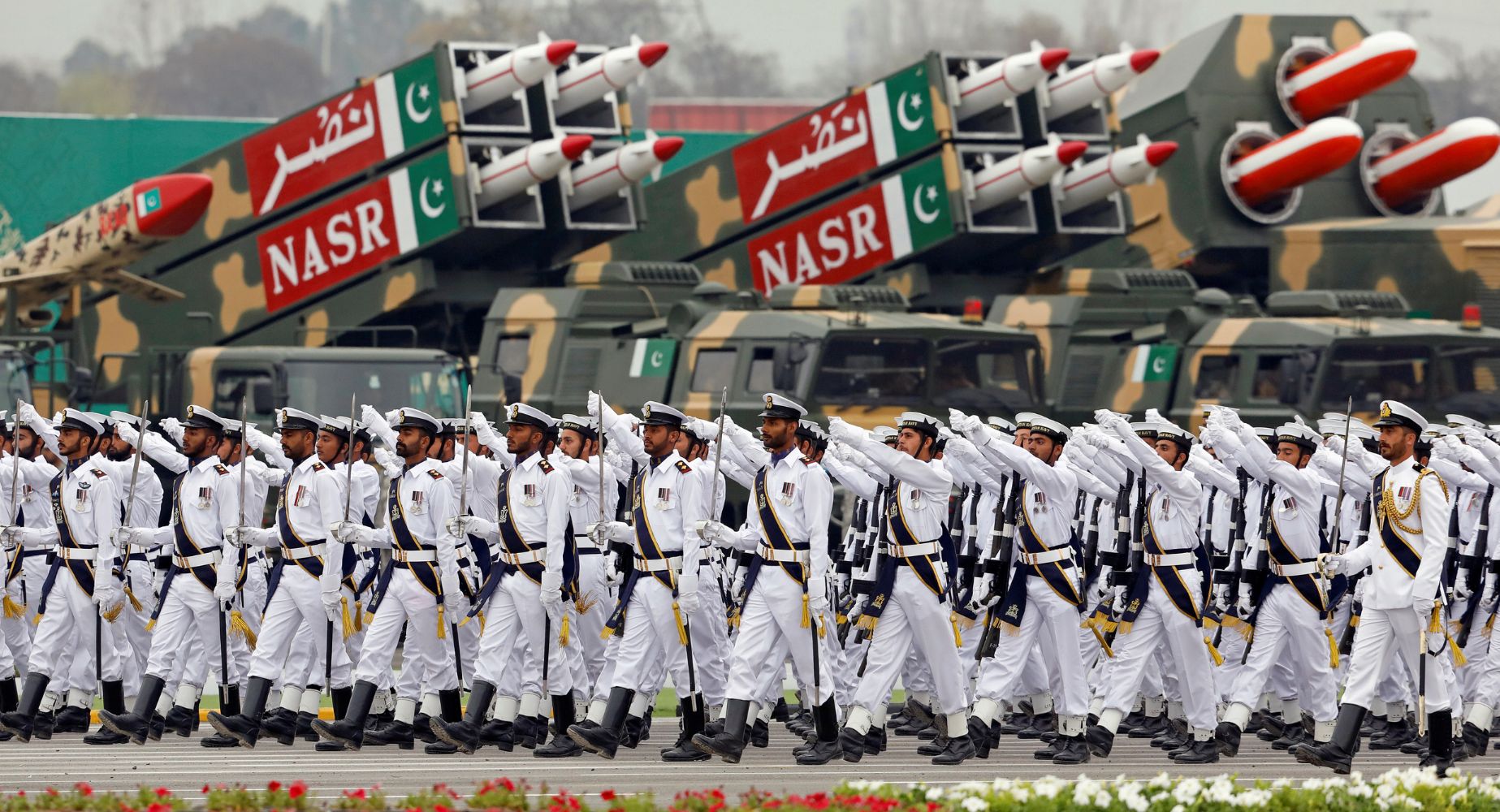
India and Pakistan have experienced repeated military crises since their 1998 nuclear tests while developing sharply different approaches to conventional and nuclear conflict. Pakistan’s doctrine of “full-spectrum deterrence” is designed partly to compensate for India’s conventional military superiority. It includes strategic, operational and tactical capabilities intended to deter attacks at multiple levels. The short-range, nuclear-capable Nasr missile is especially significant because it threatens Indian forces operating inside Pakistani territory, denying India a supposedly safe space for limited conventional operations below the nuclear threshold.
India officially maintains a no-first-use policy, but its doctrine threatens massive retaliation if nuclear weapons are used against Indian territory or forces. This produces a dangerous asymmetry: Pakistan seeks to make limited first use credible, while India seeks to make any first use prohibitively costly. Both postures are meant to deter, yet together they leave unresolved whether a tactical Pakistani strike could remain limited or would provoke a far larger Indian response.
The brief but severe India–Pakistan conflict in May 2025 demonstrated both the resilience and fragility of this arrangement. The sides exchanged missile and drone strikes, including attacks on military facilities, yet officials later stated that there had been no direct nuclear signaling and that the confrontation remained conventional. This restraint matters: escalation was not inevitable even during an intense crisis.
Still, every operation occurred against the background of Pakistan’s tactical posture and India’s promised retaliation. Nuclear use had already been incorporated into the boundaries within which both sides calculated risk. South Asia thus demonstrates a subtle form of normalization: nuclear weapons need not be brandished in every crisis once battlefield use is established in doctrine. The taboo remains formally intact, but one category of employment has become strategically imaginable.
The Middle East: Normalization Before Proliferation
The Middle East does not yet resemble South Asia. Israel maintains nuclear ambiguity, Iran has no declared nuclear weapons, and no regional dyad has developed competing nuclear doctrines. Yet nuclear considerations are moving closer to the center of conventional conflict before a reciprocal balance has emerged.
For decades, the regional debate focused on preventing proliferation: whether Iran sought a weapon and which diplomatic or economic measures could stop it. Military action against nuclear facilities remained a threatened last resort. Israeli and American strikes on Iran changed that relationship. Nuclear infrastructure became an active theater of war, linked to the wider confrontation over Tehran’s missile forces and regional capabilities.
Iran continues officially to reject nuclear weapons, citing Supreme Leader Ali Khamenei’s religious prohibition on their development and use. At the same time, Iranian officials and advisers have suggested that an existential threat could force the country to reconsider its nuclear doctrine. These statements do not amount to a declared decision to build a bomb, but they make acquisition, and eventually deterrence or use, appear conditional rather than categorically excluded.
This is not the doctrinal normalization visible in Pakistan. It is anticipatory normalization: political language constructing a possible future nuclear order. If Iran or another regional state acquires nuclear weapons, its doctrine will not be formulated in a vacuum. Today’s references to existential threats, doctrinal change and attacks on nuclear infrastructure will shape what future leaders regard as legitimate. The danger is that the region could enter a nuclear era with the threshold already weakened and limited use conceived as a response to conventional defeat or threats to regime survival.
Two Stages of the Same Normative Shift
The comparison concerns different stages in the normalization of nuclear thinking, not equivalent capabilities. South Asia represents operational normalization: Pakistan has incorporated tactical weapons into its posture, while India has defined the potentially devastating consequences of their use. Nuclear employment now helps frame conventional conflict.
The Middle East represents anticipatory normalization. Nuclear use has not entered an acknowledged regional doctrine, but discourse about existential threats, strikes on nuclear infrastructure and doctrinal change is shaping future options. What South Asia has formalized in military planning, the Middle East is beginning to construct in political language.
In both cases, deterrence is the stated objective. Yet making a nuclear threat credible also makes use more conceivable. This is how the taboo fragments: not through wholesale acceptance of nuclear war, but through exceptional scenarios in which first use is presented as limited, defensive or necessary for survival. The prohibition remains universal in principle but increasingly conditional in practice.
Preserving the Nuclear Boundary
The nuclear taboo has not disappeared. No nuclear weapon has been used in war since 1945, and resistance remains powerful. But non-use is not permanence. The boundary weakens as states present exceptional categories of nuclear employment as limited or strategically necessary.
Preserving it requires rejecting the assumption that yield, range or target can determine the scale of a nuclear weapon’s consequences. Nuclear-armed states should show greater restraint in public signaling and avoid doctrines implying that escalation can be reliably controlled after first use. In regional conflicts, crisis communication and clear separation between conventional and nuclear command structures are essential to prevent conventional operations from being mistaken for preparations for nuclear attack.
South Asia shows that tactical weapons can make nuclear use part of the architecture of conventional war without deterrence visibly failing. The Middle East warns that this architecture can begin to form even before additional states acquire the bomb.
The taboo will not be preserved by declaring nuclear war unthinkable while planning supposedly manageable forms of it. Any first use must remain understood as an exceptional strategic rupture, regardless of yield or target. Nuclear weapons become usable in practice only after they become thinkable in language and doctrine. Preventing their use therefore begins by refusing to make it sound normal.
