Foreign policy is ultimately built on two foundations: power and credibility. Power allows a state to act. Credibility determines whether others believe its actions will be sustained long enough to matter. When policy becomes dominated by short-term transactions rather than strategic doctrine, trust erodes and credibility declines. The transactional trap undermines trust and creates a crisis of credibility.
The United States remains the world’s most powerful nation. Yet power alone does not guarantee influence. Influence depends on whether allies, adversaries, and affected populations trust that American commitments reflect a coherent strategic doctrine rather than a sequence of short-term transactions.
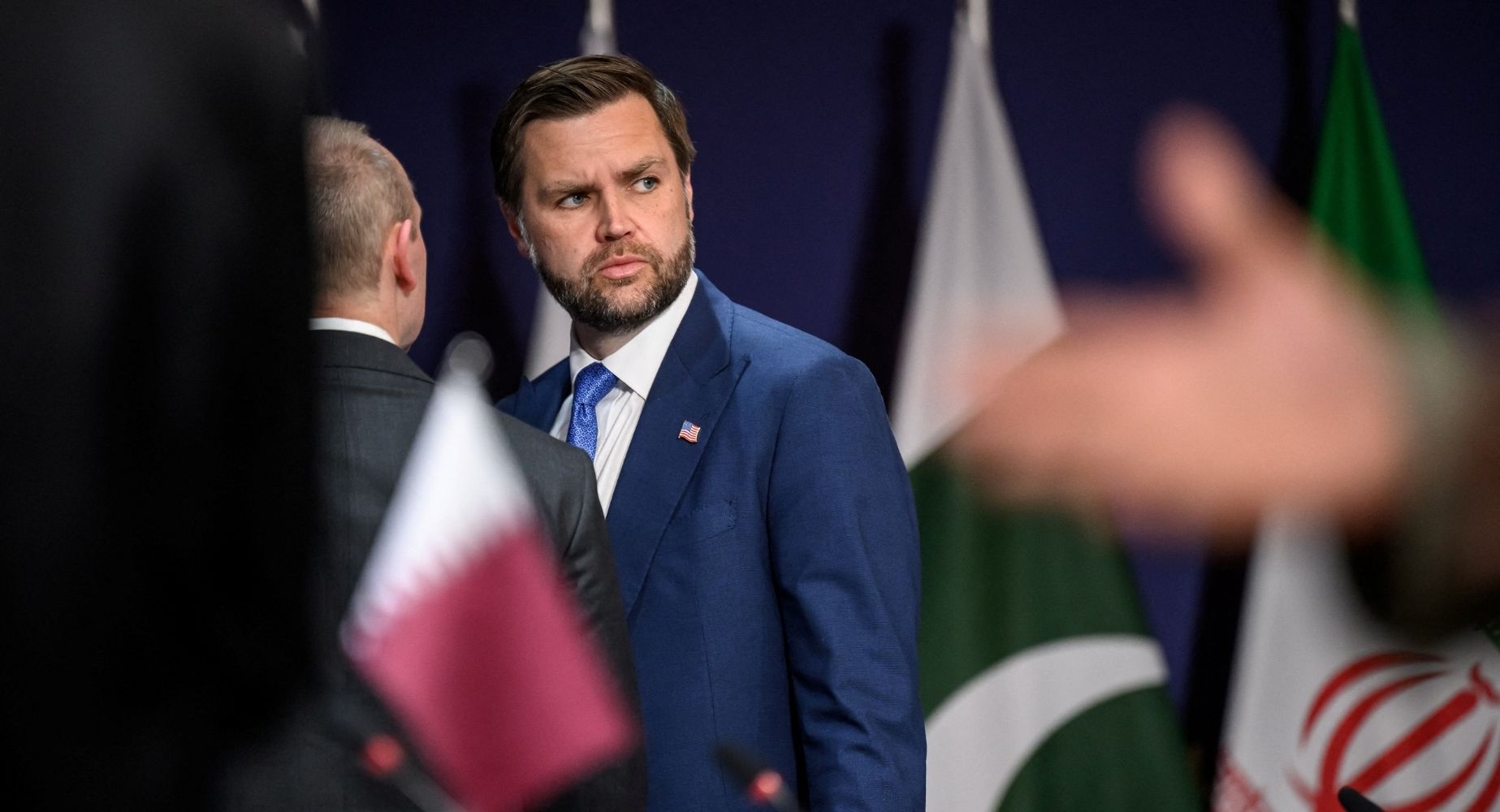
Recent developments surrounding the Islamabad memorandum of understanding (MoU), digitally finalized by U.S. Vice President JD Vance and Iranian Parliament Speaker Mohammad Bagher Ghalibaf, once again raise this question. Regardless of one’s position on the agreement itself, the broader issue is not the document but what it represents. The assumption appears to be that a negotiated sixty-day maritime framework can meaningfully alter the behavior of a regime whose strategic objectives remain fundamentally unchanged.
This reflects a recurring tendency in contemporary foreign policy: the belief that visible transactions can substitute for long-term doctrine.
A signed agreement creates headlines. A prisoner exchange produces immediate results. A temporary understanding reduces tensions. Yet none of these necessarily alters the underlying structure of power within an authoritarian system. Tactical achievements can create the appearance of progress while leaving the deeper foundations of a regime untouched.
Even as the digital ink dries on a de-escalation framework, the parallel operational chain of the Islamic Revolutionary Guard Corps remains active. Drones continue to move through the Strait of Hormuz, illustrating a central reality often ignored in external assessments: the regime’s security architecture operates according to an internal logic that no memorandum can override.
For years, debates about Iran have focused on negotiations, sanctions, diplomatic openings, and temporary arrangements. Each has produced moments of optimism and disappointment. What has often been missing is a deeper understanding of how the Islamic Republic survives.
In my thesis, “Iran’s Onion Structure of Power” I argued that the regime functions through multiple protective layers rather than through a single center of authority. The Islamic Republic is not merely a government. It is a complex network of ideological institutions, security organizations, economic interests, patronage systems, intelligence structures, and coercive mechanisms. These layers are designed to absorb pressure while preserving the regime’s core.
External actors frequently engage with the outer layers because they are the most visible and accessible. Yet the survival of the system depends on deeper layers that remain largely unaffected by transactional diplomacy. As a result, negotiations often produce adjustments in behavior without generating meaningful structural change.
The same theatrical transactionalism that mistakes a signed memorandum for a transformed regime also mistakes the removal or capture of a dictator for the transformation of a state. In both cases, policy focuses on the visible layer of power while ignoring the deeper structures that sustain it. The result is often the same: symbolic victories celebrated in headlines, followed by strategic disappointment in reality.
The problem is not unique to Iran. Many authoritarian systems function as layered political organisms. The Maduro-era security architecture in Venezuela, Putin’s Russia, and similar regimes are not sustained by a single leader alone. They endure through overlapping networks of coercion, patronage, economic dependency, intelligence operations, ideological narratives, and elite interests.
Like Iran, these systems are not pyramids but ecosystems. Their resilience comes from redundancy. If one layer weakens, another compensates. If one institution loses legitimacy, another assumes its function. Power is distributed across multiple protective layers rather than concentrated in a single vulnerable center. The system survives because its architecture is designed for survival.
The same logic extends to Lebanon. Pressure on Hezbollah can weaken visible military capacity, but weakening an organization is not the same as transforming the political ecosystem that produces it. As with other layered systems, the challenge lies not in striking a single actor but in reshaping the structure beneath it. Transactional gains in one layer often leave the deeper architecture intact, allowing influence and power to reconstitute elsewhere.
These systems are specifically designed to absorb shocks. Sanctions may affect one layer. Diplomatic pressure may influence another. Leadership changes may alter the visible face of the regime or movement. Yet the deeper architecture often remains intact. This is why authoritarian and hybrid systems can survive economic crises, political unrest, international isolation, and even leadership transitions.
A transactional approach to foreign policy struggles to address this reality because it naturally prioritizes immediate and measurable outcomes. Success becomes defined by agreements signed, meetings held, concessions obtained, or tensions temporarily reduced.
Domestic political incentives reinforce this tendency. Electoral cycles, media dynamics, and the demand for visible achievements can push foreign policy toward short-term symbolism. Across administrations, there is a recurring temptation to prioritize outcomes that can be presented quickly rather than structures that require sustained strategic commitment.
Doctrine operates differently.
A doctrine provides a framework through which individual transactions acquire strategic meaning. It identifies long-term objectives, establishes priorities, and connects short-term actions to broader geopolitical goals. Transactions can be useful instruments, but they cannot replace the strategic logic that gives them purpose.
Historically, some of America’s most successful foreign policy periods were characterized by precisely this combination. During the Cold War, policymakers pursued negotiations, agreements, and compromises. Yet these actions were embedded within a larger strategic doctrine of containment. The negotiations were not the strategy; they were instruments of the strategy. Individual transactions mattered because they served a coherent vision.
When doctrine weakens, transactions become detached from strategy. Partners begin to question whether commitments will endure beyond the next political cycle. Adversaries test boundaries more aggressively. Neutral actors hedge their positions. Over time, the problem becomes not a lack of power but a lack of confidence in how that power will be applied.
This challenge extends far beyond Iran. The war in Ukraine, tensions in East Asia, instability in the Middle East, and democratic backsliding in various regions all raise similar questions. Allies increasingly seek reassurance that American commitments are based on strategic consistency rather than temporary calculations. Adversaries increasingly look for opportunities created by perceived inconsistency.
The issue is not whether diplomacy should occur. Diplomacy remains an essential instrument of statecraft. The issue is whether diplomacy serves a doctrine or substitutes for one.
Without doctrine, foreign policy risks becoming reactive rather than strategic. It becomes a sequence of isolated responses rather than a coherent effort to shape international outcomes.
The consequences are particularly visible among diaspora communities whose homelands remain affected by authoritarian rule. Iranian-Americans, Venezuelan-Americans, Ukrainians, Israelis, and others often view international developments through the lens of lived historical experience. They understand that authoritarian systems rarely collapse because of a single agreement, a symbolic concession, or the removal of one prominent figure.
They have seen how such systems adapt. They have seen how power shifts between layers rather than disappears. They have seen how regimes survive by sacrificing peripheral interests while protecting their core structures.
These communities understand something that policymakers frequently underestimate: resilience is often built into the architecture of authoritarian systems themselves.
In an onion state, peeling away one layer does not eliminate the system. It merely reveals the next layer beneath it. Remove one figure and another replaces it. Pressure one institution and influence migrates elsewhere. Target one surface structure and the system reorganizes around it while preserving continuity at the core.
The question facing American foreign policy is therefore larger than any single negotiation, agreement, or administration. It is whether the United States can restore the strategic doctrine necessary to transform individual transactions into lasting outcomes.
Agreements can buy time. Transactions can reduce tensions. Tactical successes can generate headlines.
But none of them can substitute for doctrine.
Credibility is not built when an agreement is signed. Credibility is built when allies and adversaries alike believe that the agreement serves a larger strategic purpose.
In an increasingly unstable world, the question is no longer whether the United States possesses sufficient power. The question is whether it can once again align that power with a coherent doctrine.
The future of American credibility may depend on the answer.
