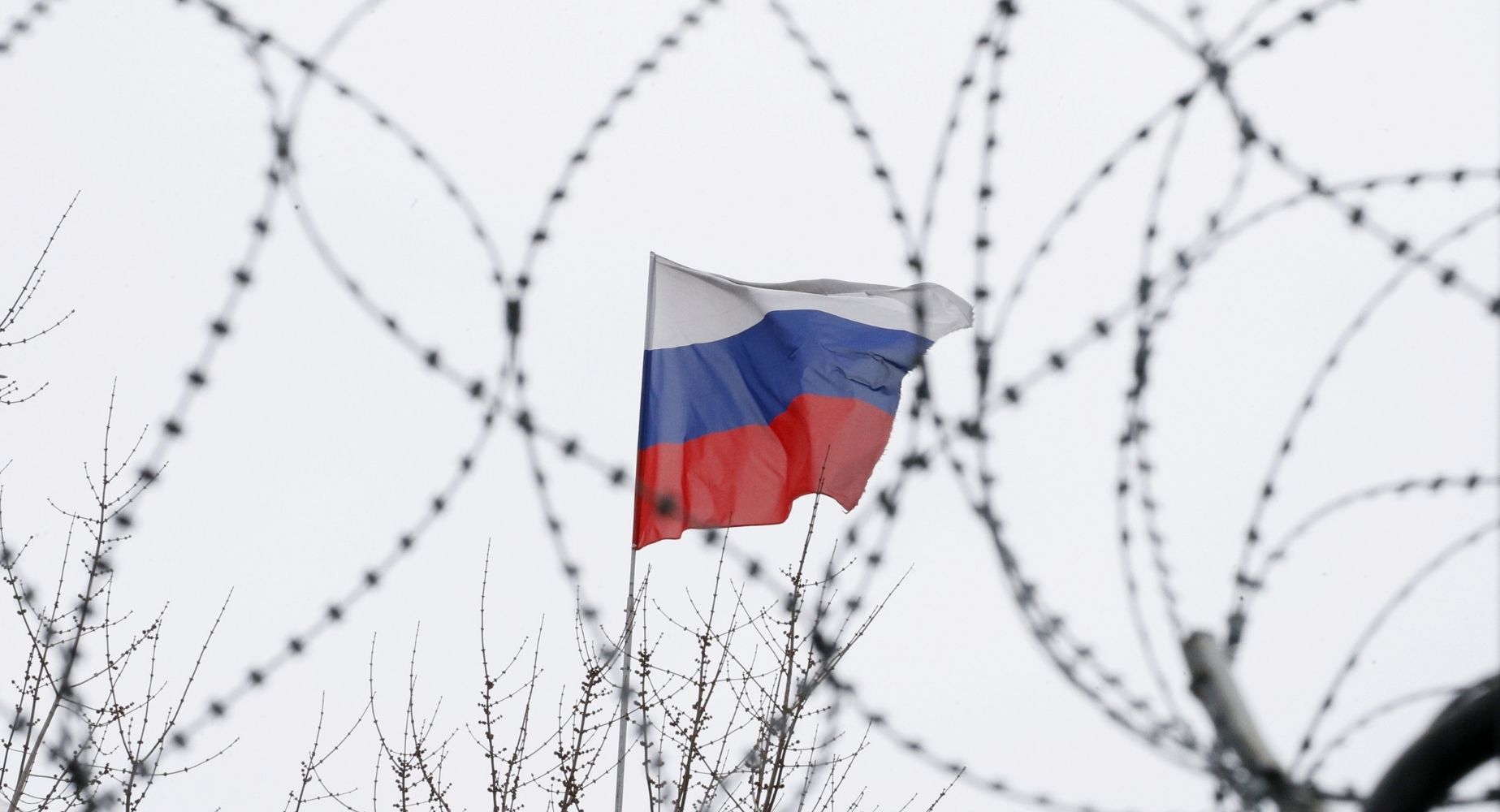
Russia’s war against Ukraine is not only a brutal violation of sovereignty; it is a direct challenge to the fundamental principle that borders cannot be changed by force. This norm is not abstract; rather, it is the foundation of international stability. If it erodes, the consequences will extend far beyond Ukraine, undermining the security architecture of Europe and encouraging revisionist behavior globally.
For this reason, Russia cannot—and should not—win this war.
The argument is strategic rather than punitive. A Russian victory, or even an ambiguous outcome that can be framed domestically as success, would validate military coercion as an acceptable tool of territorial revision. It would weaken deterrence and embolden further aggression. Conversely, a clear Russian failure would reinforce the credibility of international norms and demonstrate that sustained aggression carries decisive costs.
There is also a historical dimension that is often underappreciated. As S. Frederick Starr argues in “Putin’s Last Rodeo and Beyond,” Russia’s major military defeats have frequently served as catalysts for internal reform. The Crimean War of 1853–1856 exposed deep structural weaknesses in the Russian Empire and led to the “Great Reforms” under Alexander II, including the abolition of serfdom and the modernization of state institutions. Similarly, the defeat in the Russo-Japanese War in 1905 triggered constitutional changes and the establishment of a representative assembly. These episodes suggest a recurring pattern: external failure has often compelled Russia to shift from imperial expansion toward internal modernization.
At the same time, history offers an equally important caution. When Russia’s defeat has been incomplete—and when external actors have hoped that accommodation or premature normalization would empower reformist forces—the result has often been renewed aggression rather than lasting change. Hopefully, this pattern will not repeat itself.
The post-Cold War period illustrates this dynamic with particular clarity. In the 1990s, insufficient attention to Russia’s use of force in Abkhazia, South Ossetia, Transnistria, and Nagorno-Karabakh coincided with expectations that Moscow was on a genuine reform trajectory. This assumption shaped a cautious policy approach that underestimated the long-term implications of early coercive actions.
In the following decades, similar patterns emerged. The limited response to the war in Chechnya in the early 2000s coincided with the consolidation of authoritarian governance under Vladimir Putin. The restrained reaction to Russia’s invasion of Georgia in 2008, followed by the insufficient deterrence after the annexation of Crimea and the war in eastern Ukraine in 2014, reinforced the perception that force could be employed with manageable consequences. These cumulative signals contributed to the conditions that enabled the full-scale invasion of Ukraine in 2022—the largest war in Europe since World War II.
Georgia today provides a sobering illustration of the long-term consequences of sustained pressure. Once regarded as a leading pro-Western reformer, the country has been subjected to prolonged hybrid influence—political, economic, and informational—which has gradually weakened institutions and constrained its international agency. This demonstrates that Russian strategy operates across a spectrum of tools, not only through conventional military force but also through mechanisms designed to erode sovereignty from within.
This experience reinforces a broader conclusion: unless Russia’s capacity for external coercion is decisively constrained, instability will continue to extend beyond its borders. Military aggression and hybrid influence are integral components of a single strategic approach.
A related policy lesson concerns the limitations of Russia-centric approaches. Efforts to prioritize engagement with Moscow at the expense of neighboring democracies have not produced sustainable stability. In 1991, for example, U.S. policy initially reflected concerns that the dissolution of the Soviet Union might undermine democratic prospects in Russia. As it turned out, the failure of the coup and the independence of fourteen states created a far broader space for democratic development—many of those countries today are significantly freer than Russia itself. Similarly, the 2009 “reset” policy, which downplayed Russia’s occupation of Georgian territories in the interest of broader cooperation, did not moderate Russian behavior in the long term. These experiences suggest that supporting sovereignty, democratic governance, and a rules-based order along Russia’s periphery is not only normatively justified but strategically effective. Such an approach contributes to a more stable Europe and, over time, may create more favorable conditions for change within Russia itself.
For these reasons, any settlement of the war in Ukraine must be approached with patience and strategic clarity. Partial or ambiguous outcomes risk reproducing past mistakes. By contrast, a clear and comprehensive failure of Russia’s war effort offers the strongest basis for both internal reassessment within Russia and durable security in Europe.
Equally important is the continued support for democratic transformation in countries on Russia’s borders. Ukraine, Georgia, Moldova, and others have demonstrated a clear commitment to sovereignty and democratic development, often under significant pressure. Their success is central to long-term regional stability.
Finally, it is essential to avoid any return to the concept of spheres of influence in Europe. The notion that great powers can determine the fate of smaller states has repeatedly led to instability and conflict. Any revival of such thinking would carry significant risks.
In this context, the continued enlargement of NATO and the European Union remains a cornerstone of European security. Enlargement extends the space of predictable governance, collective defense, and rule-based cooperation. It is not a source of instability but a mechanism for preventing it.
The outcome of the war in Ukraine will shape not only European security but the future of the international order. Ensuring that Russia’s aggression fails decisively is therefore not a regional concern alone—it is a matter of global consequence. It serves the long-term interests of the United States and the wider free world by reaffirming the principle that borders cannot be changed by force, strengthening the credibility of deterrence, and preserving a rules-based system that has underpinned decades of relative stability and prosperity. At the same time, it creates the conditions for a potential reorientation within Russia itself, away from coercive imperial ambition and toward internal renewal. In this sense, Ukraine’s victory is not only about defending sovereignty; it is about safeguarding the strategic foundations of a more secure, stable, and free world.
