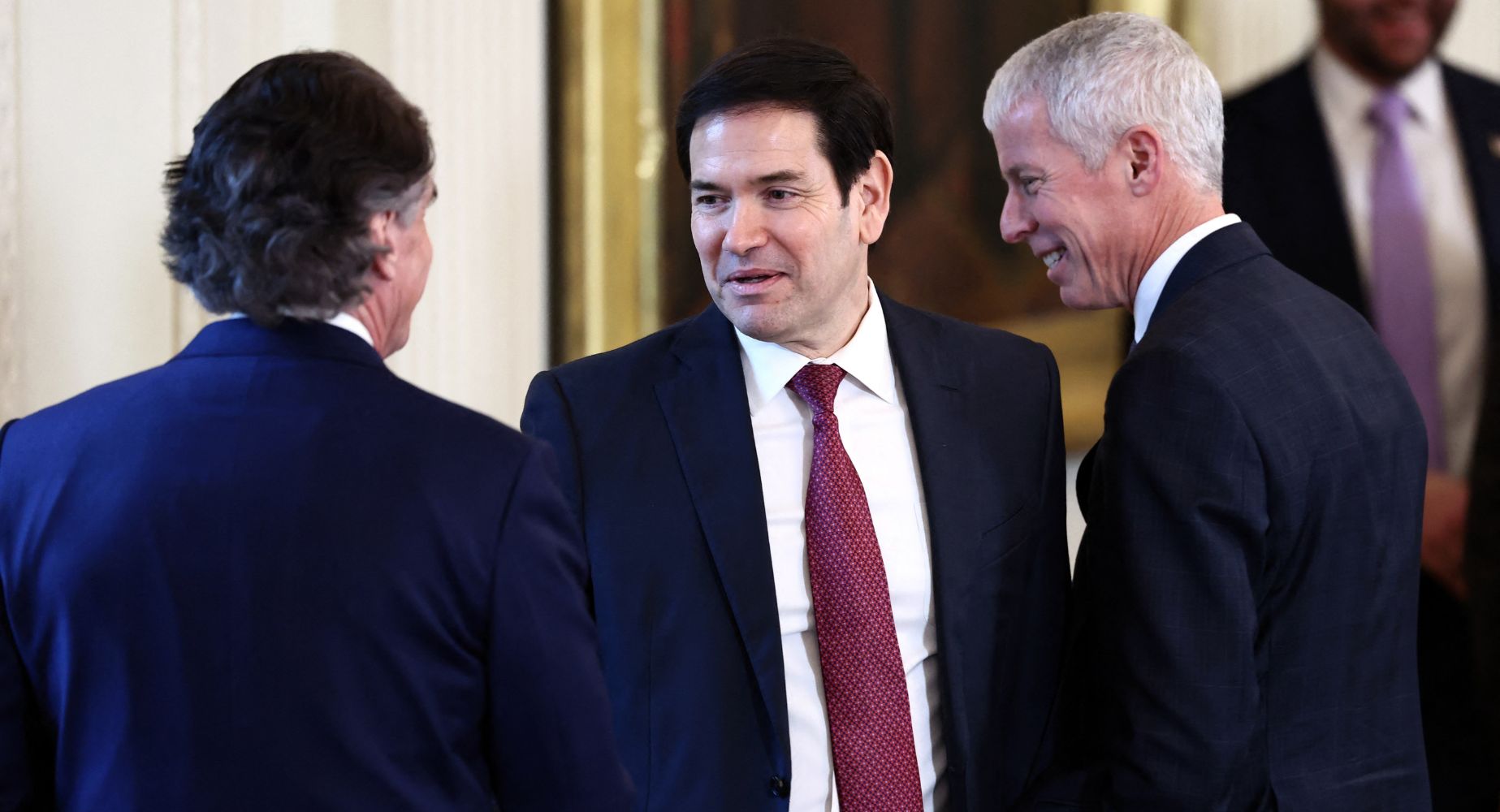
On January 7, Secretary of State Marco Rubio outlined a three-phase plan for Venezuela.
The first phase focuses on oil. Owing to sanctions, much of Venezuela’s oil production is effectively frozen. Under this plan, American companies would help rehabilitate oil production and facilitate sales, while profits would be managed in a way intended to benefit the Venezuelan population rather than fuel corruption or sustain the regime.
The second phase is described as “recovery.” American, Western and other oil companies would have fair access to the Venezuelan oil market. There would be a release of political prisoners and the return of exiled opposition figures, with the aim of beginning the reconstruction of Venezuelan civil society.
The third phase would involve a transition from authoritarian rule. This final stage is by far the most challenging.
Other Democratic Transitions
It is useful to examine two successful cases of transitions from authoritarian rule. In Spain, individuals associated with the Franco regime, notably Prime Minister Adolfo Suárez and King Juan Carlos, played central and constructive roles in enabling a transition. In Portugal, a peaceful transition occurred when junior and mid-ranking military officers rebelled against the dictatorship, enabling a largely nonviolent overthrow of the old regime.
Transitions in Latin America often follow a negotiated model, in which outgoing authoritarian rulers retain significant leverage over the terms of the transition. In Chile, for example, Augusto Pinochet remained popular among key sectors of society. Although the opposition succeeded in securing a transition, it had to operate within a constitutional framework designed by the old regime. Pinochet obtained a lifetime Senate seat, remained commander-in-chief of the armed forces, and ensured the appointment of nine unelected senators.
In Brazil, the transition to democracy took nearly 10 years, beginning in the early 1980s. Divisions within the main opposition party weakened its ability to challenge the regime, allowing the military government to exploit these fractures. The regime imposed indirect presidential elections in 1985 and embedded military-friendly mechanisms within the electoral college, including appointed senators. an approach that largely succeeded in protecting elite interests. As civil society mobilized, a new constitution was drafted in 1988 and in 1989 , the first direct election of a president took place.
By contrast, in Argentina the old regime collapsed rapidly, with the military conceding power to a multiparty coalition that negotiated the transition.
What About Venezuela?
In Venezuela, the prospects for a negotiated transition remain uncertain, while the possibility of regime collapse does not appear imminent.
Paramilitary groups tied to the regime are engaged in aggressive efforts to maintain control. These colectivos, originally formed as grassroots community organizations by the Chávez regime, have evolved into armed groups tasked with defending the regime. According to some reports, the FARC, a Colombian Marxist terrorist group, provides training, weapons, and tactical support to them.
Although some political prisoners were released, government repression continues. Security forces are interrogating citizens, seizing cell phones to check for expressions of support for Maduro’s ouster, and carrying out arrests. More than a dozen journalists and other civilians have been detained.
Venezuela does have a multiparty coalition capable, at least in principle, of negotiating a transition or assuming power. The July 2024 primary elections produced an overwhelming victory for María Corina Machado, consolidating her leadership of the opposition, although Maduro later barred her candidacy. In her place, Edmundo González Urrutia won a majority of the votes in the general election against the incumbent Nicolás Maduro. The regime responded with fraud and outright denial of the opposition’s legitimacy — unlike in most of the comparative cases discussed above.
Delcy Rodríguez, vice president since 2018, is now the acting president. Like her brother Jorge Rodríguez , Interior Minister Diosdado Cabello and Defense Minister Vladimir Padrino, she is part of the criminal network that has ruled Venezuela for more than a quarter century. With Cuban assistance, this network maintains control over the military.
The regime’s strategy appears to be attrition: confronting protests and opposition forces until fatigue and hopelessness set in, following the Cuban model. Despite Delcy Rodríguez’s claims that she will cooperate with the Trump administration and despite the release of a handful of political prisoners, it remains far from clear that she is willing to negotiate in good faith.
In short, the challenges for a transition in Venezuela, as stipulated in Secretary Rubio’s plan, are profound and may require further US pressures on the regime.
