Since its inception 78 years ago, Israel has served as a very convenient scapegoat for the authoritarian regimes in its neighborhood. Instead of looking for solutions to the many problems that plague their nations, they found it easier to blame it all on Israel. Using antisemitic practices that have proven themselves over many generations and across all corners of the world, the turned the attention of their citizens away from the corruption and wrongdoing of their governments and incited against Israel as the root cause that prevented their countries from enjoying the comfortable lifestyle that one finds in North America, Europe and elsewhere.
Thus, in the “shifting dunes” theater of life of the Middle East, the role of Israel’s greatest nemesis was always considered as a highly attractive position. First, it was Egypt, led by King Faruq and then by its charismatic President Gamal Abdel Nasser, that stepped up to lead the struggle against Israel in the aftermath of the 1948 War and held this position till it signed a peace Treaty with Israel in 1979. Then came Iraq, led by its strongman Saddam Hussein, who fulfilled the role with great enthusiasm. However, the bombing of its Osirak nuclear reactor in 1981, the 8-year war with Iran and the shameful defeat in the first Gulf War in 1991 forced Iraq to let go of this role. In came Iran, led by Ali Khamenei whose commitment to the destruction of Israel, as part of his revolutionary ideology was even worse than that of his predecessor Ayatollah Khomeini. Over the last 3 decades Iran did its best to succeed in this role – it has relentlessly pursued nuclear weapons capability, developed and built a huge arsenal of ballistic missiles, invested large amounts in supporting a network of proxies across the Middle East and conducted numerous cyber campaigns. However, these efforts have caused its economy to crumble and the strikes inflicted on it by the USA and Israel in their combined military campaign have broken the back of its armed forces. While it’s not yet clear how the conflict will end, it is quite safe to assume that Iran will find it much more difficult to hold on to its role as Israel’s number one enemy. In geopolitics, like in physics, there is no room for a vacuum. So, who will be the next country to take the lead in the endless battle against Israel?
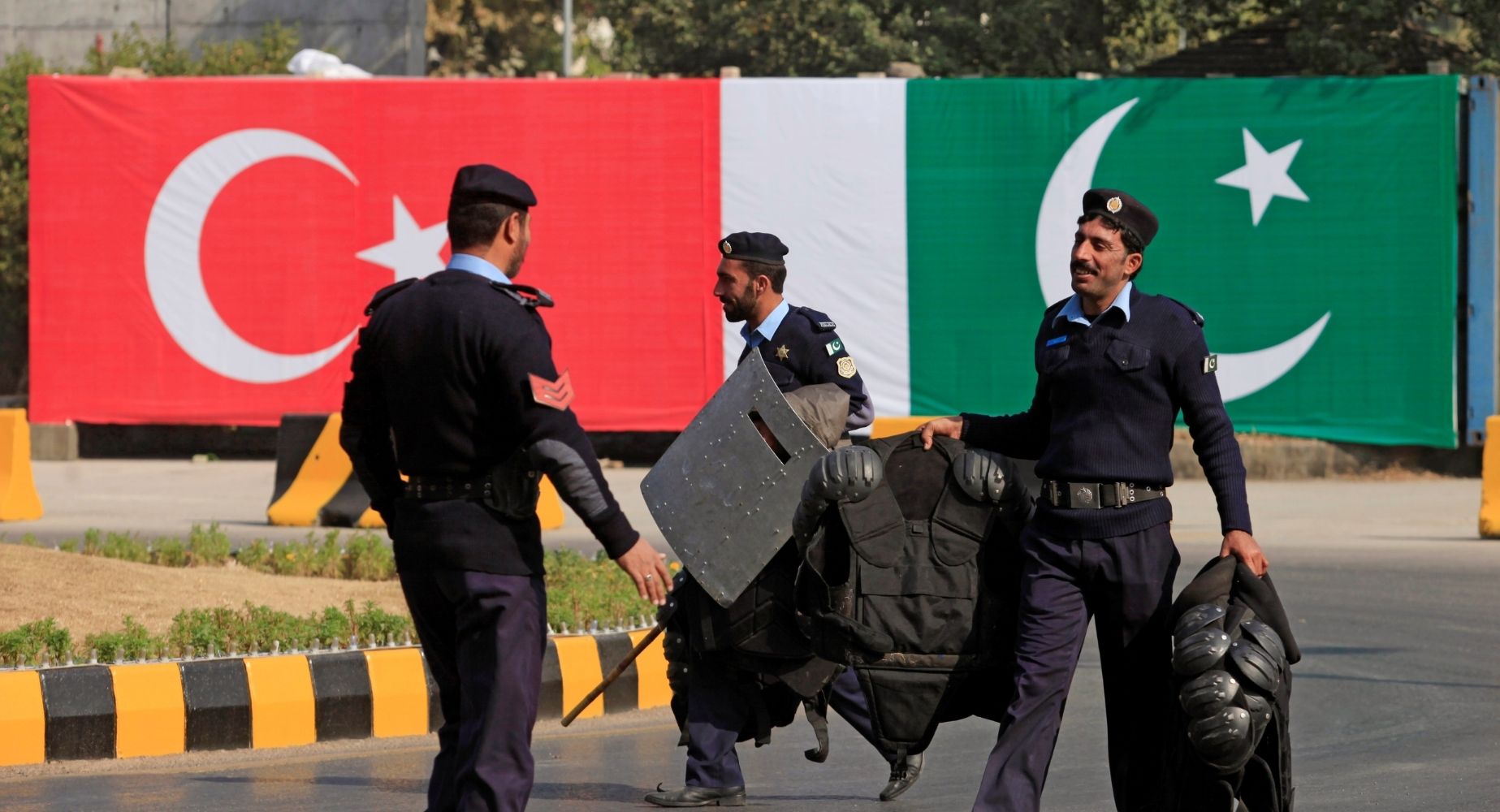
At the present time, it looks like Turkey and Pakistan are competing for the job. Both are considered regional powers, with large populations (85 and 240 million respectively), mostly Sunni with other smaller minorities. Both are ruled by authoritarian leaders who are backed up their armies and, quite surprisingly, both maintain rather friendly relationships with the USA.
Since taking power nearly a quarter of a century ago, and to a much larger extent since the Marmara flotilla incident in 2010, President Erdogan has exhibited an ever-increasing hostility towards Israel. In 2018 he has crippled the diplomatic relations between the countries by pulling Turkey’s ambassador back from Israel and calling on the Israeli ambassador to leave Turkey. After the war in Gaza erupted in 2023, he announced a comprehensive economic embargo against Israel and in July 2024 he delivered a speech stating that “we can invade Israel as we did in Libya and Karabakh”. In 2025, Erdogan sensed an opportunity to expand the Turkish sphere of influence to the South after the Assad regime in Syria caved in. He provided Ahmed al- Sharaa, then a rebel leader and now Syria’s president, with armament and training in return for a permanent foothold in Syria. Turkish troops entered northern Syria to drive Kurdish militias away from the border and if Israel hadn’t bombed some military bases in Syria as warning signals, we would have seen by now Turkish forces facing Israeli troops along the Golan Heights border. When talks between the USA and Iran were recently held in Islamabad, Erdogan probably felt that the Pakistanis are “stealing his show” and reiterated his treat to launch military operations against Israel while simultaneously initiating a ridiculous judicial process against Prime Minister Netanyahu and other Israeli public figures in a Turkish court.
Pakistan and Israel have never established diplomatic relations, and Pakistan has always chosen to take an anti-Israel stance in international forums. While no direct conflict has ever occurred between the two countries, some evidences have surfaced over the years regarding Pakistan’s involvement in supporting terrorist organizations, exporting nuclear technologies to Libia and Syria, etc. In September 2025 Pakistan and Saudi Arabia signed a Defense Treaty and it was implemented for the first time in March 2026 when Pakistani troops were deployed in Saudi Arabia to help the latter meet the threat of incoming missiles and drones launched by Iran. Pakistan is an important partner in China’s “Belt & Road Initiative”, aimed at securing China’s position as a leading superpower in the 21st century. China and Pakistan have jointly initiated a move aimed at reaching a ceasefire in the war in Iran and Pakistan offered it services as a mediator between the warring parties. Pakistan’s uncensored position towards Israel was represented quite bluntly in a post recently released by Pakistan Defense Minister Khawaja Asif who referred to Israel as “a curse for humanity” and added “I hope and pray people who created this cancerous state on Palestinian land to get rid of European Jews burn in hell”. Such a statement, coming from a country with a known arsenal of nuclear bombs, cannot be taken lightly.
Israel must be prepared for a scenario in which one of these two countries, possibly both along with Qatar as a financial edge in a triangular coalition, takes the lead against it as soon as the dust settles on the war with Iran. The choice between the options is not in Israel’s hands and all of them are, more-or-less, equally bad. The best leverage Israel has in facing this challenge is to rely on its special relations with the USA and hence, Israel should do whatever it can to protect these relations moving forward not only till 2028 (the end of the term for the current administration), but well beyond it.
