Words can kill. Washington knows that radical narratives can prepare the ground for radical action. But ideology alone does not sustain organizations, build international networks or finance operations. They need money. And recent actions by the U.S. government raise a question that deserves much greater attention: How extensive are the transnational financial networks connecting Muslim Brotherhood affiliates, front organizations and designated terrorist organizations such as Hamas?
This is no longer a theoretical question. The evidence is beginning to emerge. In June, the Justice Department charged a San Diego resident with allegedly raising approximately $600,000 through purported humanitarian campaigns and diverting part of those funds toward Hamas. The allegations remain to be proven in court. In July, the U.S. Treasury said it had exposed a “multi-layered” structure in which Muslim Brotherhood affiliates and Hamas-directed front organizations operated transnational fundraising channels, using charitable facades and underground banking networks to move and disguise funds across jurisdictions. Then, on September 1, the Justice Department announced that the FBI had seized more than $560,000 in cryptocurrency intended for Hamas while disrupting fundraising and recruitment infrastructure.
These cases lead to a fundamental question: What have we not yet found?
The Trump administration has already moved from debate to action, designating specific Muslim Brotherhood branches and targeting financial networks that U.S. authorities say connect Brotherhood affiliates with Hamas. But designation should not be the end of the strategy. It should be the beginning.
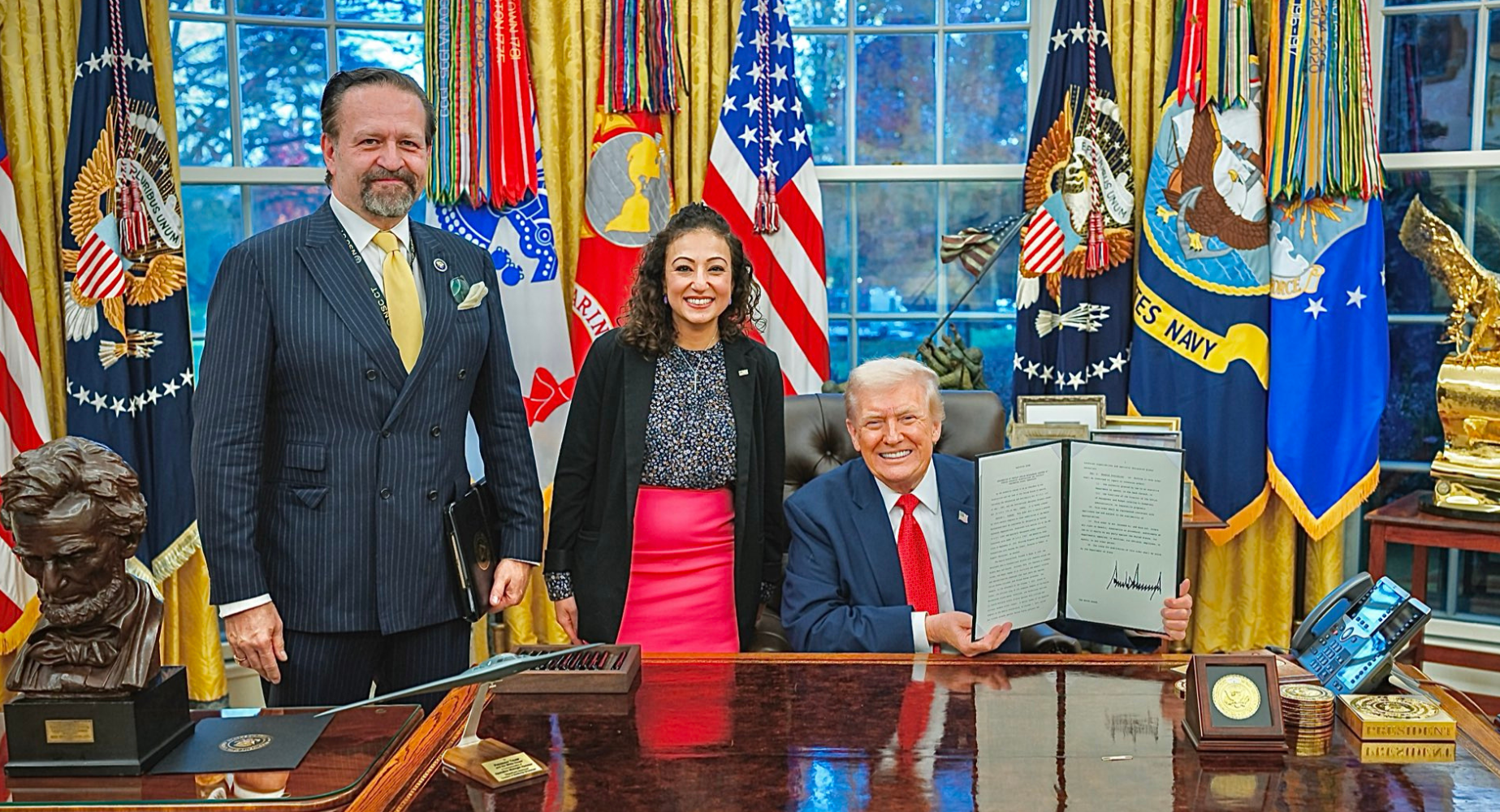
At the National Security Council, Sebastian Gorka, Deputy Assistant to the President and Senior Director for Counterterrorism, and Nancy Dahdouh, Director for Counterterrorism, Global Jihadi Movement–Sunni Threats, have worked directly on this challenge. They know the subject, have helped make the case inside the administration, and have contributed to moving the issue from debate to concrete action.
The challenge now is to build on the progress already achieved and develop a coordinated strategy capable of identifying and disrupting the broader financial architecture behind these transnational networks.Treasury, State Department, Justice, the FBI and the intelligence community already possess formidable authorities and capabilities. The NSC can play an essential role in ensuring that these capabilities become part of a coherent strategy against networks that recognize neither bureaucratic boundaries nor national borders.
If the networks are transnational, the response must also be transnational. Washington should deepen cooperation with trusted governments, intelligence services and financial authorities in Europe, the Middle East, Africa and Asia. The objective is straightforward: follow the money. Who raises it? Who receives it? Which charities transfer it? Which businesses and financial intermediaries move it? Where are the common directors, donors and beneficiaries? Where does the money cross jurisdictions? Most importantly, where does it ultimately end?
The same questions deserve to be asked inside the United States. America’s charitable and nonprofit system provides extraordinary freedom to raise money for religious, humanitarian and social purposes. Federal authorities should examine, where evidence warrants it, whether anyone is exploiting those protections, nonprofit status or charitable fundraising to conceal financial flows that ultimately benefit designated terrorist organizations. The issue is not religion. The issue is conduct, money and evidence.
Treasury has already provided reasons to look deeper. It has described charitable facades, underground financial networks, intermediaries and cross-border structures associated with Hamas and Muslim Brotherhood affiliates. The next phase therefore should not simply be another list of designations. It should be an effort to map the architecture.
That means identifying organizations that may appear unrelated but share financial intermediaries, directors, donors, beneficiaries or foreign partners. It means examining the ultimate destination of funds rather than stopping at their declared humanitarian purpose. And it means connecting information held by different American agencies with intelligence and financial information available to trusted foreign governments.
This is where American power is unique. The international role of the dollar, the reach of the American financial system, Treasury’s sanctions authorities, American intelligence capabilities and Washington’s relationships with governments around the world provide the United States with extraordinary instruments to expose illicit financial networks wherever the necessary legal jurisdiction exists.
There may be organizations and networks today that remain legal, dispersed and apparently disconnected until financial relationships, common intermediaries or organizational connections reveal a larger architecture. We should not assume those connections exist. But neither should we wait for another attack to discover them. We should find out whether they exist through methodical investigation and evidence.
October 7 demonstrated again the consequences of underestimating networks, intentions and capabilities. Washington now has an opportunity to move upstream. President Trump should give Gorka, Dahdouh and the broader counterterrorism team a larger mandate to help coordinate this effort across the U.S. government and with America’s partners abroad.
The principle is not complicated. Words matter. Networks matter. But organizations cannot survive without resources.
Follow the money. Map the networks. Establish the evidence. Expose illicit finance. Cut the financial lifelines. That is where the next phase of the fight should begin.
