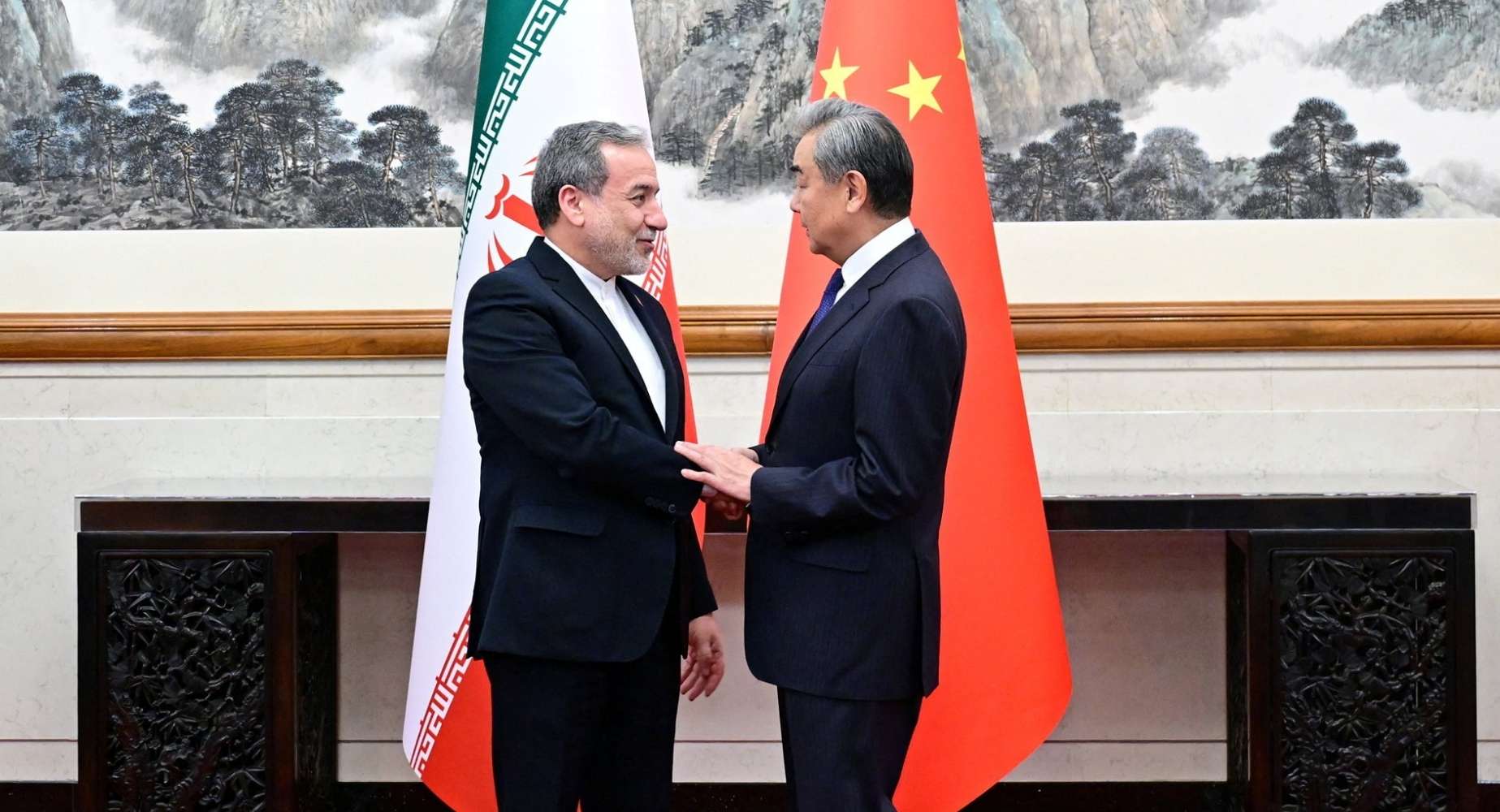
In the aftermath of the fragile ceasefire between the United States, Israel, and Iran, a striking narrative has taken hold: that China played a decisive role in bringing Tehran to the negotiating table. The claim rests on thin but widely amplified foundations. A remark by President Donald Trump, “I hear yes”, when asked whether Beijing had intervened, quickly cascaded into broader media interpretations. Reports in The New York Times suggested Chinese officials had urged Iran to accept a ceasefire, framing Beijing as a quiet but effective broker.
This narrative is appealing: it fits a broader story about China’s rising influence in the Middle East and its expanding diplomatic footprint. However, it is also misleading. China did not “break the impasse.” At most, it reinforced a decision that Iran had already made.
The Limits of Chinese Mediation
There is no doubt that China was engaged throughout the US-Israel and Iran conflict. Official Chinese statements consistently called for de-escalation, a ceasefire, and a return to negotiations. This messaging aligns with Beijing’s long-standing approach to the Middle East: prioritize stability, avoid military entanglement, and protect economic interests, especially energy flows.
Nevertheless, this was not a new position adopted at the moment of the ceasefire. China had delivered the same message repeatedly during the war. Tehran ignored it, until it did not. The key question, then, is not why China suddenly became a broker persuasive, but why Iran became receptive.
Tehran’s Strategic Timing
The answer lies primarily in Tehran, not Beijing. By the time the ceasefire was accepted, Iran had already secured what it could plausibly frame as a strategic success: regime survival, resilience under sustained military pressure, and the ability to impose costs on its adversaries. From this perspective, the ceasefire did not represent capitulation; it marked a transition from military confrontation to diplomatic consolidation.
This logic was clearly articulated by Mohammad Javad Zarif, former Vice President and Foreign Minister of Iran, in a widely discussed essay in Foreign Affairs, where he argued that Iran should “declare victory” and pivot to diplomacy, offering nuclear limits and reopening the Strait of Hormuz in exchange for sanctions relief and a broader de-escalation framework.
Officially, Iranian authorities rebuked him. In practice, the argument closely mirrored the position Iran ultimately adopted. Similarly, reporting in The Wall Street Journal suggested that Tehran entered the ceasefire from a position of relative strength, having secured both its survival and enhanced deterrence credibility. In this context, diplomacy was not a concession to external pressure but a continuation of strategy by other means.
China’s Broker Role: Amplifier, Not Driver
This does not mean China was irrelevant. Chinese officials likely did encourage flexibility, emphasizing the economic costs of prolonged conflict and the importance of maintaining open maritime routes, particularly through the Strait of Hormuz. However, these incentives were not new. China has consistently signaled such concerns throughout the conflict. If Tehran ignored them earlier, it is difficult to argue that they suddenly became decisive at the end.
China thus functioned as an amplifier of an emerging Iranian preference, rather than its originator. Once negotiation aligned with Iran’s strategic interests, Chinese messaging became useful but not determinative. In this sense, China did not change Iran’s calculus; it validated it.
The Politics of Attribution
Why, then, has the narrative of Chinese mediation gained such traction? Part of the answer lies in Washington. After weeks of costly escalation with uncertain outcomes, the appeal of an external “solution” is obvious. The idea that China could deliver to Iran offers a convenient exit strategy, one that shifts responsibility outward and reframes the outcome as managed rather than imposed. There is also an element of wishful thinking. If China holds the key to de-escalation, then engaging Beijing becomes a substitute for confronting the deeper strategic failures exposed by the conflict.
A parallel dynamic is visible in Tehran. Iranian officials have publicly praised China as a “true friend” and expressed hope that major powers, including China and Russia, as well as mediating countries such as Pakistan and Turkey, could help guarantee future stability.
However, even Chinese analysts have pushed back against this expectation, emphasizing that China is unlikely to assume the role of a security guarantor. Doing so would impose high costs, risk entanglement in regional conflicts, and potentially provoke counterbalancing responses. China’s approach is instead fundamentally different, cautious, non-coercive, and focused on facilitation rather than enforcement.
A Non-Western Diplomatic Style
This points to a broader reality about China’s broker role in the Middle East: Beijing is increasingly active diplomatically, but its influence operates within clear limits. China prefers mediation over intervention, economic leverage over military commitments, and incremental diplomacy over decisive breakthroughs.
This approach can be effective in certain contexts, particularly where parties are already inclined toward compromise, as demonstrated by China’s facilitation of the 2023 Saudi-Iran rapprochement. Nevertheless, it is far less capable of forcing outcomes against entrenched strategic interests. The ceasefire illustrates this distinction: China may have helped shape the diplomatic environment, but it did not create the conditions for peace.
China Got the Headline
In the end, perceptions of Chinese mediation say more about global expectations than about actual influence. Iran agreed to the ceasefire because it calculated that the timing was advantageous, not because China persuaded it to do so. Beijing’s role was real but limited: it reinforced, rather than redirected, Tehran’s strategic trajectory.
China got the headline. However, the decision was made in Tehran. Understanding this distinction matters: overestimating Chinese leverage risks misreading both Beijing’s capabilities and the dynamics of regional conflict, while encouraging misplaced reliance on external actors to resolve crises driven primarily by local calculations.
The ceasefire was not a triumph of Chinese diplomacy, but a moment when Iran determined that diplomacy served its interests, and China reinforced the narrative.
