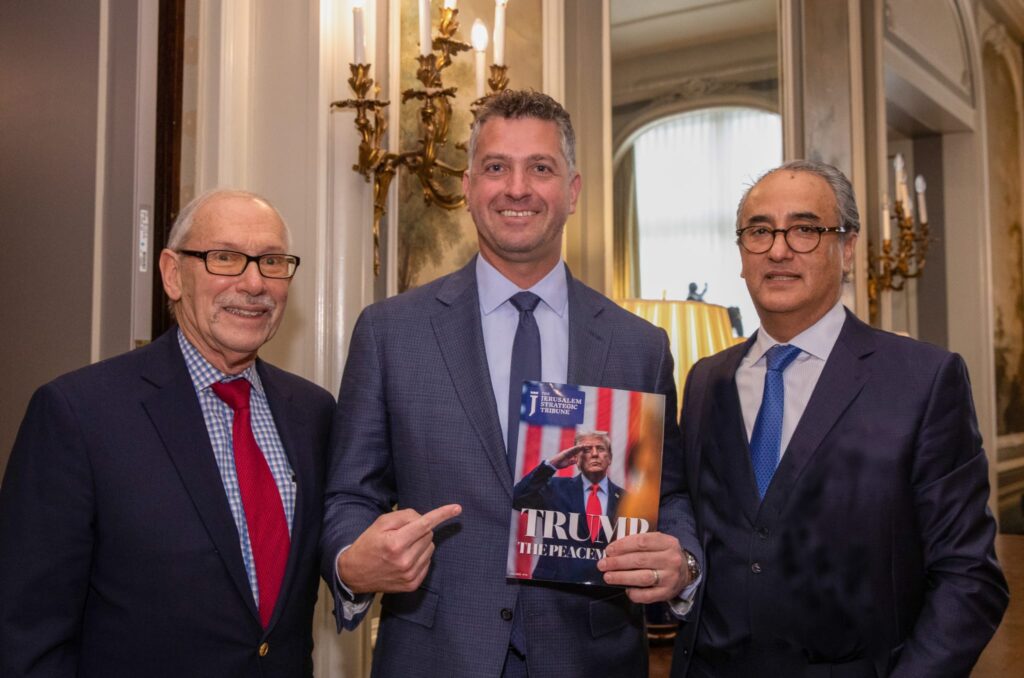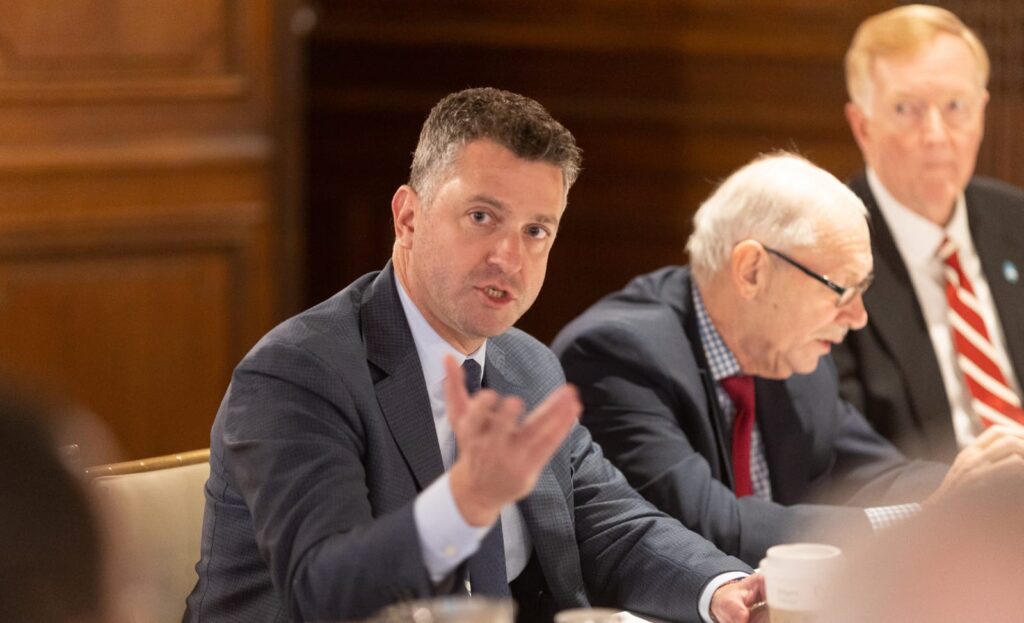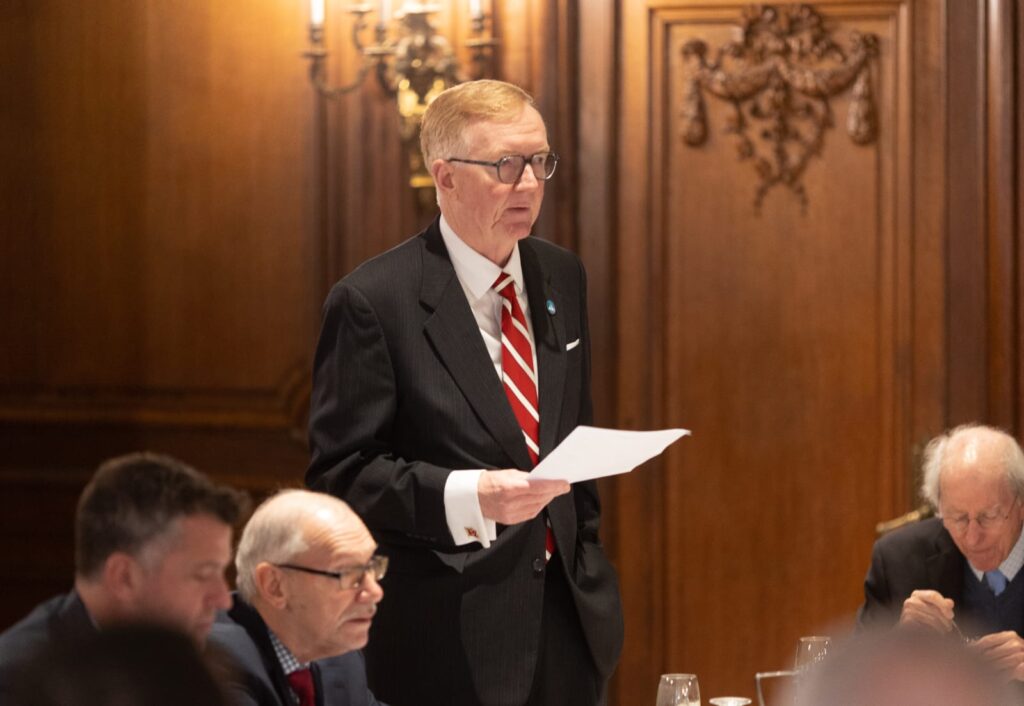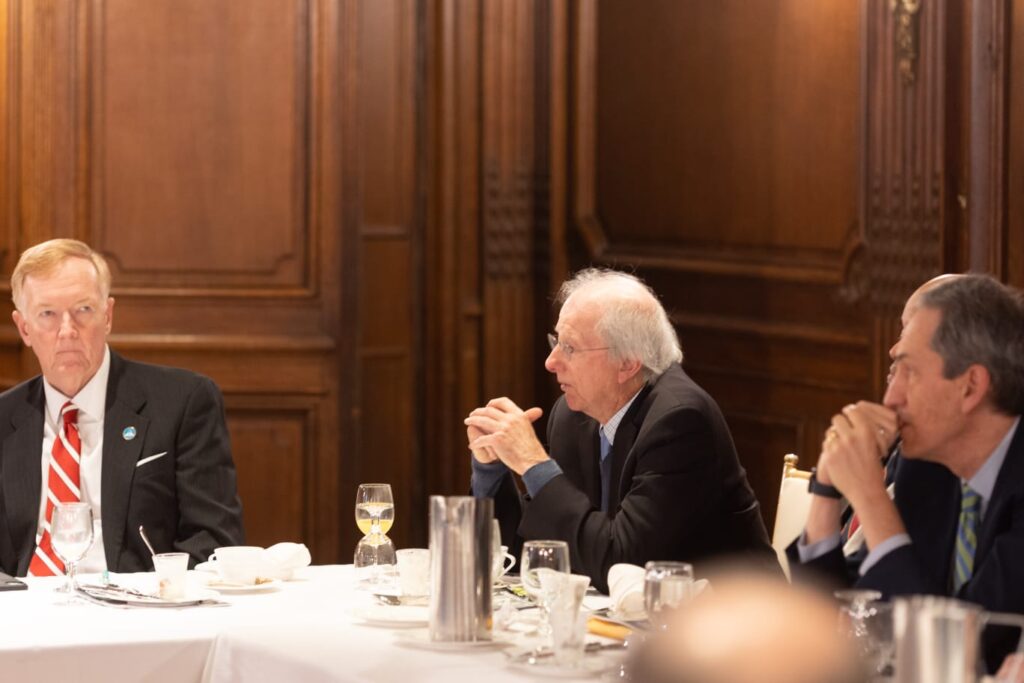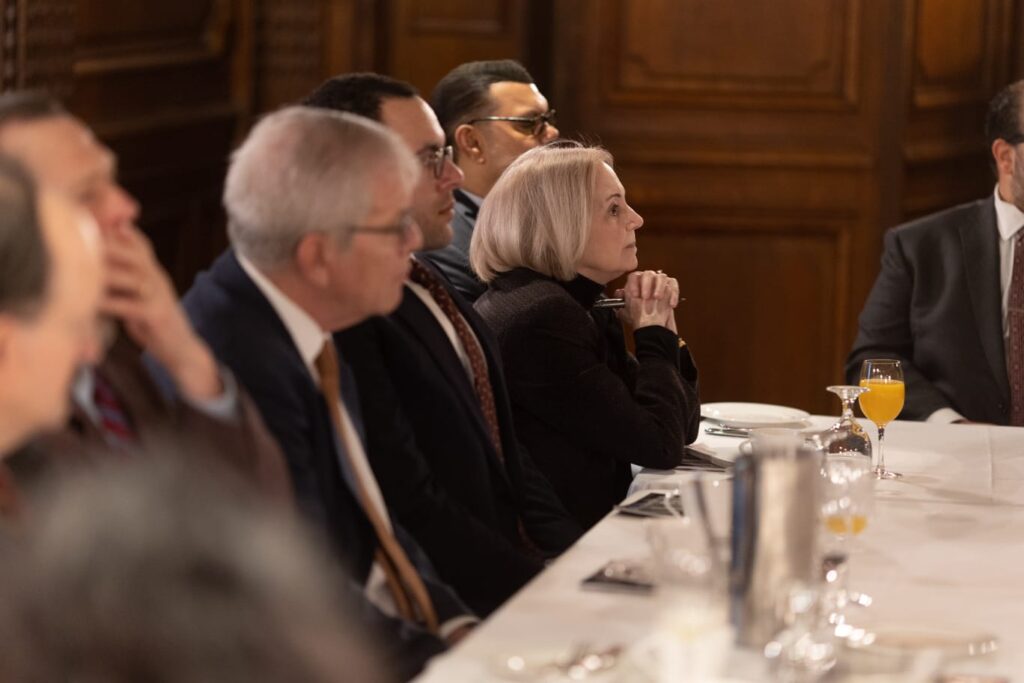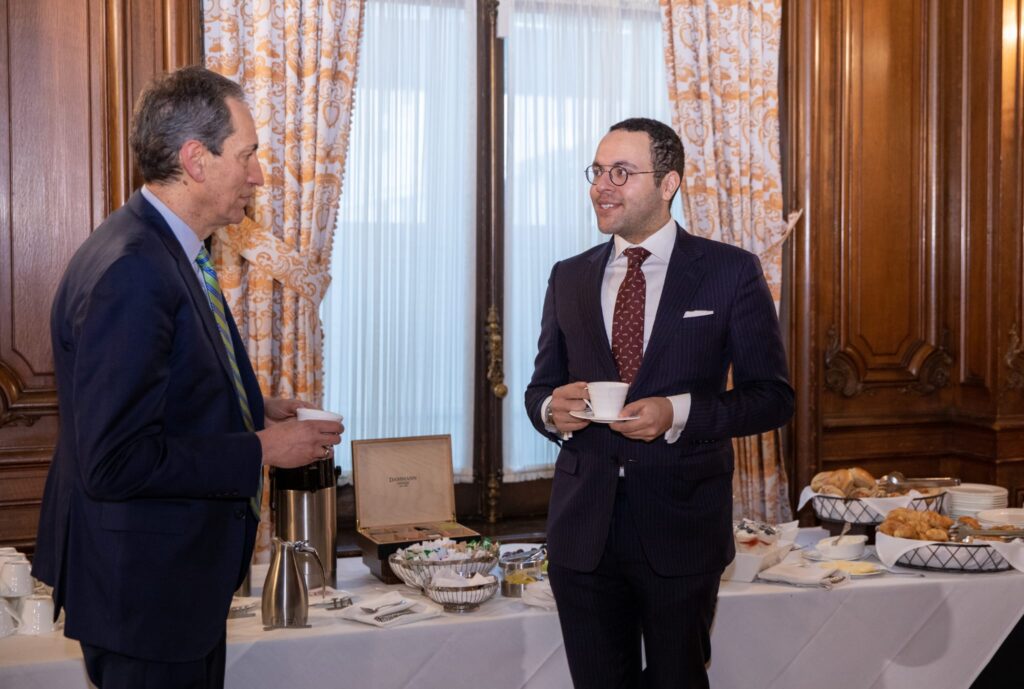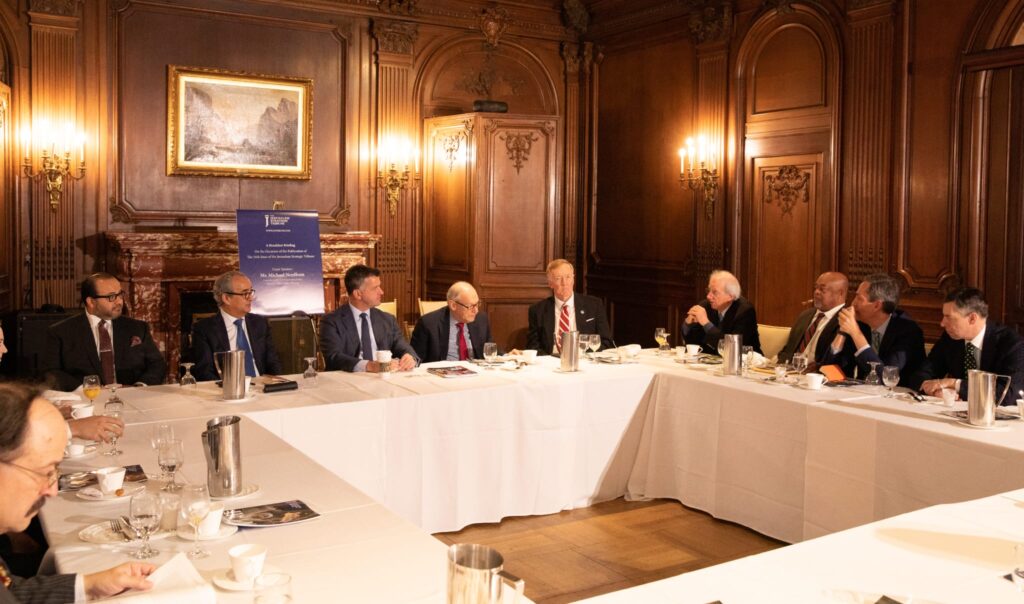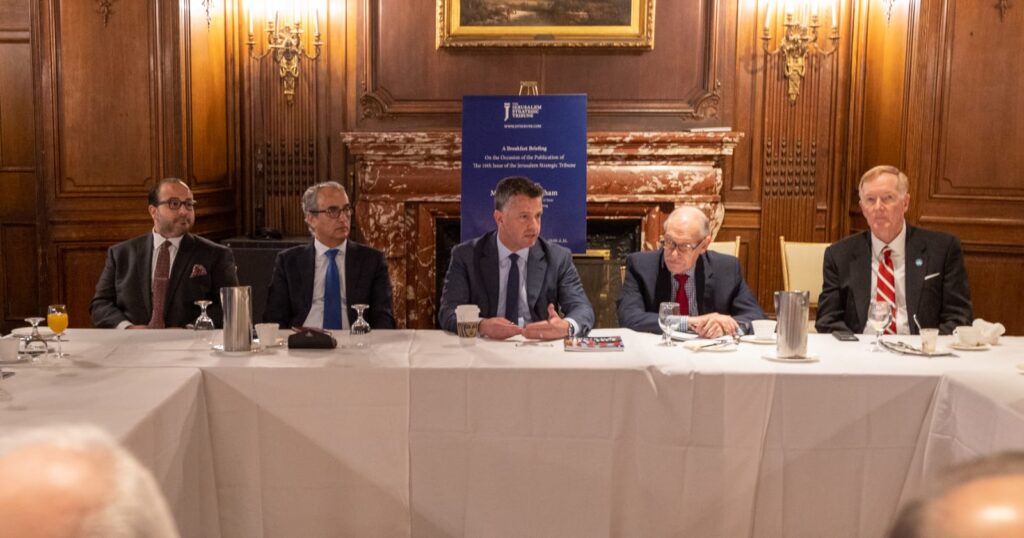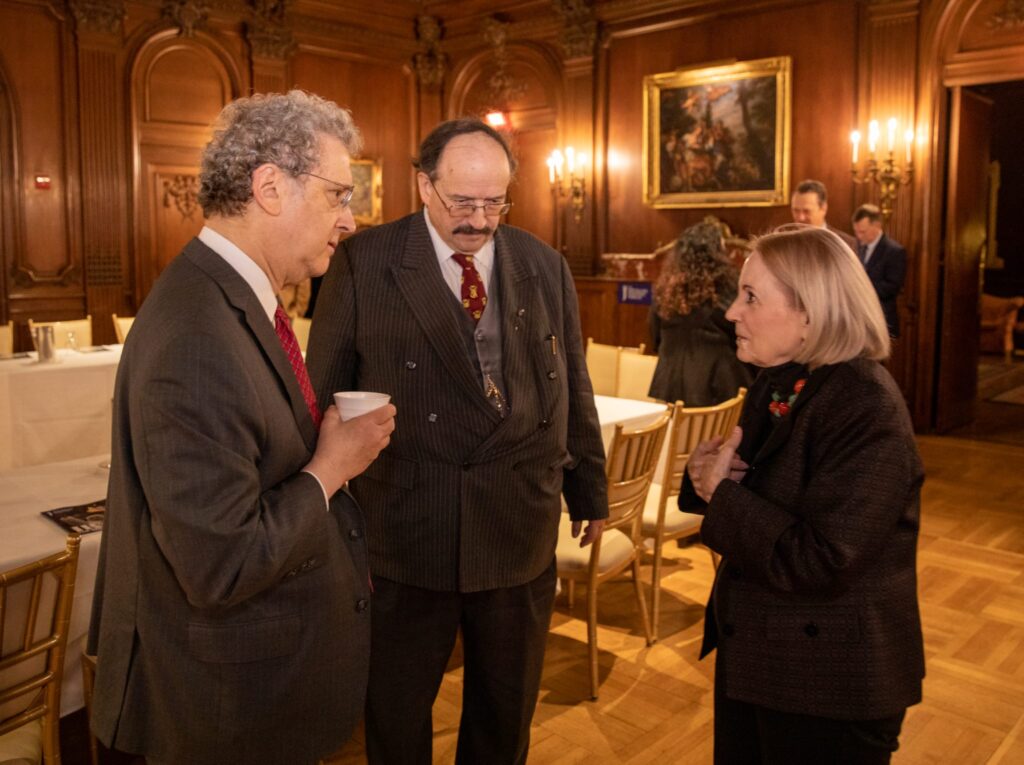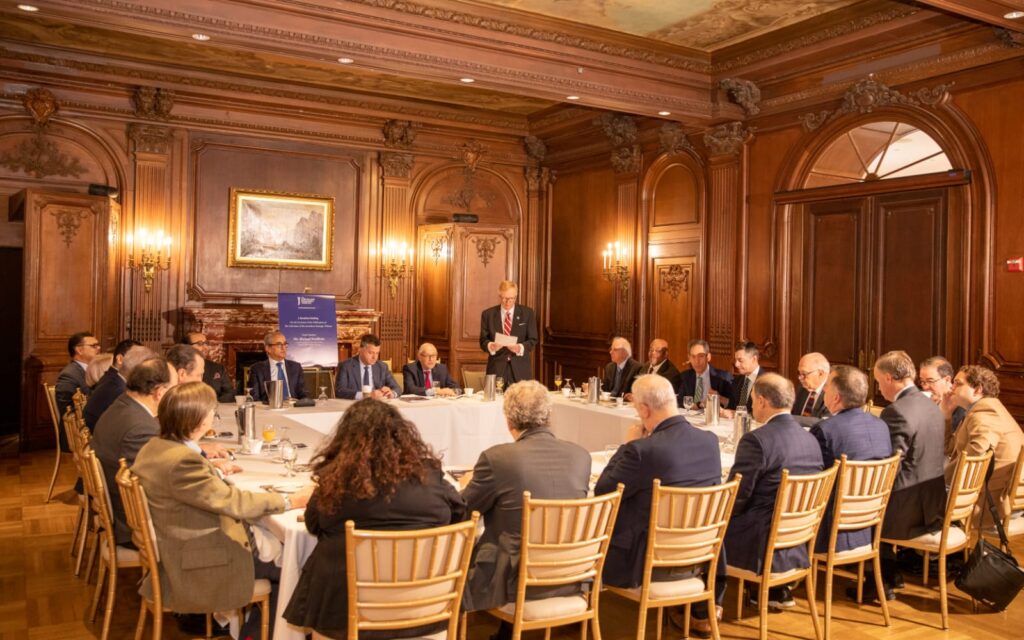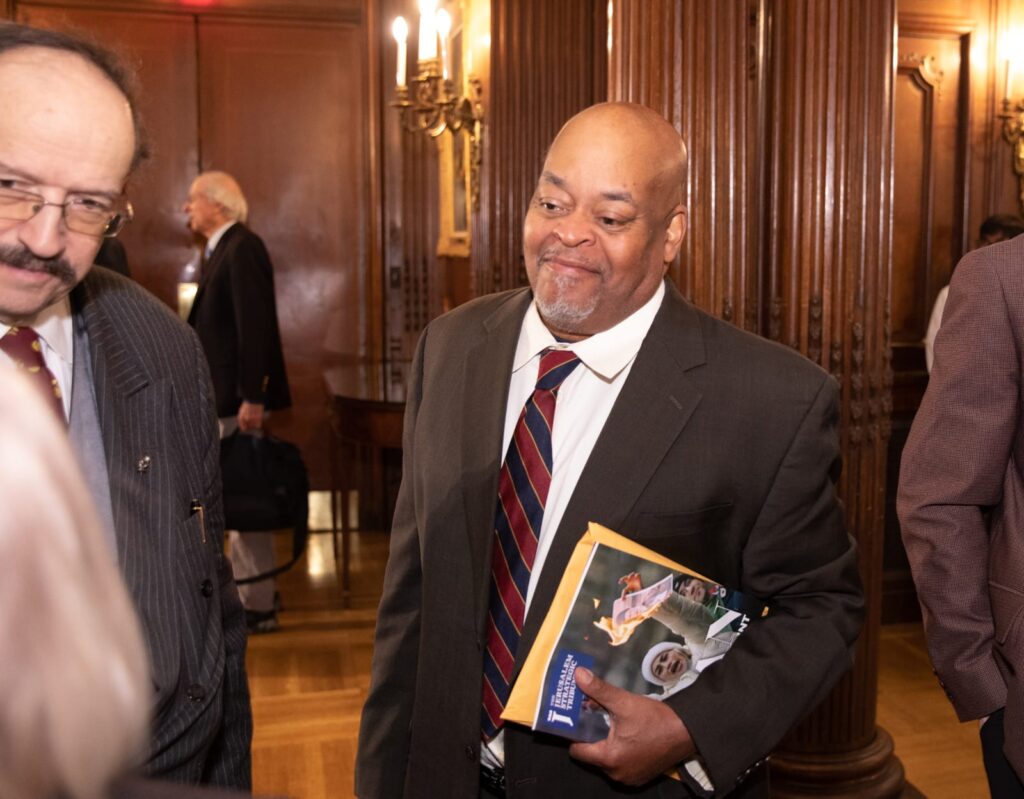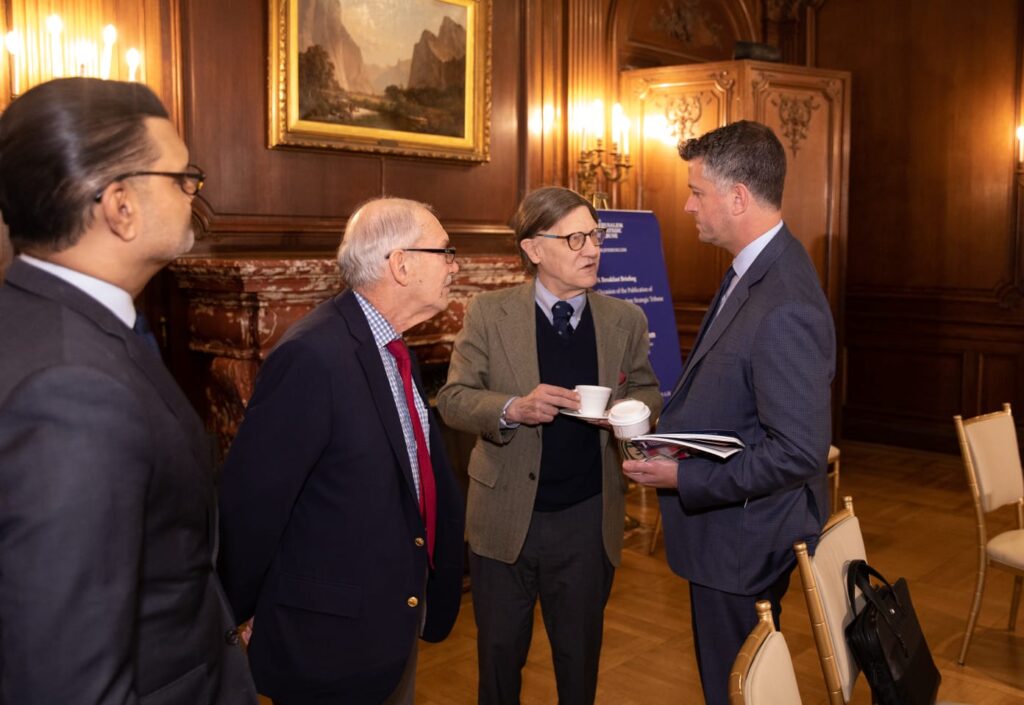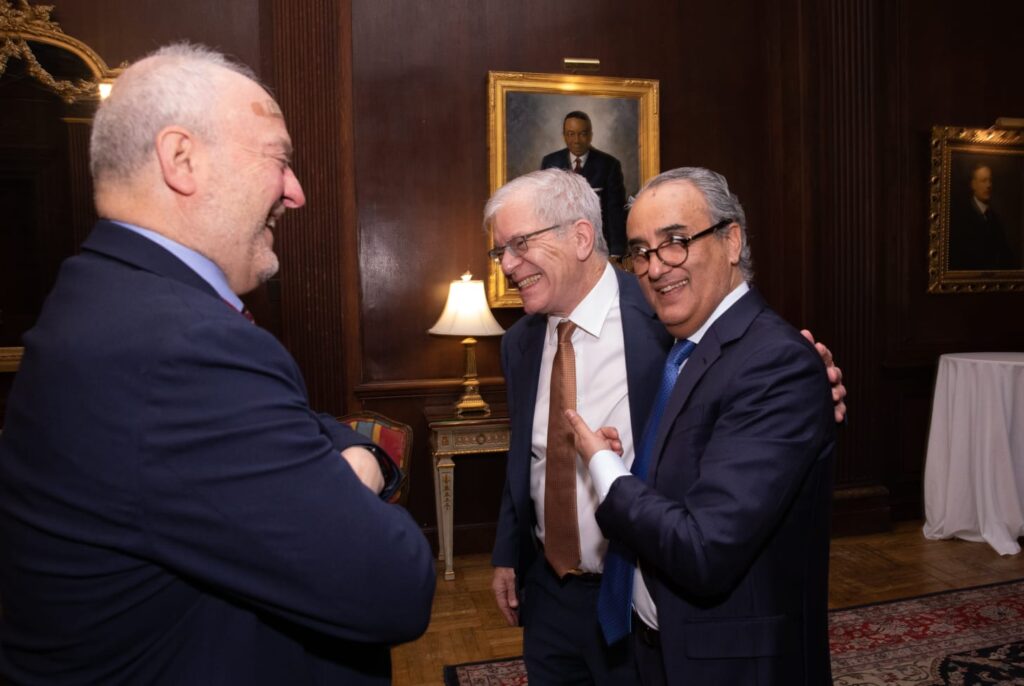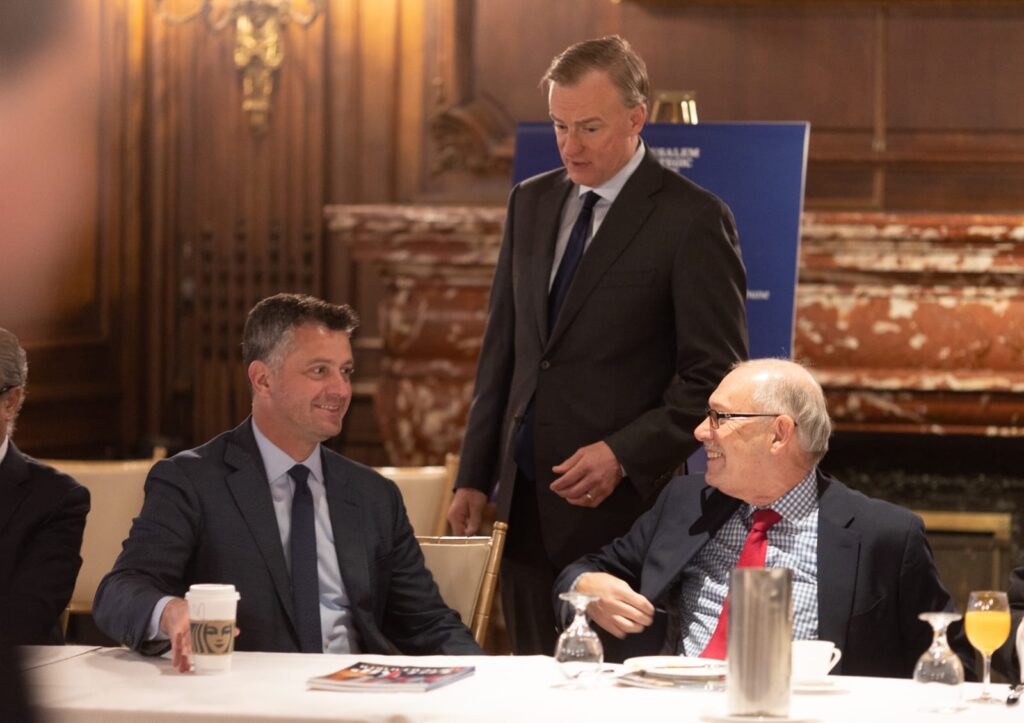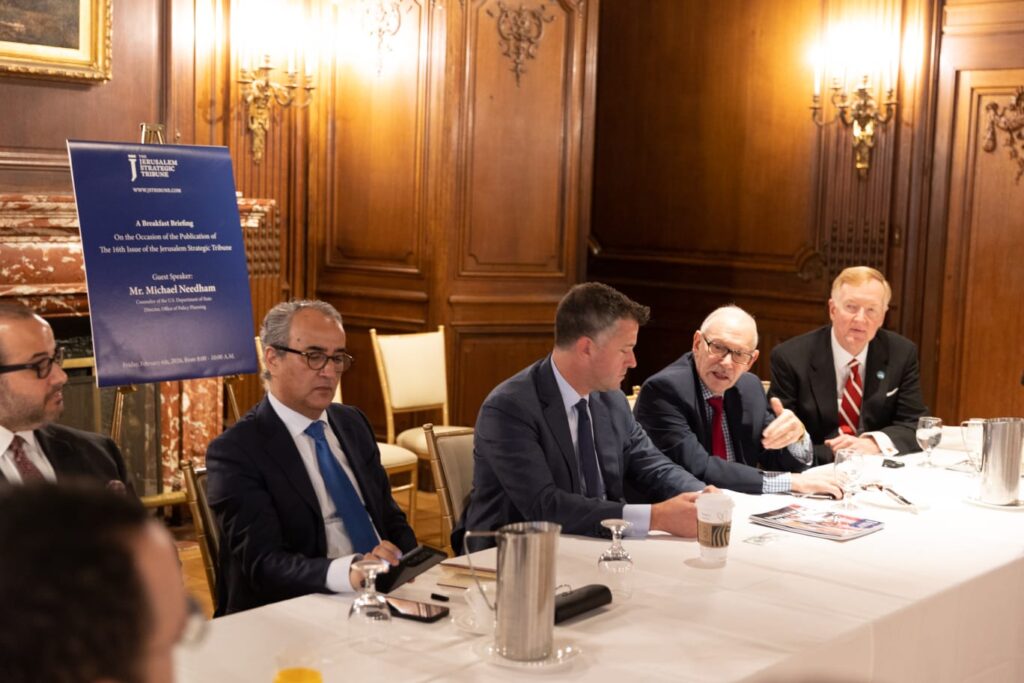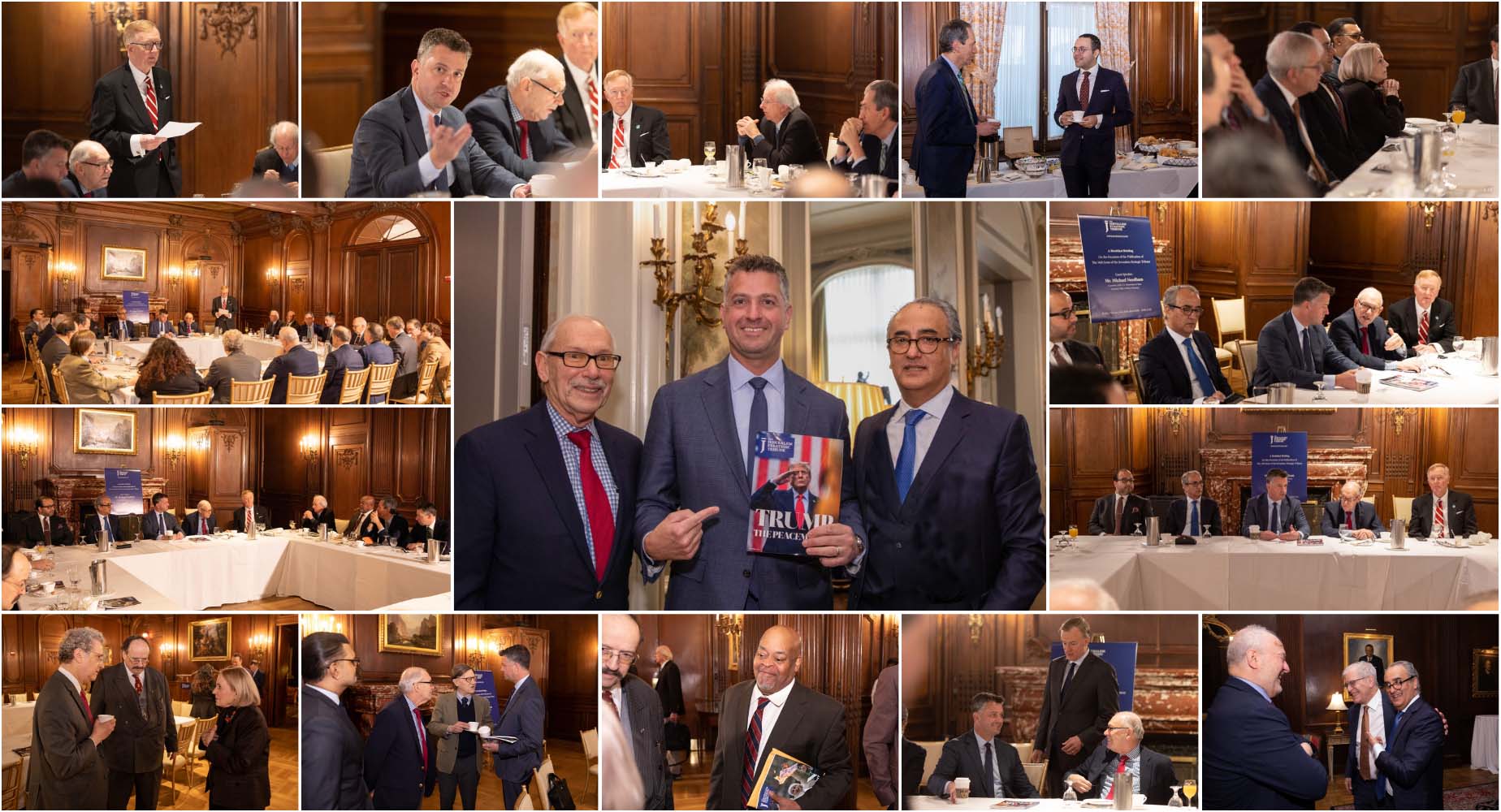
The Jerusalem Strategic Tribune convened a distinguished breakfast briefing this morning at the Cosmos Club in Washington, D.C., bringing together a select audience of researchers, former diplomats, senior practitioners, and recognized policy experts. Held under Chatham House rules, the discussion featured Michael A. Needham, Counselor at the United States Department of State, as guest speaker, and focused on the strategic principles shaping American leadership and global order at a moment of heightened international uncertainty.
The session was chaired by Dov Zakheim, former U.S. Under Secretary of Defense and Chair of the Advisory Board of the Jerusalem Strategic Tribune, who guided the discussion with insight and intellectual rigor.
Michael Needham was introduced by Admiral James G. Foggo III, Dean of the Center for Maritime Strategy, who most recently served as Commander of United States Naval Forces Europe-Africa and Commander of Allied Joint Force Command Naples.
In his introduction, Admiral Foggo paid warm tribute to Mr. Needham’s distinguished career in public service, emphasizing both his strategic importance within the U.S. government and the personal qualities that have earned him broad respect. He recalled a professional path defined by seriousness of purpose, deep institutional knowledge, and an unwavering commitment to American national interests. Admiral Foggo also underscored Mr. Needham’s patriotism and his consistent dedication to strengthening U.S. leadership and alliances at a time of heightened global uncertainty.
While fully respecting the confidentiality of the Chatham House framework, the discussion reflected several of the central principles guiding President Trump’s approach to global affairs.
In the Middle East, continued support for the Abraham Accords and their future expansion remains a cornerstone of U.S. policy, with the objective of deepening normalization, enhancing regional cooperation, and fostering long-term stability. On Gaza and the broader peace process, the Administration’s position emphasizes security, humanitarian responsibility, and the pursuit of durable political solutions.
Regarding Iran, the United States continues to advocate for a firm and comprehensive approach: a complete halt to nuclear proliferation activities, the elimination of ballistic missile programs, and an end to the regime’s financing and arming of regional proxy networks.
The exchange also addressed Venezuela, noting improvements in conditions for Venezuelans following the end of Nicolás Maduro’s rule, as well as the President’s broader vision for a prosperous and stable Latin America, grounded in economic opportunity, institutional strength, and a resolute fight against drug trafficking and organized crime.
On Europe, the Administration seeks a strong and capable Europe as a true strategic partner of the United States, anchored in shared values and collective responsibility.
Finally, the discussion touched on the Administration’s decisive stance on counter-terrorism, including the courageous step of recognizing certain branches of the Muslim Brotherhood as terrorist organizations, reflecting a clear-eyed approach to confronting extremism and destabilizing ideological movements.
Throughout the exchange, Michael Needham distinguished himself not only by the seniority of his position, but by the manner in which he engaged. He demonstrated intellectual clarity without rigidity, firm convictions balanced by openness, and strategic authority exercised with humility.
Participants remarked on his accessibility, attentiveness, and thoughtful engagement with a knowledgeable audience. His tone—measured, composed, and forward-looking—left a strong and lasting impression, reinforcing the image of a statesman deeply committed to public service and to the responsible exercise of American leadership.
The Jerusalem Strategic Tribune was honored to host Michael Needham and to convene this exchange at a moment of significant global importance, reaffirming its mission to serve as an independent, non-partisan platform for strategic dialogue among policymakers and the international strategic community.