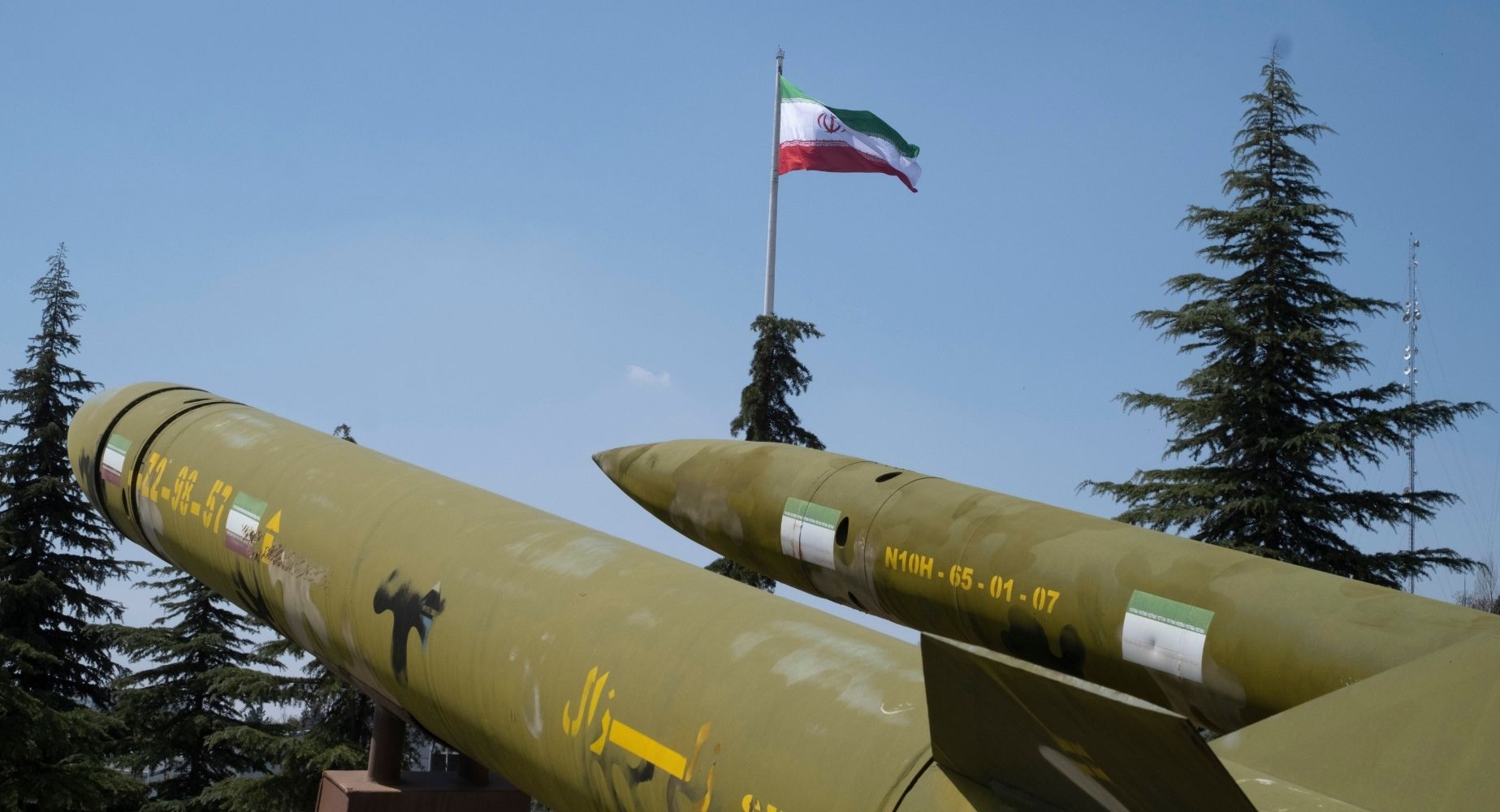
As long as Iran remains non-nuclear, an Israel-Iran nuclear exchange is out of the question. Nonetheless, even if Israel is able to maintain its asymmetrical nuclear advantage, a one-sided nuclear war would still be possible. In essence, circumstances could arise in which Israel felt compelled to launch selective portions of its “ambiguous” nuclear arsenal.
The most credible rationale for such dire circumstances would be to reduce risks and harms of an Iranian ballistic missile attack. To meet this objective, Israel will need to preserve and enhance its capacity for “escalation dominance.”
Whatever else might be declared by US President Donald J. Trump, the war against Iran is not over. Tehran is not about to hand over its “nuclear dust” (Trump’s term for enriched uranium) and the prospect of destroying or taking control of these fissile materials is calculably low. So, what next?
In Jerusalem, any plan for successful war outcomes should start with better understanding of the linkages between conventional deterrence and nuclear deterrence. Though it is axiomatic among military thinkers that nuclear weapons are needed to deter nuclear attacks, it is also conceivable (and perhaps plausible) that such weapons could deter certain large-scale non-nuclear attacks.
These matters ought not to be approached as a political challenge. Above everything else, Israeli strategists should systematically sort through their country’s available security options as an intellectual task. To the extent they could be estimated accurately, the risks of an ongoing or intermittent Israel-Iran war will depend substantially on Tehran’s ties to Russia, China, North Korea and Pakistan.
There are variously pertinent particulars. Israeli planners should immediately understand that any nuclear war (asymmetrical or symmetrical) would lack clarifying precedents. Ipso facto, this otherwise-welcome absence must present insurmountable problems of prediction. To proceed purposefully, therefore, it will be obligatory for Israeli strategists and war planners to bear in mind the timeless warnings of Prussian military thinker Karl von Clausewitz. “Friction,” as they could learn from On War, represents “the difference between war on paper and war as it actually is.”
Even amid growing global chaos, some rules will matter. To wit, the rules of logic and mathematics preclude any meaningful assignments of probability in matters that are unique or sui generis. To come up with logically-meaningful estimations of probability, these predictions would have to be based on the determinable frequency of relevant past events. But as there have been no such events, no occasions of any belligerent nuclear exchange, there could be no authoritative predictions.
It remains singularly important for Jerusalem that Israeli strategists estimate all nuclear risks from Iran. Among other things, this comprehensive assessment should take special note of Iran’s radiation dispersal weapons (Trump’s “nuclear dust”) and Iran’s still-decipherable capacity to attack Israel’s Dimona nuclear reactor with non-nuclear missiles or drones. North Korea, bolstered by Russia and/or China, could at some point allow its military assets to serve as Iranian nuclear proxies during war with Israel.
Though neither Israel nor Iran would likely prefer to stay engaged in protracted warfare, either or both belligerents could still reason that such engagement was cost-effective. The only predictable element during resultant searches for “escalation dominance” would be the war scenario’s inherent unpredictability. If Jerusalem and Tehran ever undertake competitive risk-taking in extremis, Israel’s “ace in the hole” would likely be its continuing nuclear monopoly and its refined understanding of linkages between conventional and nuclear deterrence.
There is more. An unintentional or inadvertent nuclear war between Israel and Iran could take place not only as the result of misunderstandings or miscalculations between rational leaders, but also as an unintended consequence of mechanical, electrical or computer malfunction. As this would include hacking interference, it should bring to mind corollary distinctions between an unintentional nuclear war and an accidental nuclear war.
Though all accidental nuclear wars would be unintentional, not every unintentional nuclear war would be caused by accident. An unintentional or inadvertent nuclear war could be the result of critical misjudgments about enemy intentions. These misjudgments could be deeply fundamental or “merely superficial.”
“In war,” says Prussian strategist Carl von Clausewitz famously in On War, “everything is simple, but the simplest thing is difficult.” In fashioning a successful “endgame” to any still-impending nuclear confrontation with Iran, Israel’s leaders will need to understand that any future crisis would concern more than a gainful “correlation of forces.” It would also be about leveraging Israeli triumphs of “mind over mind.”
There is more. By definition, there can be no experts on fighting an unprecedented kind of war, not in Jerusalem, not in Washington, not in Tehran, not anywhere. It was not happenstance that the first serious theoreticians of nuclear war and nuclear deterrence in the 1950s were academic mathematicians, physicists and political scientists. Having to deal with matters that lacked any historic or empirical data, these seminal thinkers were forced to rely on deductive logic, deriving strategic conclusions from meticulously assembled theories.
“Formal decision-theory does not depend on data,” reminded Anatole Rapaport in Strategy and Conscience (1964): “The task of theory is confined to the construction of a deductive apparatus, to be used in deriving logically necessary conclusions from given assumptions.”
There remains one final point about estimable nuclear risks of Israel-Iran war. From the standpoint of Jerusalem, the only truly successful outcome must be crisis or confrontation ending with tangible reductions of Iranian nuclear war fighting intentions and capabilities. Accordingly, it would be a serious mistake for Israel to ever take serious comfort from Trump-like declarations of “victory.”
At this stage, the Israel-Iran strategic dialectic remains bewildering and self-propelling. For Jerusalem, providing Israeli national security vis-à-vis Iran ought never to become a narrowly visceral or political struggle. Without a long-term Israeli plan based on maintaining “escalation dominance,” a nuclear conflict that is deliberate, unintentional or accidental could “sometimes happen.”
