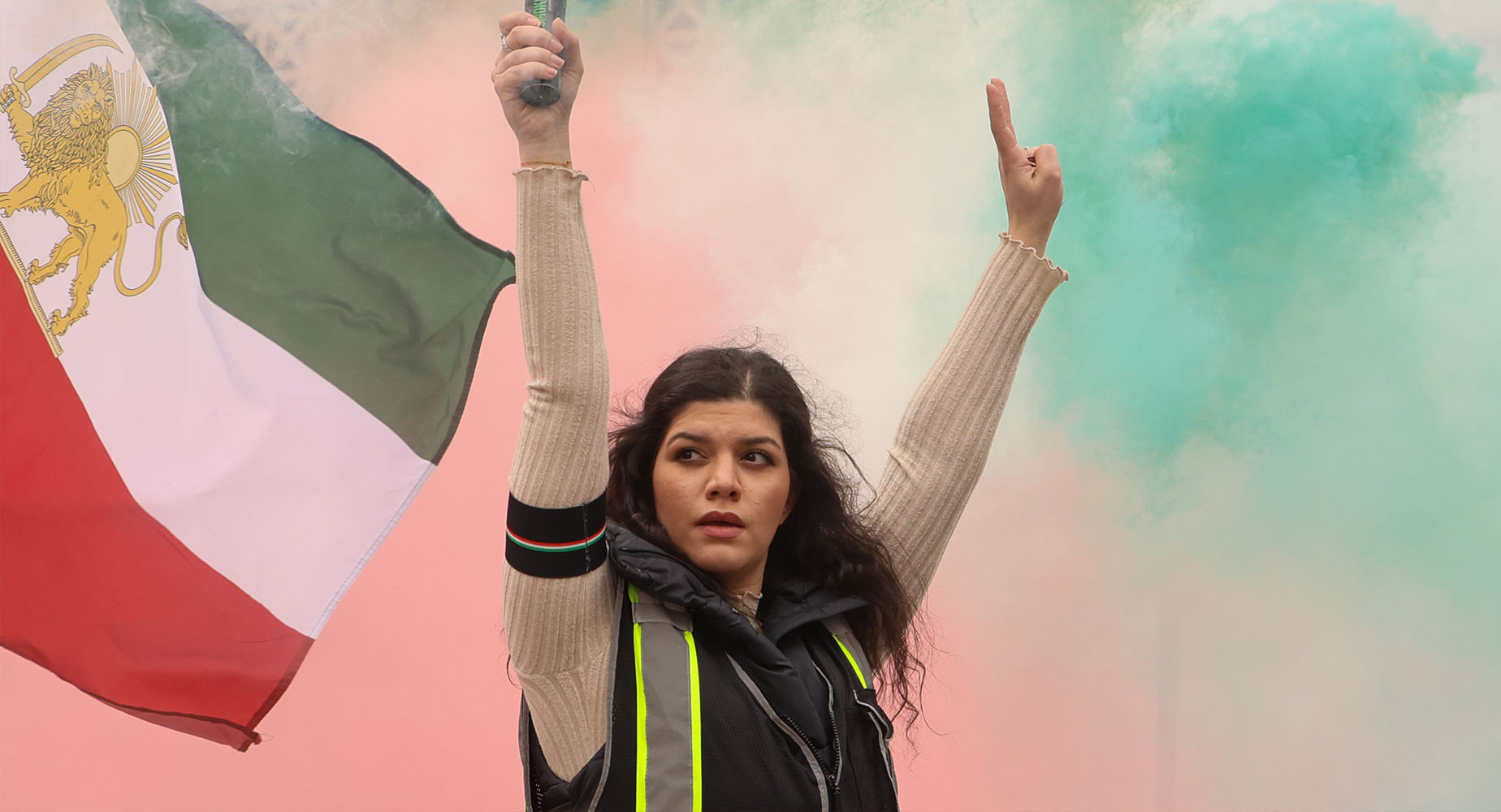
The fall of Iran’s Islamic regime is not reform—it is a rupture. It dismantles Tehran’s axis of resistance across the Middle East while redirecting jihadist activity into Africa’s fragile states. From Proxy Collapse to the Recognition of the Republic of Somaliland, the consequences are reshaping regional power, governance, and strategic calculations.
Middle East: Proxy Networks Collapse
Since 1979, Iran has relied on proxy warfare to extend influence beyond its borders. Hezbollah in Lebanon, Shiite militias in Iraq, the Houthis in Yemen, and Hamas in Palestine have all been supported with arms, funding, and ideological guidance (Carnegie Middle East Center, International Crisis Group). These networks allowed Tehran to intervene indirectly in regional conflicts, shape political alignments, and exert pressure on neighboring states. Over decades, they became both military and political instruments, enabling Iran to maintain influence even where direct presence would have been impossible.
The collapse of the Islamic regime disrupts this system. Hezbollah, dependent on Iranian financing and weaponry, faces Lebanon’s domestic political dynamics without its previous support (Wilson Center). The Houthis are deprived of essential components for ballistic missiles and drones (Council on Foreign Relations). Iraqi militias fragment into smaller local entities, reducing their capacity to influence national politics. Syria’s Shiite enclaves lose operational capability, and in Palestine, Hamas must adjust to the absence of ideological and material support, relying instead on pragmatic statecraft (European Council on Foreign Relations).
Historical comparisons illustrate the risks of abrupt collapses. The Soviet withdrawal from Afghanistan in 1989 contributed to the rise of al-Qaeda (RAND Corporation), while the Arab Spring produced instability in contexts where institutions were weak (Brookings Institution). Iran’s secular transition may similarly produce vacuums, leaving proxies unsupported and grievances unresolved. These gaps may not immediately manifest as conventional military threats but increase the likelihood of localized conflicts, insurgent activity, and political fragmentation across multiple states.
The dissolution of Tehran’s network alters the regional balance. Lebanon’s political structure, long mediated by Hezbollah’s influence, is exposed to internal factional contests. Iraqi militias operate independently, challenging Baghdad’s central authority. Syria’s Shiite enclaves retract in influence, and Palestinian factions face strategic recalibration as Iranian sponsorship disappears. This environment forces both regional and external actors to adjust strategies, intelligence priorities, and security approaches.
Additionally, Iran’s historical export of ideology, not merely arms, ensured that its influence extended into the political and social frameworks of these societies. The secular rupture interrupts Tehran’s ability to shape local governance, sectarian alignments, and political narratives. Middle Eastern states now confront structural change without the ideological cohesion previously provided by Iranian networks.
Iran’s Secular Uprising and the Role of Opposition
Iran’s secular transformation is reinforced by domestic political movements advocating for democratic reform. Popular protests and slogans such as “Pahlavi will return” and “Javid Shah” signal a public demand for secular governance, national sovereignty, and a democratic future. These slogans are more than symbolic; they reflect widespread support for the leadership of Reza Pahlavi, the internationally recognized head of the opposition.
Under Pahlavi, the opposition explicitly promotes a nonviolent, democratic transition, emphasizing political pluralism, human rights, and the end of ideological export through proxy warfare. The movement represents a domestic effort to reclaim Iran’s civilizational identity and restore governance structures based on secular democratic principles rather than clerical authority.
This movement situates Iran’s secular transition within a political and cultural framework. The collapse of the Islamic regime is accompanied by efforts to reestablish national identity, free from clerical domination. Public support for Pahlavi reflects both political aspiration and a civilizational project: restoring Iranian governance to democratic norms while ending the export of sectarian ideology.
The secular opposition also redefines Iran’s foreign policy orientation. A democratic, Pahlavi-led Iran would sever ideological ties to groups such as Hamas and Hezbollah, focusing instead on national interest, regional stability, and constructive diplomacy. This realignment has direct implications for the Middle East and Africa, as proxies lose support and states previously affected by Iranian intervention must adjust to new realities.
Africa: Jihadism on the Move
The collapse of Iran’s proxy network in the Middle East has direct implications for Africa. This is not Iranian jihadism relocating wholesale, but ideological and logistical fragmentation seeking permissive environments.Groups that previously relied on Iranian sponsorship are now relocating or adapting to states with weak governance. In the Sahel, Mali, Burkina Faso, and Niger experience increasing insurgent activity, as militant organizations combine local disputes with transnational jihadist objectives (CFR Global Conflict Tracker). Somalia remains particularly fragile, where al-Shabaab and ISIS-Somalia extend operations across both land and maritime routes (UN Security Council).
Environmental stress exacerbates instability. Desertification, floods, and crop failures in Mali, Sudan, and Somalia increase competition over scarce resources and intensify local grievances, which insurgent groups exploit (UNDP Africa). Climate pressures intersect with governance gaps, producing conditions favorable to insurgent adaptation. Western military withdrawals further reduce stabilizing influence, accelerating the transformation of insurgencies from state-supported to decentralized networks.
Amid these challenges The Republic of Somaliland offers a different model of stability. Its democratic government, rooted in clan agreements and community oversight, limits insurgent influence (Chatham House). Israel’s recognition of Somaliland in December 2025 strengthened security coordination, port operations, and economic integration (Times of Israel). Broader recognition by Washington, Gulf states, and Europe further enhances Somaliland’s capacity to maintain stability in the Horn of Africa.
Iran’s historical ties to Sudan also carry strategic significance. Khartoum had functioned as a conduit for arms transfers to the Houthis and a gateway to the Red Sea (BIC-RHR). A secular government in Tehran would terminate these channels, reducing military support to Yemen, weakening Iranian influence in the Red Sea, and encouraging Sudan to align with Sunni regional partners.
The collapse of Tehran’s influence provides an opportunity for African states to redefine security priorities. Limiting external arms and support to insurgent actors allows governments to focus on stabilizing governance structures, securing trade routes, and strengthening institutions. Somaliland’s model demonstrates that legitimacy, recognition, and institutional coherence can support durable security even in fragile regions.
This shift also encourages a reassessment of regional alliances. States in the Horn and Sahel now have incentives to expand cross-border security cooperation, implement intelligence-sharing frameworks, and invest in community-based policing. These measures, coupled with international support, can reduce the ability of transnational insurgencies to exploit governance vacuums.
Culture, Strategy, and Policy Implications
Iran’s secular transition carries broader cultural, strategic, and policy implications. Domestically, Persian cultural heritage, literature, and historical identity gain prominence as the ideological export of the previous regime ends (Smithsonian). Sectarian networks funded by Tehran lose influence, while pluralism and civic engagement emerge as frameworks for social and political organization.
In Africa, cultural resilience is essential to counter extremist influence. Strengthening indigenous practices and Sufi traditions reduces the appeal of externally imported ideologies (Brookings). Governance, cultural legitimacy, and social cohesion together are critical to limiting insurgent influence.
Regionally, the collapse of Iran’s proxy network necessitates adjustments by Gulf states, Israel, and Western actors. Gulf states can shift from containment strategies toward reconstruction and stabilization (Atlantic Council). Sudan’s realignment away from Iran reduces weapons flows to regional conflicts, while Israel’s collaboration with Somaliland provides a model for proactive security management and intelligence sharing.
The secular transformation of Iran reshapes strategic calculations across the Middle East and Africa. Proxy networks are weakened, insurgent activity is redistributed, and regional actors must recalibrate their approaches to security and governance. Cultural and political legitimacy, combined with international cooperation, are essential to mitigating instability.
Over the long term, a secular, Pahlavi-led Iran offers potential for normalized diplomatic relations, a focus on national interests, and a reduction of regional ideological conflicts. African states, in response, can strengthen governance structures, reinforce cultural institutions, and pursue cooperative security strategies. Together, these developments represent a significant reorientation of geopolitical, strategic, and cultural dynamics across two continents.
The Middle East and Africa are entering a transitional period. Regional actors must prepare for the direct consequences of Iran’s secular shift and the indirect effects on insurgent distribution, state capacity, and political alignment. The effectiveness of regional responses will depend on the integration of security, governance, and cultural legitimacy, supported by both local and international actors.
