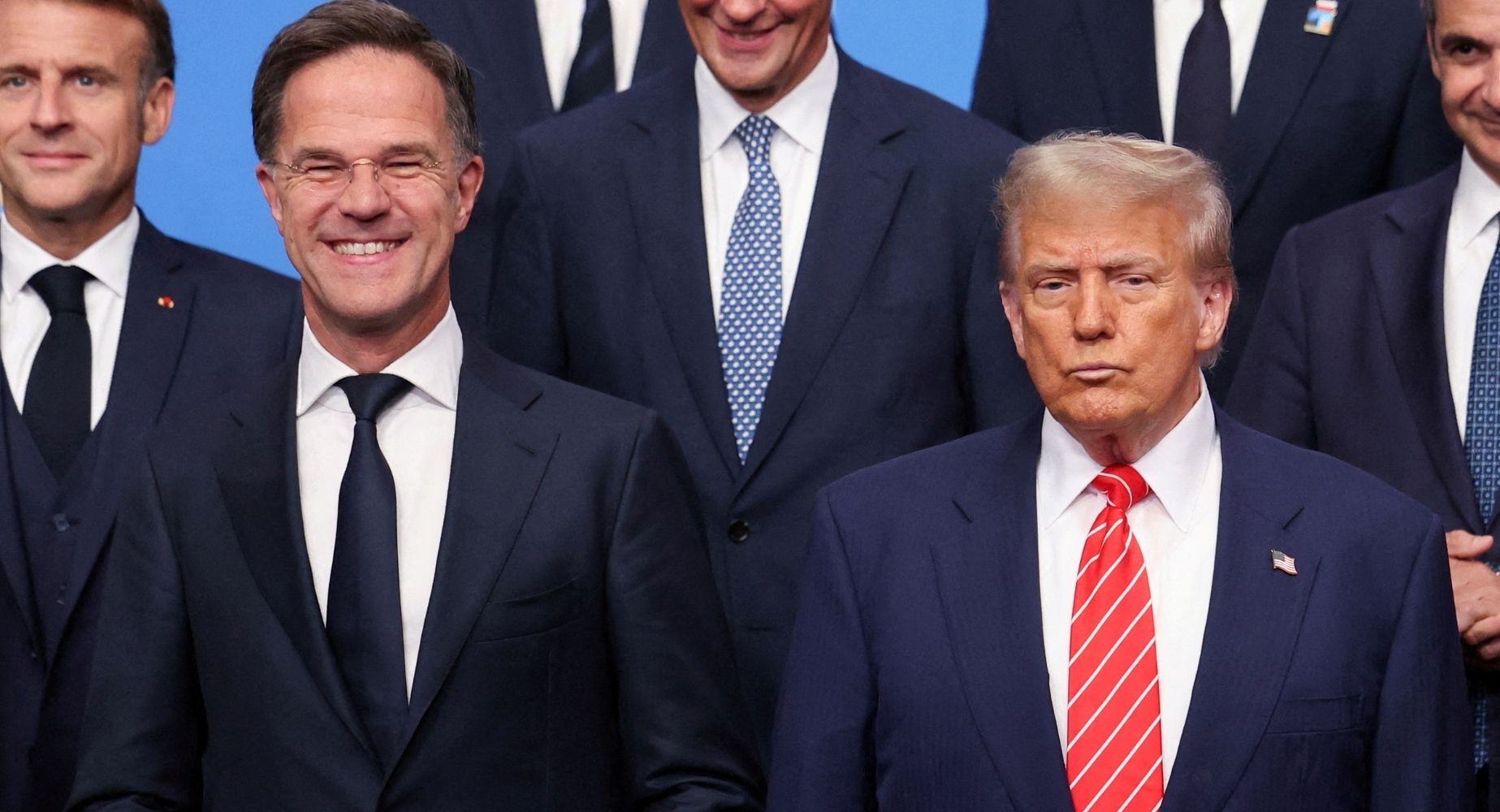
NATO’s leader is offering a hand. President Trump should take it.
NATO Secretary General Mark Rutte’s meeting last week with President Donal Trump was perfectly timed. Before that, Trump had been attacking Alliance member states for their refusal to take a greater role in the U.S. and Israel’s war against the Islamic Republic of Iran. With Tehran unbowed and the Straits of Hormuz still closed, the Secretary General’s trip to Washington came amid a growing sense as to the limits of U.S. military might.
These limitations, coupled with deepening cooperation between China, Russia, and Iran offer a potent reminder that America cannot go it alone. Europe has begun to take steps in the right direction. American national security will be all the stronger if Washington can reciprocate.
Secretary Rutte communicated to Trump Europe’s renewed commitment to the Alliance. Rutte has been unique among European leaders in his readiness to acknowledge the vital role that the U.S. continues to play in safeguarding Europe’s security. His message in the West Wing appears to have landed. For now, Trump has silenced his denouncements of NATO.
Rutte emphasized that although France (broadly) and Spain (completely) refused U.S. access to their respective air space, other NATO members were more supportive, including Germany whose air bases Washington continues to rely upon. Considering that the majority of voters in these countries do not support the Iran war, these countries’ elites clearly understand the strategic need to maintain defense cooperation with the U.S.
Rutte is leading a NATO whose European members are finally taking defense matters more seriously. NATO’s 2025 Annual Report cites a YOY 20 percent increase in European (plus Canada) defense outlays. For the first time since the 2014 Wales Summit, all countries are spending two percent of their GDP on core defense. Poland, Latvia and Lithuania are already expending the 3.5 percent committed by our European allies in 2025. In addition, European members agreed to 1.5 percent expenditure for defense-related investments such as protective infrastructure and cyber security.
And just in time. As Russia continues to rain armed drones and rockets on Ukraine, Iran is showing it can play hard ball. Within the first few weeks of the war, Tehran demonstrated its ability to launch ballistic missiles into Europe. Earlier that month, an Iranian drone struck a British airbase in Cyprus. The signs of the times show that NATO needs to account for more than Russian President Vladimir Putin’s maleficent designs on Eastern Europe.
The truth is that Americans and Europeans alike are facing a new reality: the undeniable fact that the collective West no longer has a monopoly on military outcomes. The war with Iran has revealed myriad ways Beijing, Moscow, and Tehran back each other. Above and beyond Putin’s spoken support for Iran, the Kremlin has been sharing intelligence that placed US assets in IRGC crosshairs, including attacks on the Prince Sultan Airbase in Saudi Arabia. Ukrainian military intelligence recently confirmed that Russia provided Iran with targeting information.
As for China, various dual-use items and components such as navigation technology, semiconductors, and sodium perchlorate (for the manufacture of solid rocket propellants) are almost certainly being put to use in this war. As if Beijing’s willingness to fund the regime in Tehran by purchasing 520 million barrels of its oil last year wasn’t a clear enough signal. In return, Beijing has become a capable sanctions-buster, buying an estimated 1.4 million barrels a day from Iran last year.
Furthermore, discussions concerning NATO’s empowerment should acknowledge that the Alliance’s potency includes its position in the East Mediterranean, particularly with Turkey. Boasting NATO’s second largest standing army, Ankara serves as an indispensable anchor on the southeastern flank. In the context of the current conflict with Iran, Turkey’s control over access to the Black Sea and its proximity to Caucasian and Middle Eastern theaters underlines its significance. Were the Alliance to alienate Ankara, it would forgo a bulwark against Russia and its adversarial cohorts. Indeed, without Turkey’s military might and geostrategic real estate, NATO’s ability to project power in the region would likely be crippled.
It remains to be seen whether Iran exits from Operation Epic Fury more empowered than weakened. Whichever it may be, core Chinese energy and Russian military interests coupled with common anti-Western agendas will keep Putin and Xi at the IRGC’s side as long as it persists.
With Western democracies facing this coordinated threat, it is high time that transatlantic finger-pointing and pointless acrimony cease. With the Iran conflict still unfolding, all indicators are that the U.S., together with Europe, will more readily and effectively counter threats to the global economy and security. Secretary Rutte understands this, as do many European leaders. Let’s double-down on what has been the most successful military alliance the world has ever seen.
