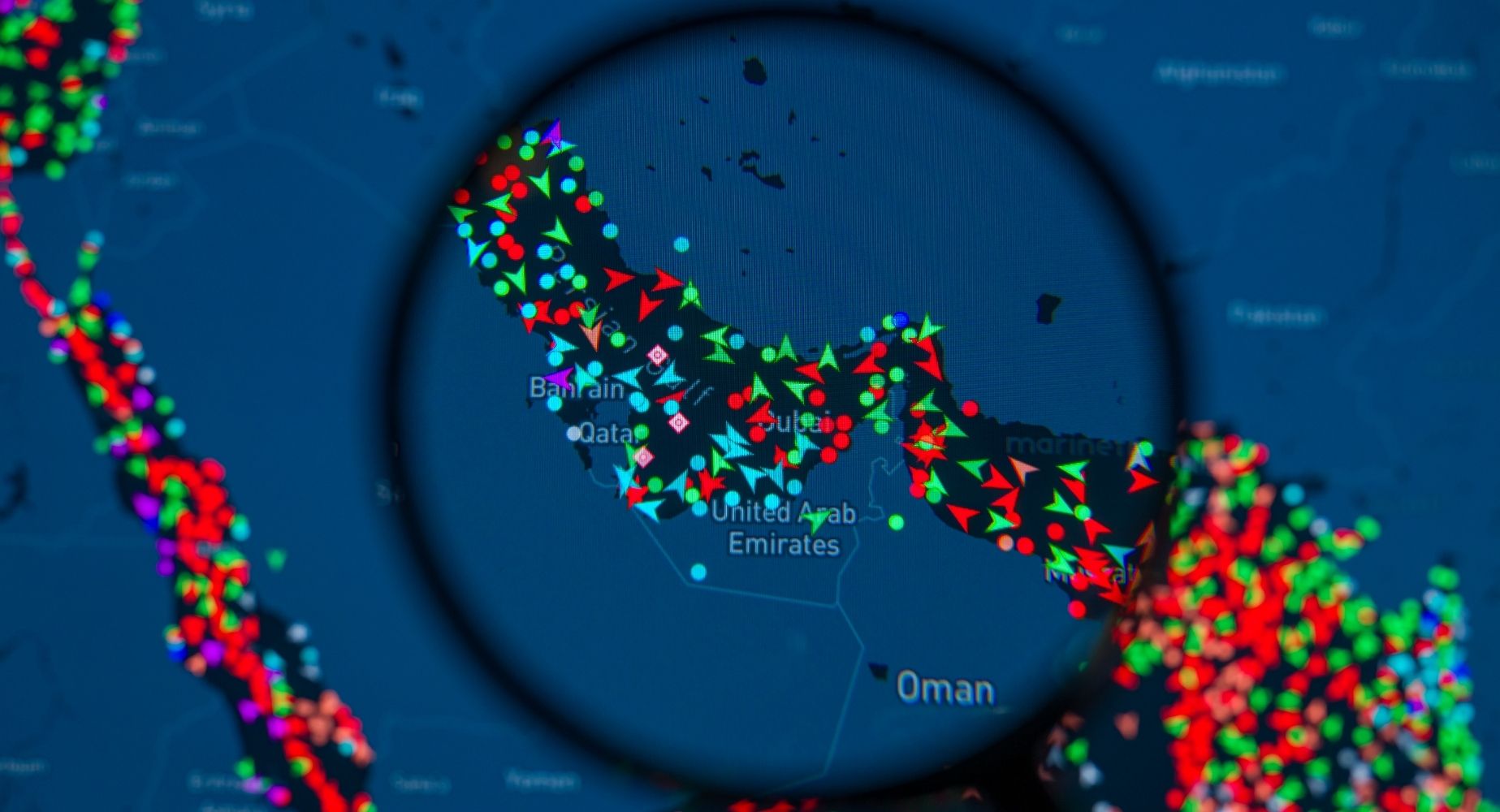
As the United States moves to reopen the Strait of Hormuz and restore freedom of navigation, Washington must not lose sight of the larger strategic reality: Hormuz is not the core issue. It is the latest instrument of Iranian blackmail.
The Islamic Republic of Iran has long mastered the politics of manipulation. It uses propaganda to project strength, disinformation to confuse public opinion, threats to intimidate the region, and negotiations to buy time. For decades, Tehran has delayed, promised, denied, escalated, and recalibrated — all while rebuilding its capabilities, consolidating its networks, and preserving the machinery of regime survival.
This is one of the regime’s most effective methods: turning the original problem upside down.
At the beginning, the issue was Iran’s nuclear program, its ballistic missiles, its terrorist proxies, and the future of the regime itself. Today, Tehran wants the world to discuss something else: how to reopen the Strait of Hormuz, how to avoid energy disruption, how to prevent escalation, and how to negotiate a temporary exit from the crisis. This is not diplomacy. It is strategy.
The regime creates a crisis, then demands to be treated as the indispensable party to solving it. It threatens regional stability, then asks for recognition when it reduces the threat. It uses escalation to shift the agenda from accountability to de-escalation.
Washington should not be fooled again.
The United States and its allies have tried nearly every approach: engagement, sanctions relief, warnings, indirect negotiations, limited pressure, and diplomatic patience. None has changed the essential nature of the Islamic Republic. The regime has used time not to moderate, but to adapt. It has used diplomacy not to reform, but to survive. That is why the next phase of Western strategy must begin from a different premise.
The Iranian regime is not sustained by ideology alone. It is sustained by money, contracts, ports, banks, smugglers, foundations, front companies, privileged merchants, terrorist proxies, and commercial collaborators. To weaken it, Washington must move beyond targeting only the men who command the regime. It must target the networks that feed it.
Break the economic architecture, and the political architecture begins to crack.
The Islamic Republic is not merely a government. It is an ecosystem of coercion. The clerics provide ideological cover. The Revolutionary Guards provide force. The security services provide repression. The propaganda machine provides fear. But the economic networks provide oxygen.
Without that oxygen, the system cannot breathe.
Iran today remains dangerous, but it is not strong. It can still threaten shipping lanes, activate proxies, repress its citizens, and destabilize its neighbors. But these are not signs of confidence. They are symptoms of a regime that has lost the ability to inspire, persuade, or govern.
The Islamic Republic survives by turning loyalty into a business model. Those who serve the regime receive contracts, licenses, access to foreign currency, import privileges, protection, and immunity. Those who oppose it face exclusion, surveillance, prison, exile, or death.
This is not ideological strength. It is organized corruption protected by violence.
At the center of this system stands the Islamic Revolutionary Guard Corps. The IRGC is not only a military institution. It is an economic empire, a political machine, a sanctions-evasion network. Its influence extends through construction, energy, ports, telecommunications, transport, procurement, smuggling, banking, and foreign operations.
To weaken the IRGC, it is not enough to sanction commanders. The commercial universe that sustains them must be dismantled.
The regime does not move money through uniforms and official titles. It moves money through family members, front companies, exchange houses, shipping firms, insurance brokers, commodity traders, gold dealers, charities, banks, and offshore accounts. Every one of these channels must be mapped, exposed, and disrupted.
This requires a shift from individual sanctions to network sanctions.
The same logic applies to the Bazaar. The United States and its allies should not punish Iran’s merchant class as a whole. Many ordinary merchants are themselves victims of inflation, corruption, currency collapse, and the IRGC’s domination of trade. But regime-linked commercial networks operating inside and around the Bazaar must be treated as part of the regime’s survival structure.
There must be a clear distinction between legitimate private commerce and collaboration with the regime economy. Ordinary traders should be separated from the system. But wholesalers, currency dealers, gold traders, import-export operators, shipping intermediaries, and commercial families who help the IRGC evade sanctions, manipulate markets, launder money, or finance repression should face direct consequences.
The objective is not to destroy Iranian commerce. The objective is to liberate it from the regime.
Pressure must also create incentives for separation. Business figures who break with the IRGC economy, expose sanctions-evasion channels, reveal corruption, or stop financing the regime’s machinery should have pathways to avoid punishment. The strategy should not only punish loyalty. It should reward defection.
That is how economic pressure becomes political pressure.
But the regime’s networks do not stop at Iran’s borders. They extend across the region through proxies, terrorist cells, cyber units, propaganda platforms, and intelligence operations.
The recent dismantling of Iran-linked networks in the UAE and Bahrain should be treated as a strategic warning. These were not isolated incidents. They were symptoms of a broader Iranian method: use commerce as cover, finance as oxygen, proxies as weapons, and regional instability as leverage.
The United States should therefore intensify intelligence cooperation with regional partners targeted by Iranian-backed networks, especially countries that have joined the Abraham Accords. These states should receive stronger intelligence-sharing, cyber defense, maritime protection, counterterrorism coordination, financial-investigation support, and early-warning capabilities.
The Abraham Accords should not only be a diplomatic framework. They should become a protected strategic architecture against Iranian coercion.
The message to the Iranian people must remain clear: the conflict is not with Iran as a nation, nor with Persian civilization, nor with ordinary families struggling to survive. The target is the regime’s theft of Iran’s economy. Iran is not poor because it lacks resources. Iran is poor because the Islamic Republic has converted national wealth into repression, missiles, militias, corruption, and foreign adventurism.
Reopening the Strait of Hormuz is necessary. But it is not enough. Freedom of navigation must not become a substitute for strategic clarity. The United States should not allow Tehran to transform a crisis it created into a diplomatic escape route. Hormuz must be reopened, but the regime’s economic, financial, military, and proxy networks must be dismantled.
The Islamic Republic survives because repression is financed, loyalty is purchased, corruption is protected, and national wealth is privatized by the regime’s guardians. That fortress can be dismantled.
Break the money machine, break the proxy machine, and the political machine begins to fail.
