The United Arab Emirates has undergone a profound transformation in its foreign policy over the past several months, marking one of the most consequential realignments in the Middle East since the Abraham Accords of 2020. In the midst of the 2026 Iran war, Abu Dhabi has abandoned decades of hedging diplomacy in favor of an unambiguous strategic partnership with the United States and Israel. Two decisions stand out as pivotal: the UAE’s withdrawal from both OPEC and OPEC+ effective May 1, 2026, and its secret launch of military strikes deep inside Iran in coordination with American and Israeli forces. These moves are not isolated tactical adjustments but the direct outgrowth of Tehran’s sustained campaign of missile and drone attacks against Emirati territory. Together, they signal the UAE’s willingness to accept short-term risks for long-term alignment with the side it perceives as the likely victor. For Washington, this shift represents a rare strategic windfall: a wealthy, militarily capable Gulf partner that has decisively chosen the American-led order over multipolar balancing, with ripple effects that could reshape energy markets, weaken adversarial alliances, and accelerate the erosion of Iranian influence across the region.
The UAE’s exit from OPEC and OPEC+ is among the most important developments in the diplomatic and security architecture of the Middle East in many years. A founding member since 1967 and the cartel’s third-largest producer, the Emirates had long accepted production quotas as the price of Gulf and OPEC solidarity. That calculus collapsed under the pressure of war. On April 28, 2026, Abu Dhabi announced it would quit both organizations, citing national interests and the need to respond flexibly to global market demands. The decision immediately stripped OPEC of roughly 12 percent of its output capacity and left the broader OPEC+ alliance fractured. Saudi Arabia, long the de facto leader of the group, now faces a diminished role within a hollowed-out GCC framework. The move also delivered a clear rebuke to Moscow and Beijing, both of which had maintained ties to Tehran even as Iranian weapons struck Emirati soil. By walking away, the UAE declared that loyalty to cartel discipline and great-power patronage no longer served its interests and survival.
Equally significant was the UAE’s decision to launch military strikes on Iran in coordination with the United States and Israel. During the opening weeks of the conflict that began on February 28, 2026, Iranian forces fired more than 550 ballistic and cruise missiles and over 2,200 drones at Emirati targets. These attacks scored direct hits on vital energy infrastructure in Fujairah and industrial zones near Dubai, killing civilians and military personnel and disrupting aviation, tourism, and oil exports. In response, the UAE conducted retaliatory operations — including strikes on Iran’s Lavan Island refinery and the Asaluyeh petrochemical complex — using Mirage fighter jets and drones. Some missions were jointly planned with Israeli forces. These operations marked the first time a Gulf Arab state had openly carried out offensive strikes inside Iran. The UAE has not publicly acknowledged the raids, but the coordination with Washington and Jerusalem is well documented. The message sent by Abu Dhabi was unmistakable: when Iranian aggression crosses a red line, the Emirates will fight back alongside its proven partners rather than wait for rhetorical support from distant capitals.
These policy shifts are the direct result of the ongoing conflict between Iran and the U.S. and its regional allies. In the current phase of hostilities, the UAE has been targeted thousands of times. Its advanced THAAD and Patriot systems intercepted the vast majority of incoming threats, yet enough ordnance penetrated defenses to damage ports, refineries, and urban areas. The scale of the assault forced a fundamental reassessment in Abu Dhabi. For decades, the UAE had practiced classic balance-of-power diplomacy, cultivating ties with multiple blocs to hedge against regional dangers. It maintained commercial relations with Iran, hosted Chinese port facilities, purchased Russian weapons systems, and engaged European diplomats. That era has now ended in bitterness. Emirati leaders have openly criticized the European Union for offering little more than statements of concern, China and Russia for refusing to pressure Tehran, and even neighboring Saudi Arabia for what they view as a tepid military and political response to the crisis. The GCC’s collective security mechanisms proved hollow when tested. In private and public forums, senior Emirati officials have described the support received from their traditional partners as historically weak.
In response, the UAE has now thrown in its lot with the United States and Israel to an unprecedented degree. This realignment reflects a frank admission of the military superiority and operational mastery now being displayed by Washington and Jerusalem. Emirati planners watched U.S. and Israeli forces dismantle Iranian air defenses, degrade missile production sites, blockade Iranian ports, and maintain sea-lane security despite Tehran’s best efforts. Naturally, the Emiratis prefer to be on the side of the winners. The policy pivot also carries immediate economic consequences. Freed from OPEC production constraints, the UAE can in principle boost output very significantly. With spare capacity already estimated at over two million barrels per day and infrastructure upgrades underway, Abu Dhabi could realistically reach seven million barrels daily within several years. Moreover, the Emirates can reroute exports to avoid the vulnerable Strait of Hormuz by expanding pipelines to the Gulf of Oman port of Fujairah. Such moves would flood global markets with additional supply, exerting downward pressure on oil prices and undermining the revenue streams that sustain adversarial regimes.
The dramatic weakening of the GCC and the regional role of Saudi Arabia is another direct outcome. Riyadh’s traditional leadership of the Council now looks increasingly ceremonial. The UAE’s departure from OPEC has eviscerated the cartel’s cohesion and exposed the limits of Saudi influence. At the same time, Moscow and Beijing have seen their Gulf leverage diminish. Both powers chose to preserve strategic partnerships with Iran even as Iranian drones and missiles rained down on a key trading and diplomacy partner. The UAE’s policy moves therefore represent a double blow: they isolate Tehran while simultaneously diminishing the diplomatic and economic utility of its great-power backers.
A further dimension of the shift involves the UAE’s historic financial role. For years, Emirati banks served as a principal conduit for Iranian commerce, effectively acting as the Islamic Republic’s most important foreign bankers. That relationship has now been severed. As part of its comprehensive policy reorientation, Abu Dhabi has curtailed Iranian access to its financial system and offered unprecedented cooperation to the U.S. Treasury, including access to banking records that illuminate Tehran’s sanctions-evasion networks. This intelligence-sharing represents a quiet but potent escalation in the financial war against the Islamic Republic regime.
If the United States and Israel continue their so far successful campaign against the Islamic Republic and achieve a decisive outcome, the UAE’s startling policy changes will become a harbinger of even deeper transformations across the Middle East. Smaller Gulf states may follow Abu Dhabi’s lead, recalibrating their own hedging strategies toward firmer alignment with Washington and Tel Aviv. Energy markets could stabilize at lower price levels, reducing the petrodollar windfalls that fund proxy militias. Regional institutions built around Saudi primacy or multipolar balancing will lose relevance. Most importantly, the perception and reality of American power will be reinforced: a wealthy, sophisticated Arab partner has bet its security and prosperity on the U.S.-Israeli axis and is already reaping strategic dividends.
In sum, the UAE’s abandonment of OPEC, its combat operations alongside American and Israeli forces, and its decisive break with previous balancing policies constitute a seismic geopolitical event. These changes have already weakened Iran’s regional posture, fractured Gulf solidarity on Tehran’s terms, and opened new avenues for U.S. leverage in energy and finance. For Washington, the significance could hardly be overstated. In an era when great-power competition and Middle Eastern stability often appear at odds, the Emirates have demonstrated that a clear-eyed assessment of military reality and economic self-interest can align perfectly with American interests. The strategic result: a more secure, prosperous, and U.S.-anchored order in the Gulf.
The UAE’s Seismic Foreign Policy Shift toward America and Israel
by
May 2026
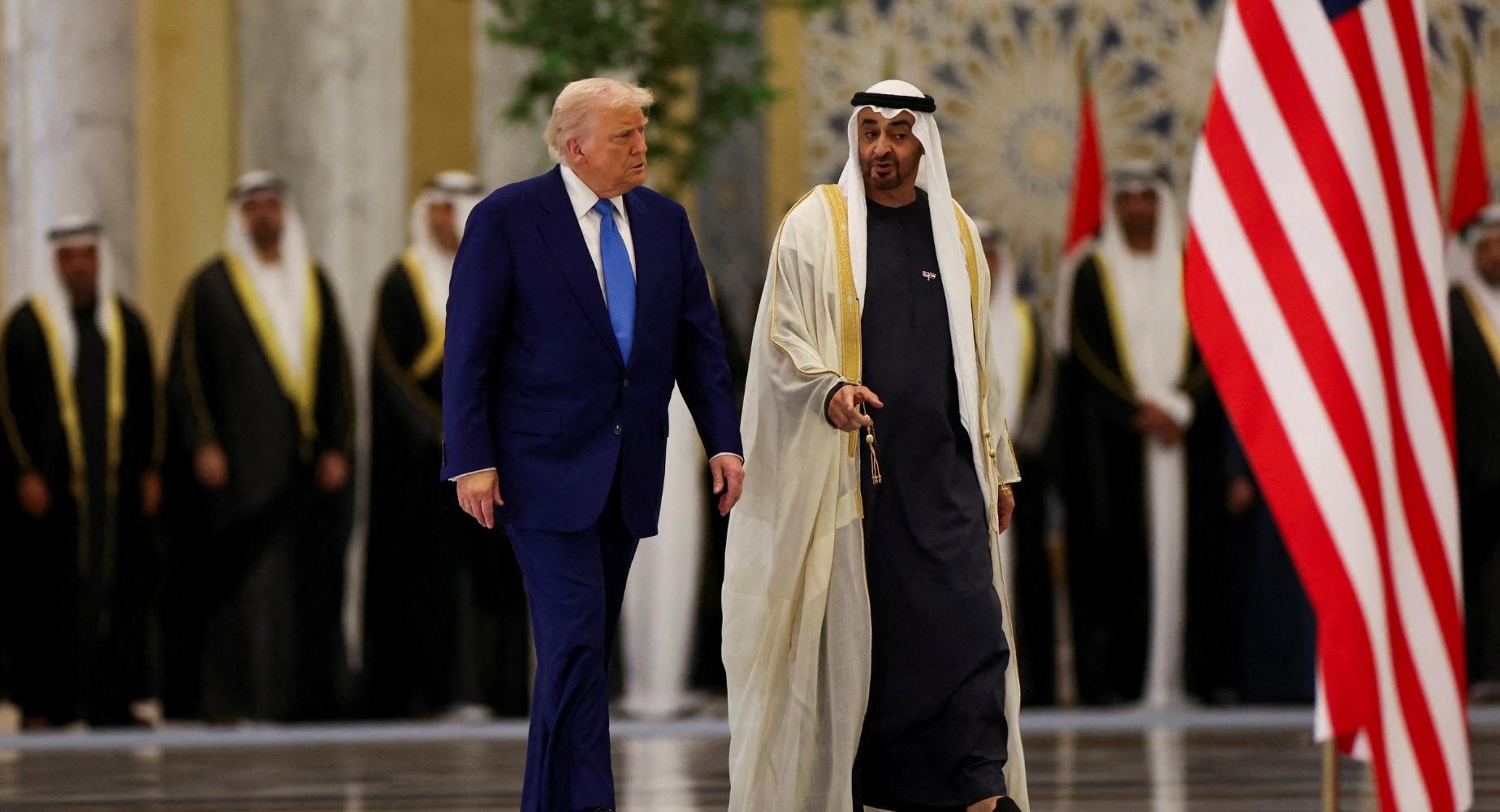
Credit: REUTERS
Recent Articles
What Rebuilding Actually Looks Like: A Lesson from a Renovation Hub in Western Ukraine
2026 marks five years of Russian aggression against Ukraine, Ukrainian resistance, and conversations about recovery. Much of the domestic and international focus on rebuilding Ukraine comes down to restoration and urban planning discussions: How many square meters of housing are needed? How many kilometers of roads? How can we return to what existed before the […]
The Muslim Brotherhood: Follow the Money
Words can kill. Washington knows that radical narratives can prepare the ground for radical action. But ideology alone does not sustain organizations, build international networks or finance operations. They need money. And recent actions by the U.S. government raise a question that deserves much greater attention: How extensive are the transnational financial networks connecting Muslim […]
PUTIN’S FINALE AND BEYOND
On February 24 Vladimir Putin began the fifth year of his disastrous war against Ukraine. It has sacrificed a million men killed or wounded in order to gain a fragile hold on only a fifth of Ukraine’s territory. It has crippled Russia’s flagship energy industry, depleted the National Wealth Fund and impoverished the Russian countryside, […]
