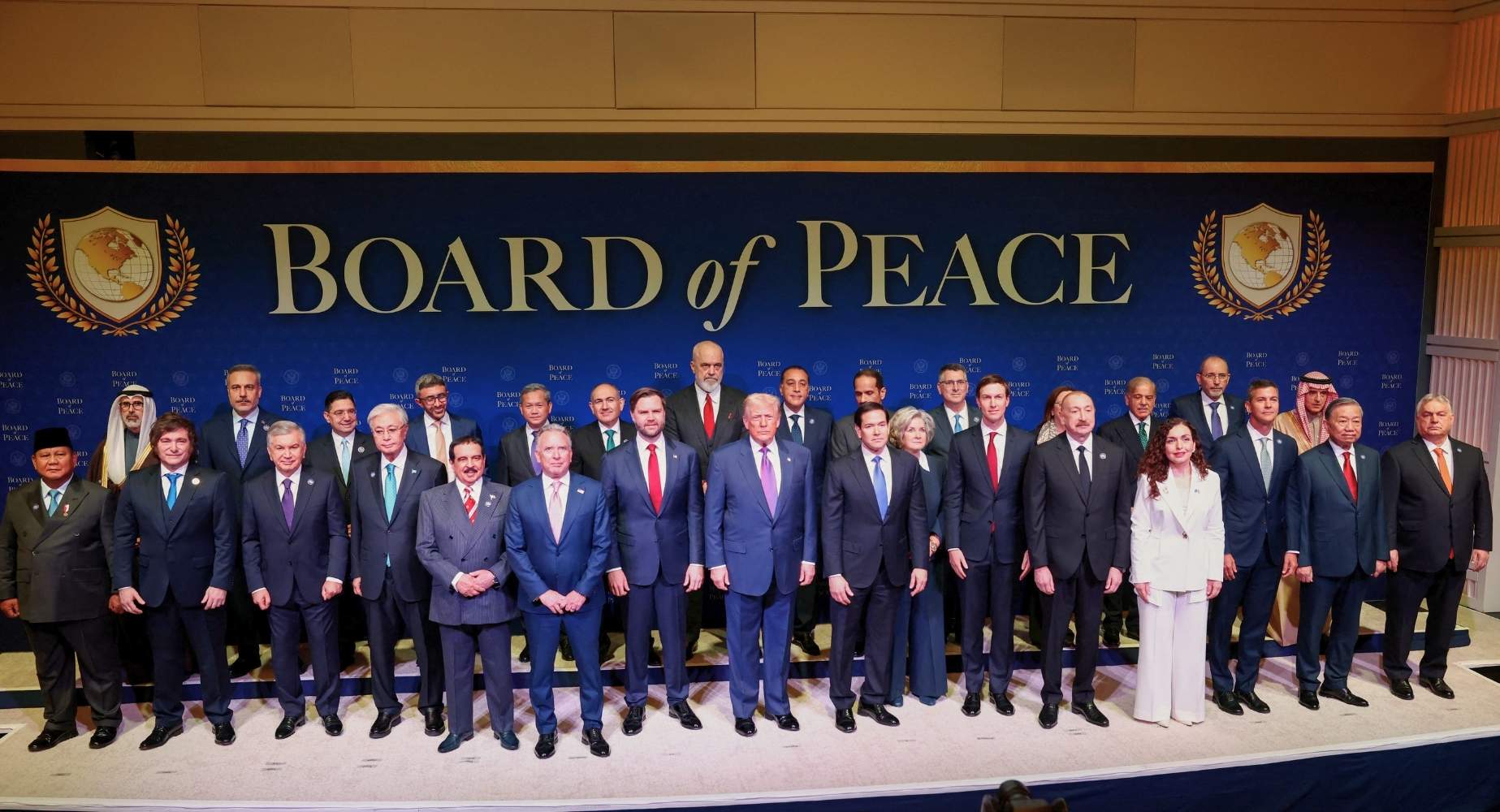
The fate of 2.1 million people in Gaza hangs in the balance this week as key officials working for the Board of Peace meet in Cyprus starting Tuesday for three days to decide how to jump-start President Trump’s stalled twenty-point plan. Despite pledges of $17 billion and behind-the-scenes planning done by a small team of U.S., international, and Palestinian staff, the Board of Peace has almost no money, no troops in Gaza, and only a tiny fraction of the personnel needed to provide security and reconstruction for Gaza’s 2.1 million people. Hamas’s refusal to disarm is a large part of the problem, but this is hardly a surprise.
There is a way forward that would work for both the peoples of Gaza and Israel. A small team of U.S., international, and non-Hamas Palestinian officials have been working on plans for months. So, too, have military planners from the United States, Israel, and countries interested in the not-yet-deployed International Stabilization Force (ISF) that could provide security in at least parts of Gaza. The challenge has been getting all their plans moved from PowerPoint slides into reality on the ground.
Here are the two most urgent steps. First, President Trump needs to be persuaded to use his leverage with Indonesia and other governments to get at least 6,000 troops to Gaza in the next eight weeks. The U.S. Air Force can provide airlift. These ISF troops will allow the Israeli army to withdraw to Gaza’s borders so that reconstruction can start east of the Yellow Line in the part of Gaza that Hamas does not control. The immediate goal should not be to build model communities of high-rise apartments—the water, electricity, and sanitation infrastructure to build high-rises no longer exists. Instead, the ISF needs to establish basic security in the towns of Khan Younis and Rafah so that Gazans can return to rebuild their homes, free of Hamas intimidation and without having to look over their shoulders at Israeli troops.
Second, no government is going to give serious money until the Board of Peace’s Office of the High Representative (OHR), led by the highly respected Nickolay Mladenov, is given funding to hire the contracting officers, fiscal managers, lawyers, and staff to oversee hundreds of millions of dollars of contracts. OHR likewise needs the ability to do security vetting and process payments for tens of thousands of Gazans from Khan Younis and Rafah as they go to work rebuilding basic housing.
Right now, as the Board of Peace is structured, Americans control the Board of Peace’s checkbook. Not having the number of professional staff needed to begin Gaza’s physical and social reconstruction is a major reason donors are unwilling to contribute real money. On June 2, U.S. Secretary of State Marco Rubio told the Senate Foreign Relations Committee that the entire Board of Peace staff was going to be fifteen to twenty people. OHR currently has about a dozen additional staff advising and assisting Mladenov, backed up by a smaller number of outside advisers. The National Committee for the Administration of Gaza (NCAG) has 15 members and a small staff in Cairo. A handful of U.S. diplomats based in Cairo and Israel support their efforts. The International Gaza Aid Center, formerly known as the Civil-Military Coordination Center, used to have “about 600” military and civilian experts, and will now be “streamlined” though “no reduction in personnel is currently planned.”
This is wildly off what is needed. To get a sense of the scale required, Gaza has 2.1 million people. Comparable cities have tens of thousands of employees in municipal administration and public services. The City of Paris, France has 2.1 million people and approximately 46,000-55,000 employees. The city of Houston, Texas has 2.3 million people and 20,000 employees (excluding teachers). Dubai in the United Arab Emirates has 2.5 million people and 11,000 employees who work for the Dubai Municipality; still more work for the Emirate of Dubai, which is separate. Manila, Philippines has 2.2 million people in the city proper and about 312,000 employees. Vienna, Austria has 2.0 million people and 65,000-67,000 employees in the core city administration. Sapporo, Japan has 2.0 million people and 23,096 city employees as of April 2025. Most of Sapporo’s education and health workers are in the private sector.
In each of these cities, public officials have an established housing stock, working municipal infrastructure, and a functioning tax base. Gaza has none of these things. Rebuilding Gaza will be far more challenging than running a city of comparable size.
To be sure, most of the municipal employees Gaza needs will come from Gaza. But OHR and the NCAG will need to do vetting to ensure Hamas’s most militant elements do not take over the new government from the inside. Overseeing contracts is essential not just to avoid corruption but to ensure Hamas does not profit from collection of “taxes” as it is doing now. While most of Gaza’s work will be done by Palestinians, including Palestinian companies, international donors will want to ensure contracts are awarded to qualified bidders and that work is done properly. And Gazan employees who are now paid by funds controlled by Hamas need to be switched over to being paid by OHR and the NCAG, probably using one of several digital currencies to prevent Hamas from stealing Gazans’ cash.
All this work will require an initial mix of international and Palestinian staff. The Trump administration is not in the business of nation-building, but getting other governments to commit money requires having the staff to manage international donations at scale. Right now, none of the people needed to do this are on anyone’s payroll.
There are good and bad lessons to be drawn from Bosnia, Kosovo, Iraq, and Afghanistan, but adjusting for size and scale, the Board of Peace needs to authorize the High Representative to immediately hire about thirty contracting officers, a hundred-person office to coordinate vetting, twenty lawyers with a range of specialties, thirty auditors, and thirty more support staff to run personnel, payroll, and IT functions. Contractors can fill in supporting roles, but they also need to be hired through a transparent contracting process, which is why you need a mix of contracting officers, lawyers, and auditors first.
Watching High Representative Mladenov’s press conference in Jerusalem and his briefing to the U.N. Security Council in May 2026, it is indisputable that he and his team have a sober and realistic understanding of the challenges of bringing peace to the peoples of Gaza and Israel. On substance, they have done outstandingly to lay the groundwork. But there are already signs both Hamas and Israel are preparing for a return to war if progress does not start very soon. In the United States, voices as disparate as Secretary of State Marco Rubio and former Secretary of State Hillary Clinton have said there is no alternative to making the Trump twenty-point plan work. The conference this week in Cyprus needs to come up with a plan to get the ISF quickly deployed into Gaza, unlock the money, and start hiring the people to begin the work of Gaza’s physical and social reconstruction. This is the key to lasting peace in Gaza, and it needs to start now.
